Fourteen-year-old Moses (not real name) wakes up each morning in his mother’s home in Mbayani Township, Blantyre, with one goal: to beg on the streets of the commercial capital to support his family.
Unlike some of his peers, Moses is not an orphan.
Instead, poverty and possible neglect have driven this Standard Five drop-out into street life.
“I used to attend Mbayani Primary School but my parents could not afford to support me, my two brothers and my sister,” Moses explains.
Life was challenging even before his father left to work on estates in the Central Region.
- Advertisement -
Although conditions were tough, Moses was able to go to school and had food on the table most of the time.
“When my father left, I saw that my mother, who survives by doing odd jobs like washing clothes, was struggling to meet our daily needs. That is why I decided to join my friends who go into town to do piece work and beg for money,” Moses says.
Initially, he visited a nearby children’s home that provided showers, food and some lessons.
However, he now says conditions at the facility have deteriorated.
- Advertisement -
- Advertisement -
“I usually come home with about K5,000 or more on a good day. At first, my mother tried to stop me from going out but now she just watches me leave,” he adds.
In Bangwe Township, 16-year-old Chisomo faces a similar struggle.
Each morning, she leaves the relative safety of her home to escort her visually impaired father to beg in the streets of Limbe or sometimes Blantyre.
Her dream of becoming a teacher seems increasingly distant.
“I haven’t been to school for a long time because, apart from the lack of support, I need to help my poor parents,” Chisomo says.
Chisomo and Moses are among many children in Malawi who are thrust into adult responsibilities at a young age.
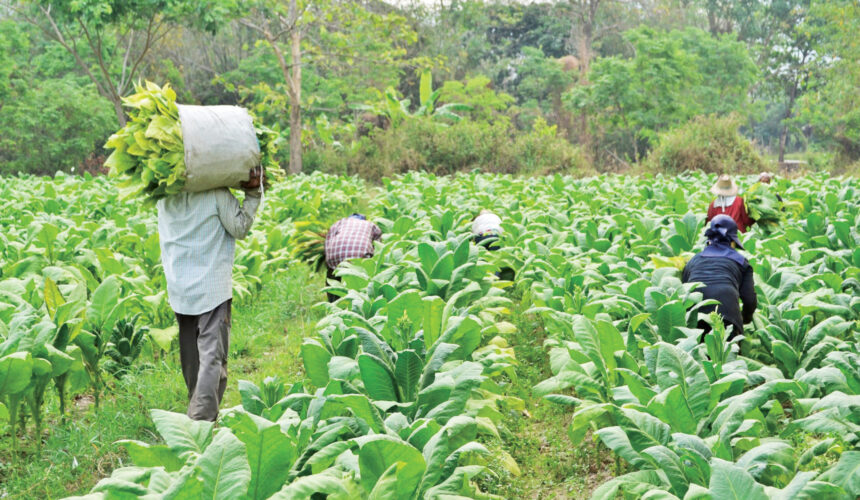
Many of these children endure extreme poverty, exposing them to various forms of abuse, including child labour.
According to the International Labour Organization (ILO), Malawi has one of the highest rates of child labour in southern Africa, with an estimated 1.5 million children aged between five and 14 engaged in some form of work.
This figure represents almost 40 percent of the country’s child population.

Regional Labour Officer for the south, Frank Adini, notes that child labour in Malawi is a complex issue driven by poverty, neglect and cultural norms.
Many families depend on their children to supplement their income, often forcing them to leave school and work in hazardous conditions.
“The effects of child labour on Malawi’s children are far-reaching and devastating. They are denied their fundamental right to education, making them vulnerable to exploitation and perpetuating the cycle of poverty,” Adini says.
However, Adini also points out that poverty is sometimes used as an excuse by parents to justify child labour.
He also states that many people in the country are unaware of what child labour is due to deeply ingrained customs.
“For instance, it is common for children to tend livestock or engage in farming activities under the guise of teaching them how to grow into responsible adults.
“We have a big task ahead in educating people about the physical and emotional harms of child labour, including injuries, illnesses and psychological trauma,” Aidini adds.
Despite the challenges, Adini reports a decline in child labour cases due to interventions at community and district levels.
He notes that some communities have established bylaws that punish parents who force their children into labour or early marriages.
“Additionally, several companies, particularly tea estates, now use identity cards to verify the age of their workers. These initiatives are showing positive results,” he says.
In January 2023, a three-year joint programme called Joining Forces for Africa: Acting to End Child Labour in Malawi (Jofa Acte) was launched.
The programme is being implemented in traditional authorities (TAs) Chimutu and Njewa in Lilongwe, as well as TAs Vuso Jere and Kalumo in Ntchisi.
Jofa Acte Programme Manager Janet Nkhoma Chagoma states that child labour has long deprived children of their rights, including the right to education.
She adds that the project has helped raise awareness about the dangers of child labour and clarified the difference between child labour and appropriate chores assigned by parents at home.
“Child labour robs children of their childhood and their right to education, ultimately depriving the country of productive citizens,” Chagoma explains.
She also acknowledges that while poverty contributes to child labour, it also creates a vicious cycle that is difficult to break.
“That is why we are also providing vulnerable households with income-generating activities in the areas where we work, so they can better support their children’s education,” she says.
The European Commission-financed project is also being implemented in Burkina Faso, Mali and Madagascar.
Launched on January 1, 2023, it is set to run until December 2025 and is managed by Plan Malawi and its partners including Save the Children.