By Brenda Kayo:
For learners at Nakale Primary School in Dowa District, going to school is supposed to be a journey towards a better future.
Instead, it has become a daily test of endurance.
Every morning, more than 600 learners from 16 surrounding villages Chiko Village, Traditional Authority Msakambewa’s area, make their way to the school.
The school is under Kambulu Education Zone.
- Advertisement -
Their hope is to find a safe classroom, a teacher and basic learning materials—only to be engulfed in a place of worry. They have only six teachers, with a teacher-pupil ratio of 1 to 100.
Since it was approved as a government primary school in 2017, the school is reported never to have secured funding for the construction of classroom blocks.
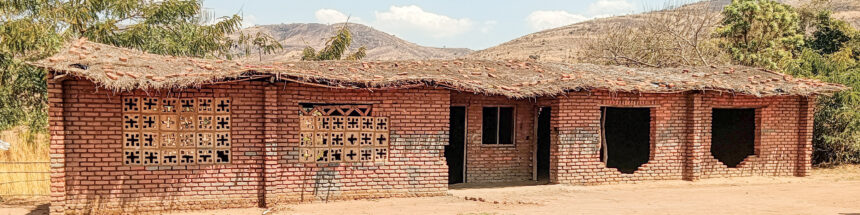
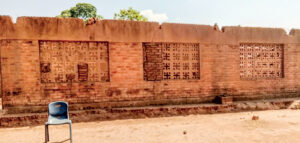
The school—with only one certified fit classroom block built by non-governmental organisation Build On—generally has dilapidated classroom blocks with cracked walls, leaking roofs, broken windows and damaged floors.
Learners learn in shifts. Others use a nearby church building when classrooms are unavailable or unsafe.
- Advertisement -
- Advertisement -
For learners, the challenges extend beyond the classroom, as even the basic facilities needed to support effective learning remain inadequate.
Toilets are in poor condition, adding to the challenges faced by both learners and teachers.
The inadequate facilities raise serious concerns about hygiene and the safety of children who use them.
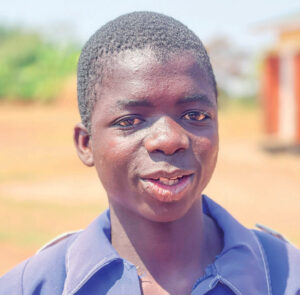
“Imagine, we share one textbook among 60 learners,” laments Siyileni Kozekani, a Standard 8 learner.
Polina Hebert, a Standard 6 learner, says, like most learners in her class, she does not fully concentrate on studies as the environment is prohibitive.
Her grades have constantly remained poor. So are those of most of her peers.
Head teacher at the school, Bobby Ng’ombe, says the school is struggling to attract and retain teachers because of its difficult conditions.
“Some teachers are reluctant to accept postings to Nakale because of the condition of the school and the challenges associated with reaching it,” Ng’ombe said.
The journey to Nakale is itself another obstacle. The road leading to the school is in poor condition, with travellers having to navigate difficult stretches, streams and rivers.
During the rainy season, the journey can become even more challenging, potentially making it difficult for teachers and learners to reach the school.
And for parents, the situation raises an uncomfortable question: How long can children continue learning under such circumstances?
among 60 learners
More than 50 learners dropped out of school in 2025, according to Parents and Teachers Association Chairperson Lackson Kozekani.
“The difficult conditions at the school are among the factors contributing to learners dropping out, more so because the learning environment does not encourage regular attendance,” Kozekani said.
Chief Chiphodo says “the situation is particularly concerning” because children are losing interest in education when the environment around them fails to encourage regular attendance.
For community members who fought to establish the school, the situation is a painful reminder of how difficult access to quality education remains for children in some parts of Malawi.
In Malawi, although primary school net enrolment is about 88 percent, only around 33 percent of children are reported to complete primary education, while lower-secondary completion is pegged at approximately 23 percent.
Learning outcomes are also poor, with only 19 percent of children aged between seven and 14 years demonstrating foundational reading skills and 13 percent demonstrating foundational numeracy skills.
Overcrowding is another serious problem, with Standard 1 repetition reaching about 36 percent, according to statistics, contributing to increased pressure on classrooms and teachers.
Poverty further limits access to education, particularly in rural areas, where children are more likely to drop out of school than stay in it.
Dowa District Education Manager Christopher Kumikundi said the responsibility of constructing school blocks should not rest with the government alone, arguing that communities and non-governmental organisations also have a role to play.
“The government cannot reach all communities. Communities should, therefore, take part in the construction of school blocks, together with non-governmental organisations,” Kumikundi said.
He said he had received reports that the roof of one of the classroom blocks had been removed by bad weather and that the authorities would send a builder to assess and undertake the necessary repairs.
However, civil society organisations say the government should do something about the situation.
“The responsibility of constructing school blocks lies in the hands of the government and not communities,” he said.
At Nakale, the community has already done what it can.
Residents have contributed to classroom construction, while organisations such as Build On have supported the school. But the deteriorating condition of some structures shows that building a school is only the beginning.
Maintaining classrooms, replacing damaged roofs, expanding facilities as enrolment grows and providing adequate sanitation require sustained investment.
For children who already cover long distances to attend school, the system can further complicate their learning schedules.
The limited classroom space also means that a school day is not necessarily the same for every learner.
Some learners may attend classes in the morning while others have to wait for their turn to use a classroom.
For a child trying to concentrate on lessons, such an arrangement can make learning more difficult.
The situation at Nakale also raises broader questions about Malawi’s education infrastructure.
Across the country, many communities continue to struggle with inadequate classrooms, shortages of teachers, limited learning materials, poor sanitation facilities and poor access roads.
Addressing Parliament recently, Education Minister Bright Msaka affirmed the government’s commitment to investing in quality education.
But for learners in rural areas, like here at Nakale Primary School, theirs are particularly severe problems whose fixing goes beyond political rhetoric.
The Nakale story is the Malawi story: Promises for quality education remain unfulfilled.