By Faith Kamtambe, contributor:
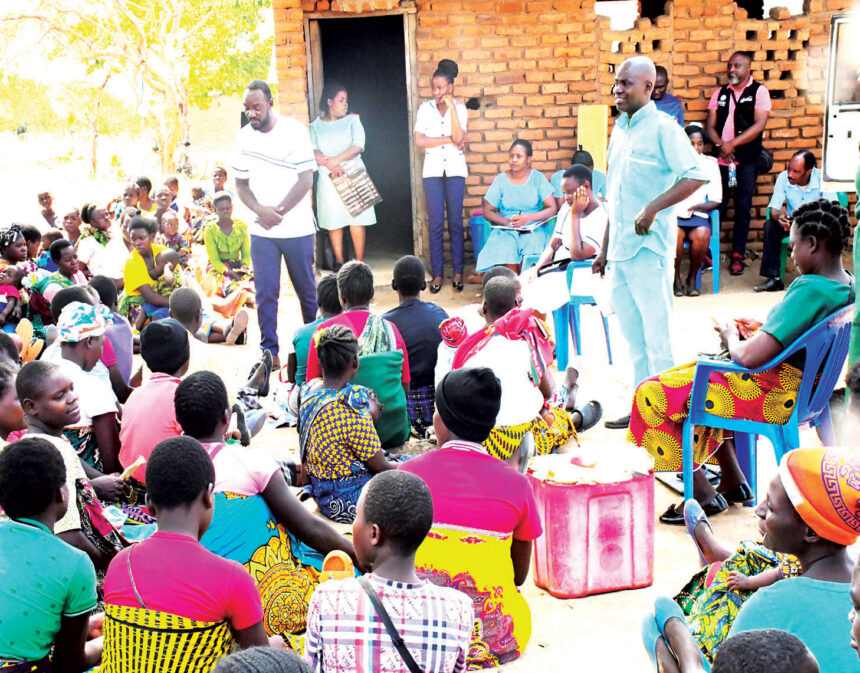
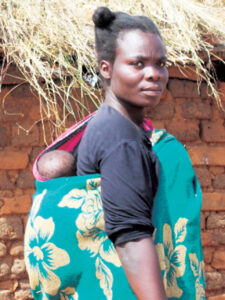
Tafele Kapatuka was left confused and anxious when the outreach vehicle that used to bring family planning services to her village stopped coming.
Just two months earlier, Tapatuka, of Mwenda Village, Traditional Authority (TA) Chadza in Lilongwe, had received contraceptive pills from a mobile outreach team run by the United States Agency for International Development (USAid) Momentum Tikweze Umoyo project.
When her supply ran out, she waited for the team to return as promised but they never did.
“I was afraid of getting pregnant again. I already have five children and four of them were unplanned. The thought of another unplanned pregnancy was killing me,” Kapatuka says.
- Advertisement -
With no access to contraception, she felt forced to deny her husband conjugal rights, leading to tensions at home.
“He could not understand. He started accusing me of sleeping with other men. I could not afford to travel to the health facility either. It is far and we do not have money for transport,” Kapatuka explains.
Ruth Mailosi, from the same village, faced a different but related problem.
She wanted her contraceptive implant removed so she could have another child, but the outreach clinic had stopped visiting her area too.
- Advertisement -
- Advertisement -
“I spoke to our Community-Based Distribution Agent (CBDA), who told me that the outreach clinic would no longer be coming because American donors had withdrawn their support,” Ruth narrates.
She was deeply concerned, knowing how important those outreach clinics were for women in her village, where regular health services are scarce and difficult to access.
Patuma Machira, a community volunteer in Mwenda Village, confirmed the impact.
“People here are now completely cut off from basic health services. The nearest facility is far and most people either walk or use bicycles, which is not practical, especially for women and children,” Machira says.
The USAid intervention had been running outreach clinics under two projects, Momentum Tiyeni and Tikweze Umoyo, providing a wide range of sexual and reproductive health services through its Integrated Family Health Outreach Clinics.
Elina Kachingwe, a mother from the area, relied on the outreach clinics for antenatal care. The closure hit her hard.
“I had all my antenatal visits at the outreach clinic. It was convenient and saved us a lot of money. When the clinic stopped and my delivery time came, I had to walk a long distance to Bwaila Hospital and I gave birth on the way,” Kachingwe says.
Head of the Reproductive Health Directorate at the Ministry of Health, Doreen Ali, says that despite shifts in funding from some partners, Malawi remains committed to accelerating the implementation of health programmes for women, newborns and adolescents.
She further indicates that the ministry has conducted an evaluation to analyse how the funding cut will affect operations and goals.
“With reduced resources, we are in the process of identifying non-essential expenditures that can be cut or postponed so that we maintain only our core functions,” Ali says.
According to the Directorate, Malawi has made progress across all areas of sexual and reproductive health and rights, including maternal, newborn and child health, over the past decades.
This has been driven by investments that have strengthened primary healthcare delivery and improved access to quality services at the community level, leading to notable improvements in health outcomes nationwide.
Currently, Malawi’s maternal mortality rate stands at 225 per 100,000 live births, against a target of 70 per 100,000 by 2030, according to the World Health Organisation.
The modern contraceptive prevalence rate among married women is 66 percent, surpassing the national target of 60 percent by 2030.
For all women, the rate is at 60 percent, indicating that Malawi has already achieved its target in this category.
While admitting that the funding cut is a major blow to the gains made, Ali says the Ministry is in the process of engaging with the Ministry of Finance to increase domestic financing to bridge the gap and to lobby support from the private sector.
“We have integrated most services and are exploring alternative funding sources. We shall continue prioritising service delivery and integration because right now our aim is to do more with less funding and minimise losses from the gains we have made as a nation,” she says.
It is a fact that many rural women have been severely affected by the aid freeze, particularly due to the suspension of outreach clinics that were previously supported by USAid-funded projects.
Health rights activist Maziko Matemba says it is concerning that many USAid-funded family planning projects have been severely impacted by the aid freeze.
He says that in some of the targeted communities, already grappling with poor indicators in family planning, STI prevention and HIV infections, the progress made is beginning to erode, signalling a worrying reversal.
“This setback is largely due to the abrupt closure of critical health interventions, many of which lacked sustainability plans at the time of their termination.
“If Malawi fails to secure sustained support, whether through domestic resources or international aid, within the next six to twelve months, the situation could become critical,” Matemba says.
While efforts, as explained by the Ministry of Health, are underway, women in rural areas remain hopeful for the return of accessible family planning services.
Some, like Kapatuka, risk jeopardising their marriages as they navigate life without any form of contraception.