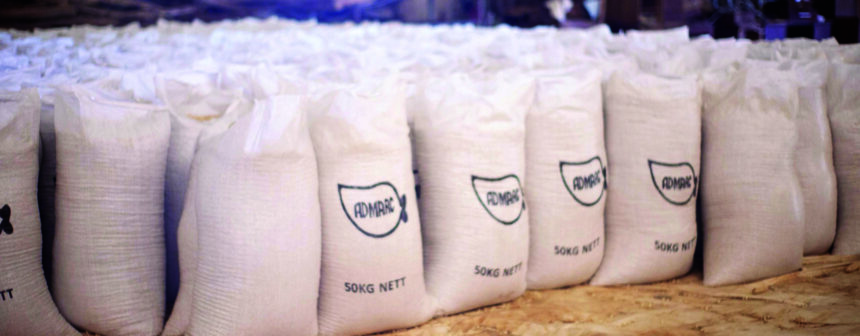
Maize prices have remained on an upward spiral, rising by 20 percent to K960 per kilogramme (kg) in August from an average of K803 per kg at the end of July.
The increase compares with a 16 percent rise recorded during the corresponding period last year.
This is according to the latest market monitoring report by International Food Policy Research Institute (Ifpri) Malawi.
According to the report, maize prices have increased across all monitored markets, with the most significant price jumps recorded during the second half of August.
Prices at all monitored markets in the Southern Region were above the government-prescribed minimum of K900 per kg, with the average price seen at K1,037 per kg.
- Advertisement -
In the Northern Region, the price of maize averaged K751 per kg while in the Central Region, the average price was K943 per kg.
The report also said Malawi continued importing more maize than it exported through most monitored border locations, with the exception of Songwe in Karonga and Hewe in Rumphi, where it was reported that there was no cross-border trade in maize due to minimal price differences across the border.
“Import-parity prices remained below domestic retail prices in most markets, indicating that imports continued to exert downward pressure on domestic maize prices,” the report reads.
Meanwhile, another report by Famine Early Warning Systems Network (FewsNet) suggests that crisis outcomes are expected to emerge in localised areas of southern Malawi and the Central Region from October 2026 to January 2027, driven by constrained purchasing power.
- Advertisement -
- Advertisement -
“Typically low agricultural labour opportunities and above-average food prices are expected to reduce poor household access to market purchases, driving food consumption gaps,” the report reads.
The report further said stressed outcomes were expected across the remaining Southern Region districts and parts of the Central Region, as most households were likely to meet their minimum food needs but struggle to cover non-food expenditures.
The FewsNet report also suggests that El Niño conditions, which are expected to persist into January 2027, could bring below-average and uneven rainfall during the start of the October 2026–April 2027 rainy season.
This could negatively affect farming activities, crop development, pasture and water availability, particularly in southern Malawi.
A month ago, while commenting on maize prices, Grain Traders Association of Malawi President Grace Mijiga said despite the rise, prices were still low, which could affect maize production in the 2026- 27 agricultural season.
The Malawi Vulnerability Assessment Committee estimated that 2.6 million people would be unable to meet their annual food requirements during the lean period.
The committee projected that the country would require about 97,887 metric tonnes (mt) of food, valued at approximately K124.3 billion.
Final estimates by the Ministry of Agriculture show that Malawi produced 3.3 million mt of maize during the 2025-26 agricultural season, up from about 2.8 million tonnes in the previous season. This is still below the recommended 3.7 million tonnes national annual maize requirement.