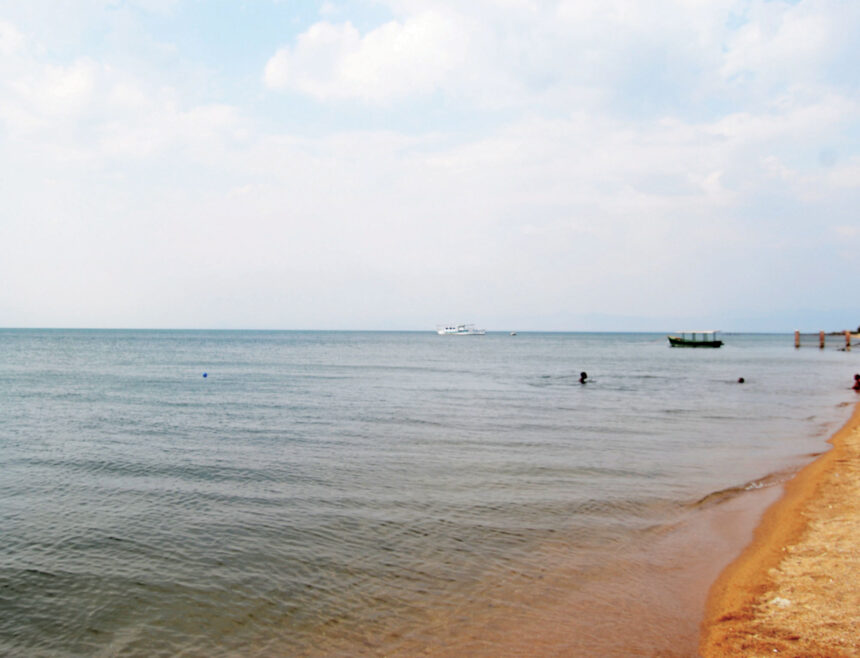
Malawi’s fisheries sector is emerging as a shining example in the Southern African Development Community (Sadc) region, driven by efforts to preserve its rich biodiversity while ensuring sustainable fishing practices.
However, the introduction of Vessel Monitoring Systems (VMS), largely used in commercial fishing, has taken Malawi’s efforts a notch higher, as they [systems] have given environmental and fisheries department officials the leeway to track and monitor activities of fishing vessels at places such as Senga Bay Capture Fisheries in Salima District, for example.

The initiative has excited Senior Chief Kachindamoto, who says fish monitoring is key to preserving the natural resource in Lake Malawi, including her area.
According to Kachindamoto, the introduction of VMS will help ease the implementation of by-laws.
She says “the systems would, as they utilise technology, complement grassroots initiatives” she introduced to her area, largely aimed at safeguarding the lake’s ecosystem for future generations.
- Advertisement -
Guardians of the lake
Kachindamoto, a well-known figure in the country, took up the mantle of protecting Lake Malawi’s precious aquatic life.
Recognising the threat of overfishing and the capture of juvenile fish, Kachindamoto devised a unique solution: the deployment of “secret mothers and fathers”.
“These dedicated volunteer secret mothers and fathers patrol the waters, monitoring fishing activities and ensuring that only mature fish is caught while juveniles are safely returned to their natural habitat,” Kachindamoto says.
- Advertisement -
- Advertisement -
Despite their noble efforts, challenges persist.
For instance, Moffat Mpagaja, one of the volunteer secretaries, highlights the difficulty of overseeing vast stretches of the lake, particularly during the fishing season.
“We face challenges in overseeing fishing activities in our area.
“As such, we are hopeful that the implementation of VMS technologies, supported by the ProFishBlue project, will offer a solution by providing real-time monitoring capabilities,” Mpagaja explained.
Introduction of state-of-the-art VMS, supported by the ProFishBlue project, will enable real-time tracking of fishing vessels, empowering fisheries offices to better regulate and manage fishing activities.
Regional collaboration for a sustainable future
The ProFishBlue project, a collaborative effort among the Malawi Government, the Sadc Secretariat and African Development Bank (AfDB), symbolises a new era of regional cooperation in promoting sustainable fisheries management and the blue economy.
With a grant totalling $9.2 million, the project aims to enhance food security, create employment opportunities and facilitate intra-regional trade within the Sadc region.
Deputy Executive Secretary for Sadc, Angele Makombo N’tumba, said challenges that chiefs surrounding Lake Malawi are facing, notably the monitoring of fish, are the reason Sadc is equipping the Malawi Government through the ProFishBlue project.
“Malawi has the potential to become a fish basket for the region, and that is why we have donated vessel monitoring systems that will facilitate research activities at Senga Bay Capture Fisheries [in Salima District] and modernise lake monitoring,” N’tumba pointed out.
She added that “the ProFishBlue project has the potential to enhance trade and create jobs within the Sadc region”.
She explains that Malawi is the only country that is doing well in aquaculture development in the Sadc region, hence the donation of equipment.
ProFishBlue is the first major ‘Regional Public Goods’ project to be financed by the AfDB under the African Development Fund (ADF)- 15 window, which falls within the domain of the blue economy and fisheries involving Regional Economic Communities (RECs) such as Sadc.
The secretariat of Sadc, AfDB, member states and implementing partners have launched the Programme for Improving Fisheries Governance and Blue Economy Trade Corridors (ProFishBlue) in the Sadc region.
ProFishBlue was approved by the Board of Directors of the AfDB on October 22, 2021, with a grant totalling $9.2 million to support the implementation of best practices in fisheries governance and blue economy trade corridors in the Sadc region.
The project aims to promote sustainable management of fisheries resources within the blue economy context to improve food and nutritional security, create employment through value chain activities, facilitate intra-regional trade and build adaptive capacity. Potential co-financing is also expected from the Global Environment Facility (GEF) and other resource partners.
Director of Fisheries in Malawi, Hastings Zidana, stressed the need for such a regional approach given the transboundary nature of aquatic fishery resources for food and commodity trade, citing Lake Malawi, which borders Mozambique and the United Republic of Tanzania.
“ProFishBlue project activities are consistent with the needs of regional member countries, as reflected in the bank’s financed ‘Sustainable Fisheries, Aquaculture Development and Watershed Management (SFAD-WM) project,” Zidana said.
The Director of Food, Agriculture and Natural Resources (FANR) at the Sadc Secretariat, Domingos Gove, highlights the importance of fisheries and aquaculture sectors to food, nutrition, livelihood support and economic development and how they fit into the region’s cross-border trade, given the vast natural resource endowment.
“The project is aligned with the Sadc Regional Indicative Strategic Development Plan (RISDP) 2020- 2030, in which the blue economy and fisheries agenda remain central to the vision and imperatives of regional integration,” he said.
AfDB and Task Manager for the project, Ahmed Khan, said the Blue Economy Flagship initiative is under the bank’s Feed Africa priority area and illustrates the linkages between “ProFishBlue” and the bank’s other high priority areas.
“The project will complement the bank’s Feed Africa strategy on regional integration, industrialisation, gender and climate change and diversify the bank’s portfolio in both sovereign and non-sovereign operations,” Khan indicated.
The project interventions comprise four components and multi-scale activities, including conservation planning, sustainable fish harvesting strategies, blue economy investment plans, input supply services for fisheries and aquaculture, marketing infrastructure for fish and fishery products, as well as the provision of regional conformity assessment and standardisation for fish and fishery products.
Training programmes will be provided to value chain actors on multiple fronts along the fish chain, especially women and youths.
The project is expected to promote competitiveness in the retail and wholesale fish trade as well as facilitate cross-border corridors in the region.
In addition, the project will support institutional capacity building for climate resilience through information service provision, climate buffers and resource mobilisation towards adaptation and mitigation.
The project directly benefits Sadc sub-regional and national public entities and institutions in their overall public administration as well as value chain actors including fishers, fish farmers, processors, retailers, wholesalers, transporters and consumers.
The project will also target both direct and indirect beneficiaries through training and knowledge dissemination, nutritional advocacy, food safety standards and climate services in the region.
To date, the AfDB Group’s active portfolio in the Southern African region comprises 218 operations, with a total commitment value of UA7.935 billion. This covers all ongoing operations in the region, including those designed for regional integration and national development impact and two regional public good (RPG) projects implemented by Sadc. The sectoral distribution of the regional portfolio reflects a dominance by the financial sector at UA2,017 billion (26 percent), the energy sector at UA1,936 billion (24 percent), followed by the transportation sector at UA1,286 billion (16 percent), the agriculture sector at UA0.971 billion (12 percent) and the remaining UA1.267 billion (22 percent) covering social and multi-sectors, including mining and environment sectors.
Fish in Lake Malawi
With more than 1,000 fish species, Lake Malawi has more distinct fish species than any other lake in the world. New species are discovered regularly, and some scientists believe that the lake may contain more than 2,000 species.
As a result of this exceptional diversity, the lake is considered a global biodiversity treasure because almost all of the species it contains occur nowhere else on the planet.
Lake Malawi is immense. Located among Malawi, Tanzania and Mozambique, it covers an area of more than 29,000 square kilometres and holds 7 percent of the world’s available surface freshwater.
Despite this, Lake Malawi is under threat. Human activities, including deforestation in the lake’s catchment area, and overfishing are taking their toll on the lake.

Minister of Natural Resources and Climate Change, Michael Usi, said the country is doing its best to address the problems.
He said this is why “Malawi is a shining example for the Sadc region, as the country has managed to protect the species it has”.
There are different species of cichlids in Lake Malawi. The diversity of the lake’s cichlids, like Darwin’s Galapagos finches, is a classic example of “adaptive radiation”—the rapid diversification of species as they adapt to environmental niches.
Why are African cichlids popular?
For example, of the 300 or so identified fish species in Lake Malawi, more than 250 are cichlids. Because they are colourful, peaceful and handy, they are popular among aquarium enthusiasts.
Lake Malawi cichlids are generally more commonly available and popular in the Indian and Europe aquarium trade than the cichlids from Lake Tanganyika and Lake Victoria.
Lake Malawi cichlids are known for their bright and varied colours, as well as their relative ease of care in captivity, making them more attractive and accessible to hobbyists.
The administration has come up with manifold initiatives to boost foreign exchange earnings in the country. One such initiative is the establishment of mega farms, the fruits of which are already trickling in.
Preserving a natural treasure
Lake Malawi, with its unparalleled biodiversity, is a global treasure. Home to over 1,000 distinct fish species, including the iconic cichlids, it holds 7 percent of the world’s available surface freshwater.
However, human activities, such as deforestation and overfishing, threaten its delicate ecosystem.
Nonetheless, Usi underscores the importance of Malawi’s conservation efforts, positioning the country as a beacon of hope for the region.
Looking ahead
As Malawi continues its journey towards sustainable aquaculture development, the future looks promising. With initiatives such as ProFishBlue and the dedication of local champions such as Kachindamoto, the country is poised to become a leader in the blue economy.
Through innovation, collaboration and a steadfast commitment to conservation, Malawi serves as testament to the transformative power of sustainable fishing practices.
As Malawi charts its course towards a sustainable future, it serves as an inspiration to its neighbours in the Sadc region and countries beyond.