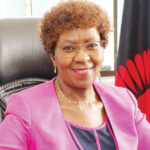
Minister of Industry and Trade Simplex Chithyola Banda has reaffirmed the country’s commitment to enhancing trade with regional peers under the African Continental Free Trade Area (AfCFTA) and other pacts it is party to.
He has since also said the government is working with various institutions and the private sector in attracting foreign direct investment.
Chithyola Banda said this last week in an interview with CNBC Africa on the sidelines of the US-Africa Leaders’ Summit in Gaborone, Botswana.
This comes as Malawi, like some regional peers, is yet to start trading under the AfCFTA—a market with a combined gross domestic product (GDP) of $3.3 trillion involving 55 countries and 3.1 billion people.
It also comes as Malawi’s net FDI has been slowing down from 9.9 percent of the GDP in 2014 to 0.4 percent by 2022.
- Advertisement -
According to Chithyola Banda, the country is constantly engaging regional peers for possible trade and investment deals that would help enchance growth of the country’s economy.
He said the country is banking on such pacts as AfCFTA in its attempt to expand its export products and services in line with the National Export Strategy II 2021–26.
Chithyola Banda said, apart from scouting for trading opportunities, the country has deployed efforts towards attracting more FDIs, while the government works to address possible bottlenecks on the landscape.
“We are developing the special economic zones, and I have been able to engage with a number of people and institutions that have interest in industrial parks.
- Advertisement -
- Advertisement -
“As a country, we are also making strides in increasing the network, in terms of getting new people and institutions interested in investing in Malawi. We have zeroed in on industrial parks,” Chithyola Banda said.
Available data show that the trade deficit between Malawi and the rest of African countries has continued to worsen in recent years, rising from $406 million in 2016 to $670 million.
In an interview last week, South Africa-based international trade expert, Trudi Hartzenberg, said protectionism remains one of the major reasons behind the slow take-off of AfCFTA.
Since Africa officially started trading under AfCFTA in January 2021, impact of the agreement has been minimal as countries are yet to effectively use its instruments.
Hartzenberg, who is also Trade Law Centre Executive Director, said that the desire to protect domestic industries and avoid import competition is fuelling tension among countries.
Hartzenberg said negotiations of tariff concessions and rules of origin slowed down trading under the pact.
“These processes are still to be finalised. These are important initiatives but they should not divert focus on the end goal of finalising the outstanding negotiations, so that trade under the full AfCFTA can begin,” Hartzenberg said.
Between 2016 and 2020, about a third of Malawi’s exports, or 34 percent, were destined for African countries while a similar share of Malawi’s imports originated from the continent