


By Pemphero Malimba:
The Malawi Congress of Trade Unions (MCTU) has accepted the 40 percent minimum wage increase announced by the government last month.
MCTU president Charles Kumchenga confirmed the development in an interview Monday.
Minister of Labour Peter Dimba announced the 40 percent increase at a press briefing in Lilongwe.
Among other changes, Dimba said that the general minimum wage had been raised from K90,000 to K126,000, while for domestic workers it had increased from K52,000 to K72,800.
- Advertisement -
However, speaking after the announcement, Kumchenga said the union was not entirely satisfied with the increase.
He argued that, considering the rising prices of goods and services in the country, a 90 percent increase would have been more appropriate.
He also indicated that the union would consult with its affiliates to decide on the next steps.
Speaking to The Daily Times Monday, Kumchenga said the affiliates had resolved to accept the increase.
- Advertisement -
- Advertisement -
“MCTU has 36 affiliates, so we discussed this with some affiliates at random to get their views. The general consensus was to accept it for now but continue engaging the government,” he said.
The MCTU president added that the affiliates had agreed to resume discussions with the government next year.
“We are trying to balance the risk of retrenchment with the need for a higher minimum wage. If we push for a large increase, it could lead to job losses, which we want to avoid,” he said.
Last month, Dimba said the increase had followed consultations with MCTU and the Employers Consultative Association of Malawi.
He said the Ministry had considered the prevailing inflation rate, economic growth, industrial productivity, bank lending rates and the potential impact of wages on employment when determining the adjustment.
He also revealed plans to strengthen inspections to ensure compliance with the new minimum wage.
“We have a significant number of employers who do not comply with the set minimum wages. I want to remind them that this is the law and breaching it has consequences. In fact, it is a criminal offence for employers not to adhere to the minimum wage,” Dimba said.
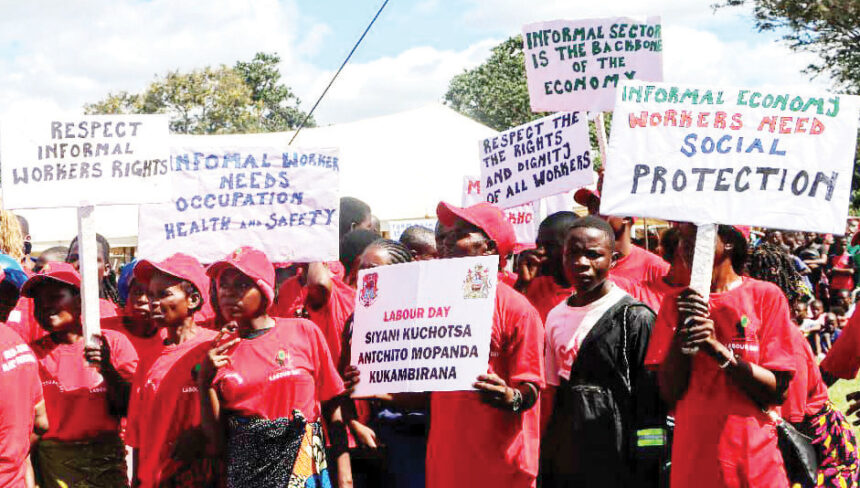
Earlier on Labour Day, May 1, workers raised concerns about poor working conditions and inadequate wages, which they said made it increasingly difficult to cope with the rising cost of basic needs such as food.
In some forums, employees reported issues including delayed salaries, wages below the legal minimum, lack of protective equipment and excessively long working hours.
President Lazarus Chakwera, who presided over the commemorations at Balaka Stadium, assured the workers that his government was addressing their concerns.