
By Sellina Tambula:
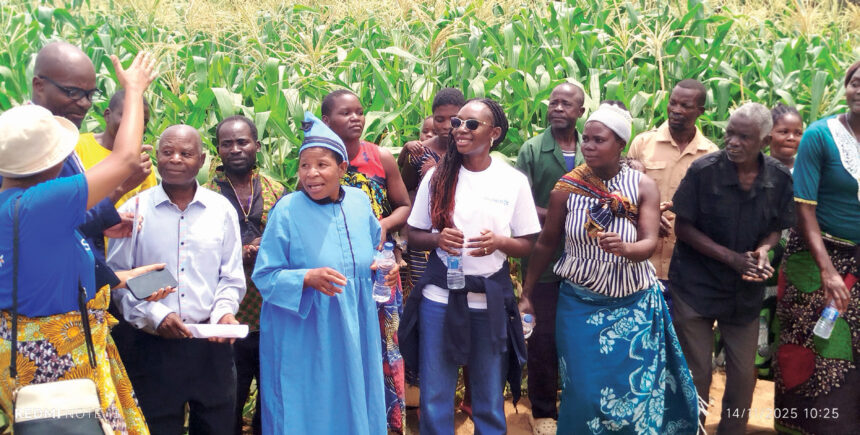
While some, such as former president, the late Bingu wa Mutharika, argued against the narrative that Malawi is not a poor country but, rather, it is the people who are poor, a community in chief Muzungu’s area, Traditional Authority (TA) Namasoko, in Phalombe District have proved this by fighting against poverty using their own local resources and initiative.
Muzungu Village is like any other village in the country; it faces challenges such as poverty, lack of adequate water and sanitation resources, food insecurity and many more.
However, what seemed as a misfortune in 2023 pushed the community to nip some of these challenges in the bud and work towards improving their livelihoods.
In 2023, the village’s only borehole was destroyed by Tropical Cyclone Freddy, leaving them to rely on unsafe water sources for almost six months until an organisation called IsraAID Malawi came to their rescue through Phalombe District Council.
- Advertisement -
In no time, the borehole was repaired.
As one way of empowering the community to take care of the borehole, the organisation encouraged them to form a water user committee to oversee governance of the water source.
Committee members were trained in income-generating-activity mechanisms to ensure that they are in a position to spare parts and maintain the borehole.
But it is here that the committee stood out! While the expectation was that it would either establish a village savings and loans (VSL) group or cultivate on a small piece of land and grow vegetables to save money, the committee broke the poverty mentality by opting for irrigation farming.
- Advertisement -
- Advertisement -
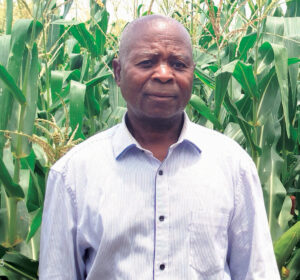
Chairperson for Muzungu Waters User Committee Fyson Mwepetha said they opted for irrigation because they also wanted to alleviate their poverty, apart from raising money to maintain their borehole.
“We went to our chief and explained to her what our vision was and she immediately came on board. She joined us and even provided the land for us to turn our dream into reality,” Mwepetha said.
The group, which now has over 20 members, started with only 11 people, including Village Head Muzungu.
As more people started seeing the benefits, they started joining it.
With no form of support, they managed to raise resources such as seed and other farm inputs on their own, and they even borrowed a solar water pump and slowly began clawing their way out of the pit of poverty.
“We started in the 2024 farming season and, at first, we wanted to just do the work in a small garden but we later started thinking big and decided to cultivate maize. We thought of saving some of the money to maintain the borehole and use the rest to alleviate our poverty,” Mwepetha explained.
The group generated about K110,000 and put aside K10,000 for the borehole and used the rest to buy food and educate their children.
Village Head Muzungu says she immediately provided land for the initiative because she had seen how her subjects were wallowing in poverty and saw this as an opportunity for them to better their lives.
“I gave all this land to the committee for free. They don’t have to pay me anything,” Muzungu said.
Siphiwe Sawasawa, an extension worker in water development in Phalombe, who also trained the water user committee members, said such trainings are done whenever a borehole is drilled in the district.
“During the training, they were advised to cultivate crops in a small garden where they could grow vegetables for sale in order to maintain the borehole but what this particular committee has done is beyond what they were trained to do,” Sawasawa said.
Sawasawa said there are many boreholes that have been drilled in the district but that what the community in Muzungu has done has exceeded her expectation.
“In all of Phalombe, this is the first committee that has done this. Other committees just have very small gardens around the borehole, where they grow vegetables and only make enough to sustain maintenance of the infrastructure,” Sawasawa explained.
She called on other water user committees to emulate what Muzungu water user committee is doing by taking advantage of the knowledge gained to build their capacity by doing irrigation on a large scale.
IsraAID Malawi Country Director Appio Annet said she was impressed by what she had seen. She said when they went to the area rehabilitate the borehole in 2023 and facilitate committee members’ training, they had not anticipated that the committee could do such great things.
“This community stood out for us because they had, on their own, done irrigation farming on such a large scale from the training we did,” Annet said.
This year, the committee has doubled what they made last year.
This year, the group has gone bigger things by increasing their plots to 10 acres and the expectation is for them to make more money and save more money for borehole maintenance.
However, Village Head Muzungu has called for support, saying the group wants to buy its own solar power pump so that it is in a position to continue growing and do away with borrowing.
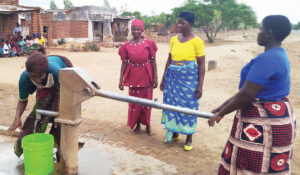
“We also need another borehole in this area as my village is growing and the demand for water is also growing. One borehole in not enough,” Muzungu said.
With such support, coupled with group members’ hard work, it is likely that Muzungu water user committee can grow into a mega farm that can grow and supply food to surrounding districts and, in the course of time, transform their livelihoods and those of other community members.