By Wezzie Gausi:
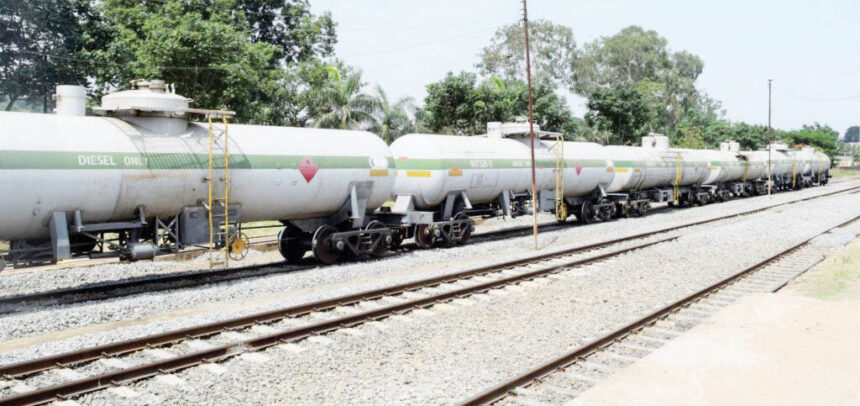
State-owned fuel importer, National Oil Company of Malawi (Nocma), has said it has increased the transportation of fuel by rail from one to 13.7 percent.
Using rail, the company is expected to cut the cost of ferrying the commodity compared to the road network, which has been the traditional means of bringing fuel into the country.
This comes as the sector has been faced with myriad risks lately, including disruptions of road and rail infrastructure which has necessitated the need for diversity in import options and routes.
In the long term, the government is exploring the viability of investing in a pipeline, which is a safer and efficient means of transporting fuel.
- Advertisement -
In an interview, Nocma Director of Operations Micklas Reuben said the institution plans to reach 20 percent of rail transportation by the end of this year.
He said plans are already in place to increase rail transportation as it is cost effective and faster.
“Nocma receives products from Beira, Nacala and Dar es Salaam. But we are currently using rail to receive fuel that is coming from Nacala.
“We intend to increase by having other routes from Beira and Dar es Salaam. On average, Nocma imports 60 percent of the total national imports and if we are to be having 20 percent coming on rail, that will be very cost effective,” Reuben said.
- Advertisement -
- Advertisement -

Malawi Energy Regulatory Authority (Mera) Chief Executive Officer Henry Kachaje said the body will always work hand-in-hand with Nocma for the country to have adequate fuel at all times.
He said with the increase in the consumption of petroleum products, there is a need to have many modes of fuel transportation.
“We are happy that Nocma is making progress in fuel transportation through rail. We believe that, by next year, a lot of progress will have been made in how they transport fuel to the country,” Kachaje said.
Parliamentary Committee on Defence and Security Vice Chairperson Bester Awali said the committee was impressed with the progress Nocma is making.
He said the issue of fuel shortages is not a good thing.
“We are happy to hear how Nocma has progressed to use rail in transporting fuel to the country. We believe they will keep on looking at other modalities to transport fuel in the country,”Awali said.
Meanwhile Nocma is exploring additional supply routes like the Feruka, Masasa and Sena corridor and pipeline transportation modes of transporting fuel to the country.
Malawi is land-linked depending on the ports of Beira and Nacala in Mozambique and Dar es Salaam in Tanzania to import its fuel. The Liquid Fuels and Gas Act stipulates that the country must keep at all times 90 days stock of fuel out of which 60 days must be kept at the strategic reserves and 30 days at oil marketing companies.
Malawi is spending about $600 million per year on fuel importation alone as consumption for diesel and petrol continues to rocket.
Figures from energy industry regulator, the Malawi Energy Regulatory Authority (Mera), show that, on average, Malawians use about 50 million litres of fuel a month, an equivalent of 600 million litres per year.
Per day, Malawians use about 845,000 litres of petrol and 834,000 litres of diesel. And to support this level of fuel importation, the country requires $600 million per annum.