In the heart of the disaster-prone district of Nsanje, community members are rising from the ashes, determined to rebuild and fully recover.
Cyclone Freddy, which made landfall in Malawi in 2023, left a trail of great destruction.
Now, with support from the government, local and international organisations, Nsanje residents are slowly rebuilding their lives.
For Grace Petulo, a survivor of Cyclone Freddy, the journey to recovery has been a testament to the power of resilience.
Sitting on the veranda of her new home in new Makhanga Village, where she and others relocated to, she recalled the disturbing experience of surviving the floods and seeking refuge in a camp for three months.
- Advertisement -
“Life was hard, but when the government provided land and asked us to relocate, I was one of the first people to grab the offer. We were assisted with money to build a new home and, now, I’m living comfortably with my family of eight,” she said.
Petulo said it was necessary to relocate after staying in disaster-prone Makhanga area for a long time.
Petulo’s story is one of many in Nsanje, where community members are working together to mitigate the impact of disasters.
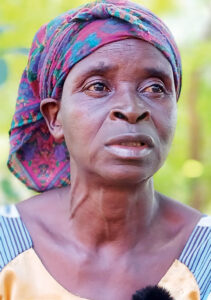
Magret Kambalame, who lives in Bandazi Village, said the construction of dykes, such as the Milore dyke, has provided them with a sense of security.
- Advertisement -
- Advertisement -
“The council has ensured that we benefit from the dyke and we are now living comfortably and are grateful for the protection it offers,” she said.
The Nsanje District Council has been at the forefront of disaster risk management efforts, with a comprehensive plan that outlines interventions for mitigation, preparedness, response and recovery.
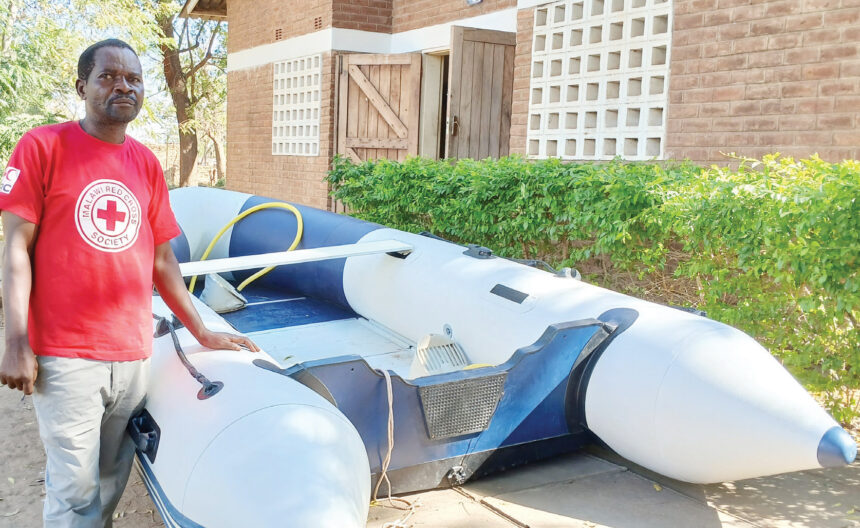
Chairperson for Malawi Red Cross Society volunteers in Nsanje District Bauleni Biyasi bore testimony to that.
“We have boats on standby and they assist us in rescuing people when floods hit surrounding areas,” he said.
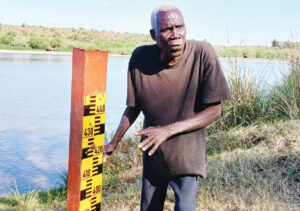
Early warning systems have also been put in place, including the river gauge along Ruo River, which helps prevent loss of lives and property downstream.
Elderly man Fole Pezo of Mwazalungu Village said that the gauge enables them to note that water levels have reached a point where they can send a message to areas down the river; areas such as Makhanga and Osiyana.
“This is important because lives are saved before the disaster strikes,” he said.
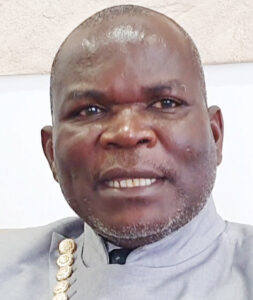
Nsanje District Commissioner Dominic Mwandira said, in terms of recovery, the Department of Disaster Management Affairs (Dodma) has been supporting community members with cash transfers, food aid and infrastructure rehabilitation.
He said over 2,000 households received support from Give Directly, and Dodma distributed maize to 36,904 households in response to the Malawi Vulnerability Assessment Committee report.
“Dodma is also constructing new schools in areas where people have relocated, including Makhanga primary and secondary schools, Chikali, Chigwamafumu, and Muona primary schools.
Additionally, the organisation rehabilitated Chimwala Mbangu Irrigation Scheme in TA Malemia using funds from the Post Cyclone Idai and Kenneth Emergency Recovery and Resilience Programme,” Mwandira said.
He revealed that the council has established vibrant structures at various levels to support disaster management, citing the District Disaster Risk Management Committee and village disaster risk management committees.
“We, as a council, have a disaster risk management plan and a contingency plan that highlights how we prepare for disasters, mitigate and recover. Our goal is to minimise the impact of disasters and ensure a swift and effective response,” Mwandira said.
He said the council has implemented preparedness and mitigation interventions, including the construction of emergency evacuation centres, the provision of boats for search and rescue operations, and capacity building for disaster risk management clusters.
“The council has also relocated community members living in disaster-prone areas to safer places, including those from Makhanga to Osiyana in TA Mlolo and GVH Kalonga in TA Mbenje. We are not just rebuilding homes, we are rebuilding lives. We are committed to supporting community members and ensuring that they are prepared for future disasters,” Mwandira said.
Churches Action in Relief and Development supported the construction of houses in TA Tengani while Habitat for Humanity built the capacity of local artisans on safer house construction guidelines.
Nsanje’s initiatives on disaster preparedness and recovery align with the United Nations Sustainable Development Goals (SDGs), particularly Goal 13, which focuses on climate action.
The district’s efforts also contribute to the Malawi 2063 vision, specifically Enabler 7, which emphasises on environmental sustainability, seem to be bearing fruit.
As Nsanje District continues to rebuild, the resilience of its people is serving as a beacon of hope for the rest of Malawi.