By Isaac Salima:
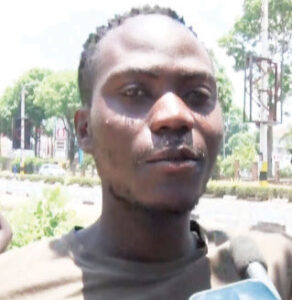
To Adam Kasanga, a motorcycle operator at Kamuzu Stadium bus stage in Blantyre, freedom means the leeway to access services at a public toilet for free.
He says this is common sense because city dwellers like him pay parking and other fees in return for quality services that are “easily accessible”.
Kasanga, however, says every time he leaves his residential area, Ndirande Township, to join colleagues in waiting for customers at the bus stage, he knows that he cannot access other services because the city fathers and mothers have other priorities.
“I recall that, this other day, I opened bowels but struggled to access toilet facilities because the city does not have public toilets.
- Advertisement -
“I wish we, Blantyre City residents, had access to public toilets because this is one way of promoting sanitation and hygiene, especially now when cholera outbreaks are becoming common.
“The problem had started the previous day but, the next morning, I still went out to conduct my business because, as you know, we generate income when we are on the road. That day, I was at Clock Tower in Blantyre when I started feeling pain in the stomach but when I looked around for a public toilet there was none,” Kasanga adds.
Kasanga is just one of the many Blantyre residents who continue to struggle to access toilet services due to lack of the same.
Mercy Chimbuto— a mobile money agent who operates at Cristwick along the Masauko Chipembere Highway— shares similar concerns.
- Advertisement -
- Advertisement -
“City residents need public toilet facilities for their dignity to be upheld. This is especially important for women,” Chimbuto explains.
To prove the residents right or wrong, we conducted spot-checks in Blantyre Central Business District all the way to Limbe commercial hub.
In the commercial city of Blantyre, when one wants to use the toilet, they have to rush to Blantyre Flea Market along the Mandala Road to get to a pay-in private toilet.
Vendor in the city, Madalitso Lamba, says there is a need for city officials to place public toilets in strategic places
“Otherwise, residents struggle to get access to toilet services,” he points out.
From Kandodo Corner Shop on the way to Limbe, the next pay-in toilet is found at Queen Elizabeth Central Hospital, or Ginnery Corner, bus stage.
In short, Blantyre City is short of toilet facilities, such that the spectacle of residents urinating on walls, trees and other structures is common.
To make matters worse, some of the waste ends up in Mudi River.
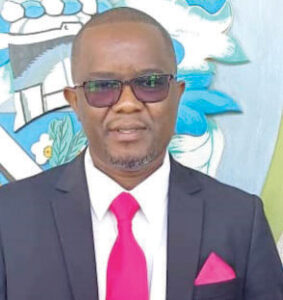
While acknowledging that Blantyre City Council can do more, its chief executive officer Dennis Chinseu says they are trying to change the situation.
“We are looking at means of making sure that we do something. Among the interventions is the Malawi Water Sanitation Project under the World Bank which aims at addressing the problem.
“However, we, on our own, cannot do everything and rely on partnerships with other stakeholders. Those who think that they have capacity can come forth and construct toilet facilities so that people can be paying [something] to access them,” Chimsewu said.
On his part, environment management advocate Maloto Chinkombero says there is a need for city councils, not just that of Blantyre, to put in place amenities that would ease sanitation challenges that residents face.
“We need to act fast because this is an area where less attention is paid. However, the implications are huge.
“The good thing is that there are short-term solutions, notably the introduction of mobile toilets, that city officials can introduce as one way of addressing environment and sanitation problems in areas,” Chinkombero points out.
Coincidentally, on Sunday this week, Malawi joined the rest of the world in commemorating World Toilet Day, which falls on November 19.
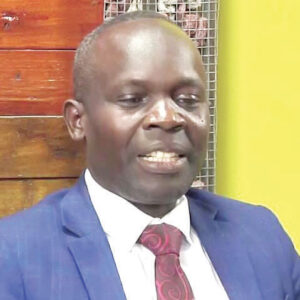
Speaking during a panel discussion on Saturday, Water and Environmental Sanitation Network National Coordinator Willies Mwandira called for collaboration if the country is to make strides in ensuring that the use of, and access to, toilets is enhanced.
“By 2030, the country aims at ensuring that everyone has access to a toilet facility. Both households and public places need to have a toilet facility. However, for this to be achieved, there is a need for collaboration among stakeholders,” Mwandira points out.
He adds that there is a need to build disaster-resilient facilities which can withstand drought and other natural disasters.
Mwandira, however, decried the lack of access to water, saying this is hampering efforts of ensuring that everybody has access to, and knows how to use, a toilet.
“Currently, 88 percent of people have access to water.
“This, sadly, means 12 percent of people still struggle to find potable water,” Mwandira explains.