By Dumbani Mzale, contributor:
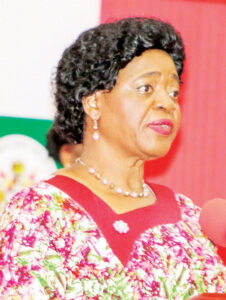
First Lady Monica Chakwera is the ambassador for tuberculosis (TB) in Malawi and the Southern African Development Community (Sadc).
On several occasions, she has demonstrated her zeal and determination to see Malawi end TB by 2030.
She has recently convened a series of high-level media, education and private sector engagements aimed at fostering collaboration to amplify the voices of TB patients and survivors in Malawi.
As a TB ambassador, the First Lady has prioritised patient-centred approaches to TB services.
- Advertisement -
She is also proactive, not reactive, when it comes to emerging issues affecting the health sector, particularly those impacting vulnerable women and girls.
Chakwera is always mindful of the fact that 80 percent of Malawi’s population resides in rural areas, where TB disproportionately affects vulnerable groups.
Therefore, there is an urgent need to ensure services reach these communities.
Tellingly, her latest action and call for increased domestic financial support in the fight against TB speaks volumes about an agile ambassador who cannot afford to be complacent in her duty.
- Advertisement -
- Advertisement -
She avoids a situation where Malawi is caught off guard by the impacts of devastating global decisions, policies, and actions.
On Friday, January 31, 2024, she presided over a high-level multisectoral engagement on TB in Lilongwe.
While addressing the gathering, she emphasised the urgent need for sustainable local funding for TB prevention and treatment services.
Her statement caught the attention of many media representatives who attended and covered the event for their respective outlets.
“Collectively, we need to act with urgency and commitment, investing in resources that can help end TB by 2030. This will require the private sector and other stakeholders to mobilise funds domestically,” Chakwera said.
She specifically spoke within the context of the recent executive orders issued by the 47th President of the United States (US), Donald Trump, which have directly affected the country.
Chakwera is aware that with the feared closure of the United States Agency for International Development (USAid), Malawi has suffered a significant blow and the country cannot afford to remain idle in the face of such a shutdown.
Trump has issued several executive orders, rescinding many of the previous administration’s actions, withdrawing the US from the World Health Organisation (WHO) and the Paris Agreement, among other historical measures, including the shutdown of USAid.
Among many other developmental initiatives, USAid has been supporting Malawi’s National TB Programme (NTP) to combat TB by providing key national-level needs for equipment and transport as well as supporting community-level TB treatment services.
The disease remains a major public health problem in Malawi.
Before Trump’s order on USAid, the international organisation shared NTP’s vision of a TB-free Malawi and worked tirelessly to reduce the morbidity, mortality and transmission of TB until the disease was no longer a public health issue.
USAid was also the largest funding partner for TB control in the country, second only to the Global Fund.
But instead of ‘mourning’ USAid’s exit, Chakwera wore a brave face as she underscored the need for a stronger multi-stakeholder approach to continue fighting TB.
She said Malawi should not, at any cost, lose the recent gains made in the fight against the disease, warning that any slippage would be a painful blow to the country as a whole.
She highlighted the progress made by Malawi in the fight against TB under the Leprosy and Tuberculosis Programme, including the integration of HIV and Aids treatment with TB services, which she said has been crucial.
“Reduced mortality rates, which are currently at 54 percent among HIV-negative people and 60 percent among HIV-positive people, as well as high treatment success rates, are signs that we are doing well in the fight against TB. We need to intensify efforts to completely end the disease,” she said.
HIV remains the most significant risk factor for developing active TB disease in Malawi.
Statistics also show that Malawi has reduced TB-related deaths significantly from 12,000 in 2015 to 5,500 in 2022.
Despite these strides, Chakwera said the fight is far from over and requires concerted efforts from various sectors to eliminate the disease’s burden.
She observed that the fight against TB cannot be won by the health sector alone.
During the event, Chakwera’s call was immediately supported by Deputy Minister of Health Noah Chimpeni who said the ministry is working on increasing domestic resource mobilisation as a way of addressing the heavy reliance on external funding, which accounts for 64 percent of the total health expenditure.
“The emphasis on self-reliance is key to the long-term sustainability of healthcare. As such, there is a need to improve efficiency in healthcare spending and examine areas, including costly referrals outside Malawi,” he said.
Meanwhile, executive director of the Coalition of Women Living with HIV in Malawi, Edna Tembo, has said the recent suspension of US foreign aid will significantly impact efforts to fight TB and other diseases.
Tembo, therefore, called on the government and the private sector to respond collectively to the changes, which have caused a major setback.
Listening to Deputy Programme Manager for the Malawi National TB and Leprosy Elimination Programme, Kuzani Mbendera, it is clear that Malawi continues to make great strides, with the treatment success rate for TB standing at 90 percent on average, as of September 2024.
These are the gains that the First Lady wants the country to preserve.