By Imam Wali:
The sick are vulnerable as they follow any lead that promises good health.
And one Priscilla Zamuthe relates with this.
The 37-year-old woman, who is from Senior Chief Chauma in Dedza District, suffered from cervical cancer in 2021.
It all started with bleeding profusely. In no time, her health deteriorated. Her relatives suspected that she had been bewitched. This created never-ending wrangles among family members.
- Advertisement -
Instead of taking her to a health facility for proper treatment, the relatives opted for traditional healers.
From 2021 to early 2022, they had been to 11 traditional healers but Priscilla’s condition kept worsening each passing day.
“I was producing a smelly discharge and was on the bed for nearly a year. In that period, we went to more than 10 traditional healers in the district and beyond as we thought that I had been bewitched.
“However, my condition did not improve. Every day I could see death,” said the mother of two boys and a girl.
- Advertisement -
- Advertisement -
Finally, her uncle hatched the idea of taking her to Dedza District Hospital.
“When the family had exhausted all the cash, when they realised that their productivity had suffered as they were always on the road and nursing me, the uncle decided that we go to a conventional hospital. After consultations at Kamuzu Central Hospital, where we were referred to from Dedza District Health Office, my greatest fear came true,” Priscilla explains.
In 2019, MacPherson Phiri of Traditional Authority (TA) Malomo in Ntchisi District lost wife Ireen due to failure to take her outside the country due to financial constraints.
He needed over K6 million for diagnosis and related treatment.
Without options, he turned to traditional healers and, unfortunately, Ireen succumbed to cervical cancer in January 2023.
“I still remember my dear wife,” says Phiri, who now has the burden of taking care of his little children alone.
Phiri says sometimes well-meaning loved ones take relatives to herbalists for treatment because of ignorance while, in other cases, others do so out of desperation.
The burden of cervical cancer in Malawi is alarming despite that it is preventable and treatable when detected early.
According to statistics, 40 percent of cervical cancer patients in the country present themselves to healthcare service facilities when the disease is at an advanced stage.
The problem is that the majority of these people come from rural communities. Cervical cancer is claiming the lives of eight people every day.
No wonder, the World Health Organisation (WHO) indicates that Malawi is leading in cervical cancer deaths in the world, with a mortality rate of 51.5 per 100,000.
In 2020 there were 4,145 new cases detected and 2,905 women died.
The data indicate that 37 percent of all new cancer cases in Malawi are cervical, with two-thirds of all cases end up dying.
If not controlled, the cancer burden is likely to retard Malawi’s progress towards achieving Sustainable Development Goals (SDGs) on health, notably targets 3.4 and 3.7— which stipulate that “Most African countries should have: Human Papilloma Virus (HPV) vaccination programmes, national cancer registries, routine cancer screenings, education on cancer and associated health risks, developed palliative care systems, oncology as a specialty in medical schools, better access to chemotherapy drugs and improved pathology capacity”.

To mitigate the burden of cancer, the Ministry of Health has intensified preventive measures through routine vaccination against HPV among girls aged nine years, the provision of hepatitis vaccine to people at risk, screening services for cervical cancer in health facilities, according to spokesperson Adrian Chikumbe.
Chikumbe observes that lack of a cancer centre is negatively affecting the fight against cervical cancer as the country continues to lose lives and is spending K2.25 billion annually through referrals for cancer patients abroad, out of which 50 percent goes towards cancer patients.
However, the completion of two cancer centres— one by the government at Kamuzu Central Hospital in Lilongwe and a private one in Blantyre owned by Dr Thomas Mpinganjira, who lost his wife to cancer and through a joint venture between Thomson and Barbara Mpinganjira Foundation (TBMF) and Luxembourg-headquartered OMCC Group has given Malawi what is now called International Blantyre Cancer Centre— is an indication that the dark clouds may not linger for long.
The centre will be the first dedicated cancer treatment facility in the country and will also serve as a referral centre and provide radiotherapy and nuclear medicine services, which are currently unavailable in the country.
The centre will be handling around 2,000 cancer cases per year, thereby addressing one of the country’s more crucial constraints in the provision of health services.
However, according to the 2022-26 strategic plan, Malawi needs $74,474,582.00 to win the fight against cancer.
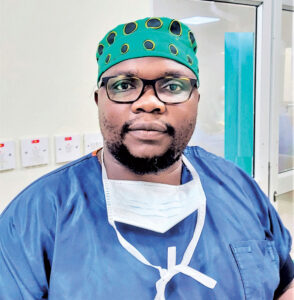
Oncologist at Queen Elizabeth Central Hospital (Qech), Dr George Chilinda, says cervical cancer continues to pose significant public health challenge in Malawi and many other low and middle-income countries.
“Despite efforts to improve its prevention, screening and treatment, Malawi has the highest incidence and mortality rates of cervical cancer globally. It’s especially heartbreaking to learn that cervical cancer is the leading cause of cancer deaths among women in the country,” he said.
He says in 2020, cervical cancer accounted for 37 percent of all new cancer cases among females. It is estimated that 4,145 new cases and 2,905 deaths from cervical cancer were registered in 2020, an increase from the 2012 statistics of 3,684 new cases and 2,314 deaths from the disease.
Chilinda says Malawi is taking the right steps, citing the development of a strategic plan that feeds into WHO’s goals.
“We are fortunate to have partnered with several organisations such as MSF, Partners in Health, Baylor Tingathe Project, PSI, Macro and others to address the issue at hand by focusing on screening and providing early diagnosis, access to effective treatment, and healthcare services, to make a significant difference in the lives of those affected.
“Although there are gaps in the system, we are determined to address them and make our strategic plan a resounding success. Together, we can make a positive impact and improve the lives of many,” he pointed out.
He says, as part of efforts aimed at keeping cervical cancer at bay, the gynecological oncology unit at Qech performs surgeries on at least eight cases of cervical cancer and related diseases every week.
Meanwhile, Malawi Health Equity Network Executive Director George Jobe has suggested that the government must increase investment in cancer prevention and control, rather than dealing with the consequences.
“It is good that, finally, the burden will be eased as a cheaper private cancer centre has been opened in Blantyre. If the government opens its cancer centre shortly, the situation will improve for the better,” Jobe points out.
Speaking at Madimba Ground in Likoma District during commemorations marking National Community Health Day last year, President Lazarus Chakwera called on girls aged between nine and 14 years to get HPV vaccine to prevent cervical cancer.
“This vaccine is available for free in all public and Christian Health Association of Malawi health facilities for girls between the ages of 9 and 14 and it is administered once in one’s lifetime.
“I, therefore, ask all mothers and caregivers to support these young girls to get vaccinated. It is in the interest of my government to foster development and health for all people of all ages regardless of age, race, ethnicity or religion to ensure that we build a better Malawi with healthy people,” Chakwera indicated.
This could help Malawi meet targets set by WHO, which set the 90-70-90 targets to be reached by 2030.
This means that 90 percent of girls should be fully vaccinated with HPV vaccine by age 15, while 70 percent of women are screened with a high-performance test by age 35, and again by 45 years of age, and that 90 percent of women identified with cervical cancer should receive treatment (90 percent of women with pre-cancer treated; 90 percent of women with invasive cancer managed).
The country’s 2019- 2029 Cervical Cancer Strategy Plan aims to improve primary and secondary prevention (through HPV vaccination and self sex education, as well as screening and treatment on precancerous lesions) and tertiary treatment to reduce the incidence of the disease and improve outcomes for Malawi’s girls and women.
However, planning is one thing while doing things as planned is yet another thing.