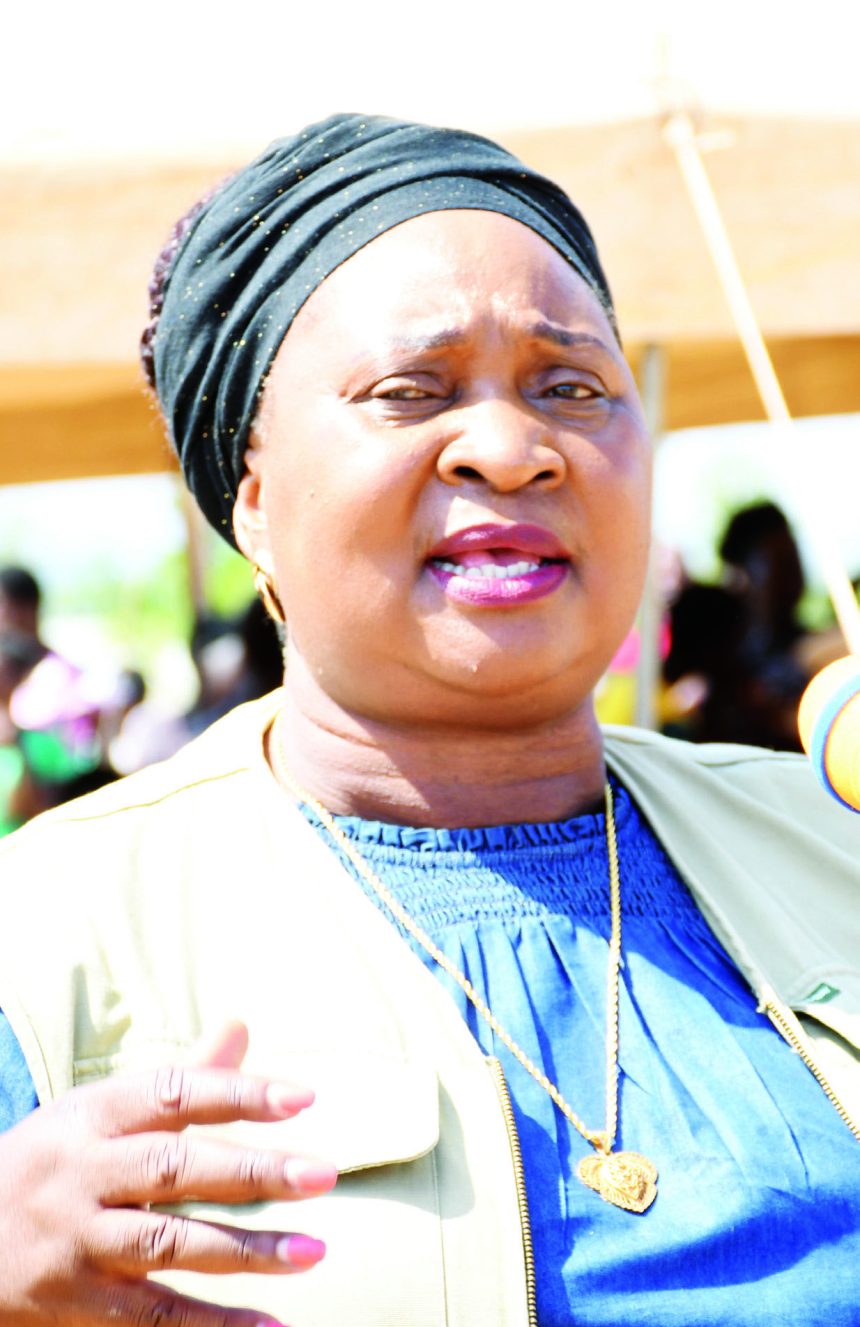
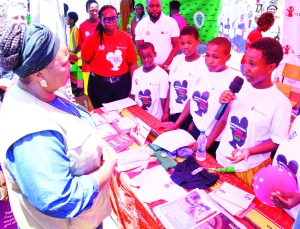
As, one by one, girls from all walks of life descended on Chiwembu ground, Traditional Authority (TA) Nthache, in Mwanza District during the morning of Friday, October 18, one could not miss the sense of optimism in their eyes.
As if to further buttress their intent to—with the help of parents, guardians, community members, State, non-State actors, development partners and other stakeholders— sweep all obstacles in their way, some of the girls chanted “Musandisokonezere Tsogolo Langa [do not disrupt my future]” at every turn.
Placards in hand, they could not wait quietly for the arrival of Minister of Gender, Community Development and Social Welfare Jean Sendeza, who was the guest of honour.
Instead, they paced back and forth on the stretch between the ground and the site where members of the Police Brass Band had parked their bus, some 142 metres from the venue, while waiting for Sendeza to arrive and join her in a solidarity march to Chiwembu ground.
All of them were in TA Nthache’s area to be part of ‘2024 International Day of The Girl Child’ (IDGC) activities as well as witness the launch of the ‘Ending Child Marriage Strategy’.
- Advertisement -
The theme for this year’s IDGC is ‘Girls Vision for The Future’.
When Sendeza finally arrived at the spot where Police Brass Band had parked its bus, the atmosphere was electric, with Gule Wamkulu, girls and other traditional dancers clamoring for attention.
It was, of course, girls who outshone the rest
After all, it was their day.
- Advertisement -
- Advertisement -
It all started with Sarah Noah, 24, who encouraged girls not to give up on their dreams.
Noah, from Muwanga Village, TA Kabudula, in Lilongwe District, said she once faced an obstacle that nearly derailed her education goals.
“I am one of the girls that gave birth at a tender age.
“However, I did not give up on my dreams such that through interventions by Girls Empowerment Network and others, I went back to school. I am now a first-year student who is studying for a bachelor of science in mathematics and chemistry,” said Noah, who is pursuing her studies in Zomba.
She said this meant girls could overcome adversity and stay on course to meeting their dreams.
“Do not give up, girls; do not give up,” she surmised.
For motivation, the girls did not look farther than Noah and Joyce Chitsulo, who is the lawmaker for the area [Mwanza West].
“I am the first female parliamentarian for the constituency.
“Traditional leaders, community members and other stakeholders felt that they had tried male parliamentarians, with mixed outcomes. They, therefore, gave me a chance, supported me, and I made it to Parliament.
“Together, we are promoting girls’ education through the construction of community day secondary schools and other facilities. The only challenge is that we need boarding facilities so that girl students should not be covering long distances to school. It is my hope that the Minister of Gender, Community Development and Social Welfare [Sendeza] will help us source funds for such initiatives,” Chitsulo said.
“Just last week, the Government of Malawi was signing an agreement with the European Union (EU). I understand that the agreement has a provision for support to the education sector. We can use such funds to construct boarding facilities for girls in community day secondary schools as well as secondary schools,” the parliamentarian said.
Her sentiments were in direct reference to what happened on Thursday last week, when the EU resumed budget support to Malawi after about 12 years of holding it back.
This followed the signing of a €55 million (about K107 billion) programme.
With a total value of 55 million Euros, of which 50 million Euros is allocated as direct budget support over a 30-month period, the new EU budget support programme aims to enhance efficiency, effectiveness and quality in the delivery of secondary education services.
On her part, Sendeza said the government was doing everything in its power to ensure that girls were being provided with a conducive environment in which they could set goals and meet them.
She was quick to say for girls to stay focused, they needed parents’ and guardians’ untiring guidance.
“Parents and guardians must not take their eyes off girls but continue to guide them towards the right path. One of the ways of doing that entails monitoring the time that girls come back home from their endeavours.
“It also entails ensuring that girls are not being exposed to harmful materials such as pornography. With the proliferation of mobile phones and easy access to the internet, it is easy for harmful materials to land into girls’ hands. It is everyone’s responsibility to protect them from harm,” Sendeza explained.
The minister also warned girls not to share pictures of their private parts with anyone, saying the country was losing girls to suicide after such nudes leak on social media.
“Those who are committing suicide get so distraught after the leakage of their nude pictures in mobile phones and the internet that they feel that suicide is the only way out. This is concerning.
“Let me ask girls not to share nude pictures with anyone, including those who sell such pictures abroad. Let me also warn those that are perpetuating the practice that the law will take its course,” Sendeza said.
She was quick to say Malawi is, in line with Sustainable Development Goal 5 on Gender Equality, doing its part to create an enabling environment for the empowerment and protection of girls.
Sendeza said the country was also aligning its efforts with the African Union’s Agenda 2040: The Africa We Want for Children.
Speaking about the launch of the strategy, she describes it as a call to action for all government ministries, departments and agencies as well as development partners to play an active role in ending child marriages and advancing the cause of gender equality.
Sendeza emphasises that a multi-sectoral approach is the way to go in achieving national and international goals including eliminating harmful practices against children, ensuring quality education and providing a safe environment for girls to realise their full potential.
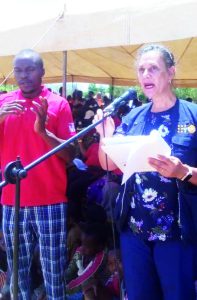
Weighing in on the issue, United Nations Population Fund Representative Nelida Rodrigues said International Day of the Girl Child unites the United Nations, development partners and all stakeholders as they renew their commitment to creating a brighter future for girls everywhere.
“This year’s theme, ‘Girls’ Vision for the Future’, challenges us to truly listen to girls and invest in proven solutions that accelerate their progress towards a future where every girl can realise her full potential. This theme speaks powerfully to the idea that to save a girl is to save tomorrow—because when we save the girl child, we safeguard the future of generations.
“A world where girls thrive is a world where humanity thrives. Girls are the bedrock of our communities; they are a force of nature, entering this world with the unwavering resolve: ‘Watch me grow! I am capable!’,” she pointed out.
“Her voice is indispensable to our collective progress, to the liberation of all people from age-old and intersecting oppressions. She climbs mountains, defies expectations, and boldly declares to the world: ‘I am more than the traditions that seek to define me. I am not a passive recipient of customs—I am part of reshaping them’. She envisions a world where differences are embraced, not ranked, where she and her brothers are equals, free to play, learn and be fully valued for who they are.
“Yet, the playground of life is far from level. The rules remain stacked against her, and her climb is steep and fraught with obstacles. Traditions still clip her wings, and her fundamental rights remain fragile—subject to regression and backlash,” she added.
Rodrigues was quick to say the girl child is strong and resilient.
She added that what the girl seeks “is not too much to ask—a childhood free from harm, free from imposed definitions, a chance to become who she truly is. Her uphill journey is hers to conquer, and she will not accept outdated answers. She is spreading her wings, ready to soar”.
Rodrigues assured girls that they are not alone in their journey as their journey was humanity’s journey, such that no one was free “until all of us are”.
“Her chains bind us all, for we are her human family. Freedom is a sacred birthright of every human being. It is the air we all need to breathe, to grow, to become. Freedom is indivisible; it cannot be parcelled out. If it is not expanding, it is shrinking. To secure freedom, we must be bold enough to question what isn’t working.
“The girl child is every one of the 180,000 girls born today around the world, each with a heart ready to chart her own course. Are you with her? Today, we embark on a journey—a long walk to freedom—for ourselves and for the world’s girls,” Rodrigues said.
She then commended the Government of Malawi on another milestone in the journey; namely the launch of the revised Ending Child Marriage Strategy.
“This vital strategy underscores Malawi’s commitment to eliminating child marriage and is fully aligned with the global framework, including the 2030 Transformative Agenda and the ICPD25 commitment to zero child marriages by 2030,” she said.
Now that the policy has been launched, it can only be hoped that State, non- State actors, corporates and development partners will put hands to the wheel, ensuring that the road to the girl child’s future is paved.