
In our first article on this subject three weeks ago, we shone the light on the evolution of carbon markets globally and carbon project development and implementation in Malawi. In this article, we zero in on two carbon project developers to explore the performance of Malawi’s carbon projects and the potential of Malawi having lost out substantially on the projects
By Charles Mpaka:
In February 2014, the Environmental Affairs Department approved C-Quest Capital Malaysia Global Stoves Limited and Total Land Care project for distribution of clean cook stoves in Malawi. C-Quest describes itself as a “social impact project developer” with a mission “to transform the lives of families in vulnerable communities around the world”.
It achieves this, it says, “by providing access to sustainable energy services and clean energy technologies that reduce greenhouse gas emissions, combat global climate change and improve the health of those in need.”
In 2008, an Irish carbon project developer, Hestian Limited, had entered Malawi to promote use of locally-developed improved cooking stoves that would replace the traditional three-stone stoves.
- Advertisement -
“Our goal is to achieve greenhouse gas emission reductions and strengthen sustainable development through carbon finance projects – effectively we get paid via the carbon credit system to provide a reduction in greenhouse gases,” Conor Fox, Director and Co-founder of Hestian, told the Irish Times in February 2014.
Traditional three-stone cook stoves which are widely used in Africa are found to inefficiently consume large amounts of wood.
Through Hestian and C-Quest projects, Malawi would see the marketing and adoption of improved cook stoves that require much less quantities of wood, leading to less deforestation and reductions in carbon dioxide emissions.
A United Nations Framework Convention on Climate Change (UNFCC) document on the C-Quest programme says the new stoves would be distributed on a commercial and a non-commercial basis.
- Advertisement -
- Advertisement -
“Carbon finance will be used to facilitate the purchase, distribution and marketing of stoves and renewable biomass fuels, so making these products more affordable to users; without carbon finance, these activities would not take place,” it says.
Malawi has been involved in carbon trading for more than a decade now with C-Quest Capital and Hestian among the trailblazing firms to develop and implement carbon projects through distribution of improved firewood cook stoves.
By promoting use of these cook stoves, Hestian and C-Quest have been generating carbon credits which they can then sell to buyers looking to offset their own emissions.
We sent inquiries to both Hestian and C-Quest through their email addresses and phone numbers as provided on their websites.
We wanted to know the total number of improved cook stoves they have distributed, the total carbon credits their stoves have generated, revenue realised from those credits and the amount of this carbon finance that has gone to cook stove users.
For months now, we have not received any response from either of them.
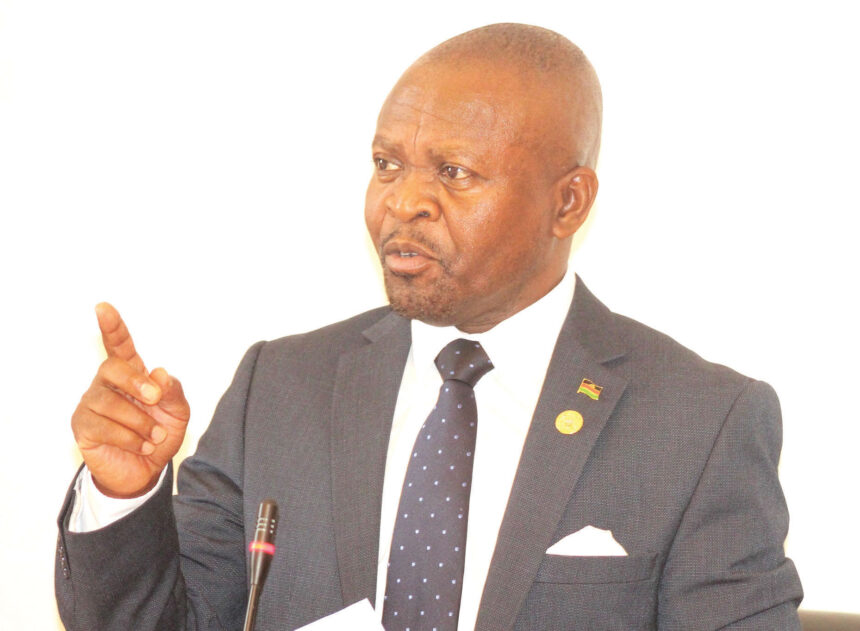
However, Minister of Natural Resources and Climate Change Michael Usi says the two firms started their projects under Clean Development Mechanism (CDM) – a carbon offset scheme that allows access to finance by developing nations from developed countries to support clean energy and other projects.
He says Malawi registered 11 projects under CDM and accessed about $40 million for socio-economic development.
In what is an admission that government cannot properly account for the volume of credits and revenue generated under the schemes, Usi says: “This was the time when the government had no proper systems and procedures in carbon trading. This made reporting and declaration of carbon credits difficult.”
Government has just developed guidelines for development of carbon projects going forward.
“We have embarked on a journey to formalize and transition their respective projects into carbon trading. This will enable both parties [Malawi and the carbon developers] to benefit from the projects as a result of revenue generated,” Usi says.
He says Hestian recently declared 1.5 million credits, which are now being auctioned on the international market. Malawi stands to gain more than $1.8 million from the sale of these carbon credits.
“In addition, once C-Quest project is finally approved, it means about $20 million will be realised as revenue from the sale of carbon credits generated and sold,” Usi says.
About the impact the projects have had on lessening deforestation, he says “we believe they help in reducing the overreliance on natural resources especially wood”.

We discussed the subject with Ramzy Kanaan, Manager of the USAID and UKaid co-funded Modern Cooking for Healthy Forests (MCHF) project.
He says it is disappointing that carbon project developers operating in Malawi have been unable or unwilling to report transparently and accountably on the number of stoves distributed, the credits generated and the value at which they were sold and the extent of reinvestment in Malawi.
He also says if government is not able to provide a definitive response on carbon revenue generated, it likely means it does not have a clear idea on the number of stoves distributed by each developer, the number of carbon credits generated, or the value of the credits sold.
Kanaan acknowledges the steps which the government has taken recently to develop regulations for carbon projects development. But he suggests Malawi has likely incurred massive losses in revenue in the years it has not had a regulatory framework in place.
“While it is important for government to benefit financially from carbon finance, it is also important that it understands the big picture to ensure the developer, the government and the user (the one actually responsible for the emission reduction) are benefiting equitably.
“So, if a carbon project developer reports to government that they have generated 1.5 million credits, government would still need to understand the value of these credits, as well as the costs involved in distributing the improved cook stoves to know if the distribution of carbon revenue is equitable. And this can only be achieved with consistently transparent and accountable reporting,” he says.
Kanaan says carbon offsets are “very literally the only commodity that is produced in Malawi, and exported from Malawi, without the government, having any information on the quantities, produced and exported, and for which government has had no without the ability to generate any revenue.”
In recent years carbon offset schemes have been facing criticism for exaggerating their contribution to carbon emissions reductions, for being basically pollution permits for wealthy countries and for exploiting people who are at the coalface of emissions reductions activities while brokers reap the benefits.
One of most recent critical perspectives has come from researchers at the University of California Berkeley in the United States of America.
In their study, ‘Pervasive over-crediting from cook stove offset methodologies’ published in Nature Sustainability journal in January 2024, the researchers criticize the projects for making inaccurate estimations of their emission reductions, for instance.
However, carbon project developers including C-Quest and Hestian, have stood up against such criticism.
For instance, in a rather acerbic reaction published in September 2023 to the preprint version of the study, C-Quest and 10 other carbon project developers described the research as “misguided and threating to critical funding for clean alternatives to solid fuel stoves”.
In their open letter, they accuse the researchers of basing their analysis on unsubstantiated assumptions and relying on unrepresentative sampling of cook stove projects.
Kanaan, however, faults the signatories for altogether avoiding the issues of transparency and accountability and the issue of equity in benefit sharing
“Reflecting on my experience in Malawi, users— the ones actually reducing emissions — have benefited minimally from carbon finance, while the carbon project developers promoting improved firewood cook stoves have enjoyed the majority of the “benefits of carbon finance,” he says.
Kanaan argues that sorting out these issues will enable Malawi’s carbon projects partners to deliver sustained climate change mitigation, environmental and health impacts.
In the last article of this series, we will explore Malawi’s potential in forest carbon finance.