By Rogers Siula:
At Mbande Primary School in Karonga, a student-led initiative is improving hygiene and sanitation practices both within the school and in surrounding communities.
The Water, Sanitation and Hygiene (Wash) club, established with support from non-governmental organisation Self Help Africa, has become a model for change, enhancing the school’s environment and encouraging behavioural shifts at home.
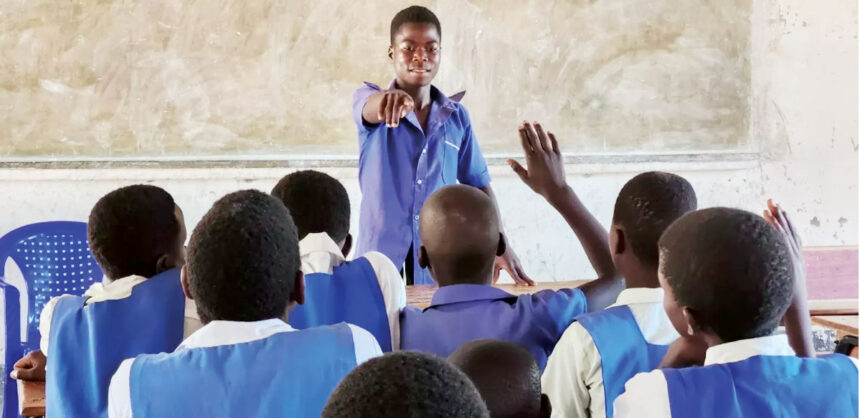
Chairperson of the Wash club, Gladson Kaunda, 15, reflects on the group’s impact.
“We meet every Monday. Since the club was founded, our school and homes have become cleaner and healthier. We were provided with buckets, soap and sanitary pads to promote good hygiene practices,” Gladson says.
- Advertisement -
One of the club’s key achievements has been advocating for improved sanitation facilities at the school.
“Through our efforts, we persuaded the school committee to construct more toilets and provide sanitary spaces for adolescent girls,” Gladson, who is in Standard 8, explains.
The influence of the Wash club extends beyond infrastructure.
Members have adopted habits such as regular hand washing with soap, cleaning their surroundings, responsibly disposing of waste and drinking water from treated sources.
- Advertisement -
- Advertisement -
These changes have become routine for the students, according to Gladson.
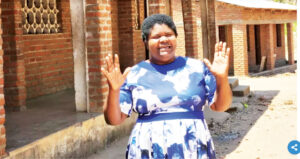
Headteacher of Mbande Primary School, Chimwemwe Mhango, is particularly proud of the club’s accomplishments.
She notes that the proactive behaviour of the Wash club has had a ripple effect, making the school a model for neighbouring institutions.
“Previously, absenteeism due to waterborne diseases was a major issue. But now, that is all in the past. For the first time, the school has recorded its highest pass rate in the recently released primary school leaving examinations,” Mhango says.
She attributes this success partly to the students’ improved health and understanding of disease prevention.
The collaboration between the school, the learners and the local communities has been crucial to the success of the Wash initiatives.
Health officials have provided support, sharing valuable information and resources to emphasise the importance of good hygiene.
“Information is power and prevention is better than cure. We are committed to maintaining this momentum for long-term change,” Mhango says.
Mbande Primary School serves a large catchment area, including the villages of Murwa, Mwenitete, Mwankenja and Mwangonde.
The influence of the Wash club extends to these villages, where local health committees have actively promoted clean water and hygiene practices.
In Mwankenja Village, the local health committee has been conducting door-to-door water chlorination campaigns to ensure that households have access to safe drinking water.
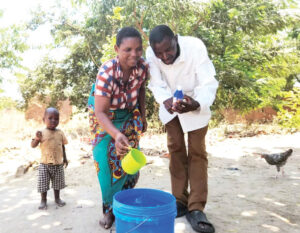
Chairperson Mbasakile Mwafulirwa explains that the initiative began in November 2023 and continues to be carried out twice a month.
“We visit 65 households in our area, and I am pleased to report that we have not had a single cholera case in the past year,” he says.
These community efforts are part of a larger project funded by Unicef and the United States Agency for International Development’s Bureau for Humanitarian Assistance.
In collaboration with Self Help Africa, they have implemented a cholera prevention and preparedness programme in Karonga.
The district council has received support to carry out comprehensive water treatment and promote Wash practices in schools and communities.
As a result, Mbande Primary School and its surrounding villages have become healthier and more resilient to waterborne diseases.
“Together, we are building a healthier future,” Mhango concludes, expressing optimism for the continued success of the Wash initiatives at her school and beyond. —Unicef