




By Patience Lunda:
Children, some as young as four years, take turns to solve mathematical problems on tablets at Mwambazi Primary School in Nkhata Bay District.
Save for the occasional outpouring of emotions after getting one mathematical problem or the other right, the scene is silent and still.
Not all learners are engrossed in solving mathematical problems, though; others are busy studying Chichewa, one of the vernacular languages in Malawi.
Learners there consider themselves lucky for getting acquainted with information, communication and technology (ICT) gadgets at such a tender age.
- Advertisement -
Their parents were not as lucky.
Not everything is rosy, though, as poor infrastructure has been cited as one of the factors hampering access to ICT services in schools such as Mwambazi.
Shortage of solar panels and electronic gadgets has been cited as the other exacerbating factor.
Officials from Organisation for Sustainable Socio- Economic Development Initiative (Ossedi), which is supporting the Malawi Government in implementing the Building Education Foundation through Innovation Technology (Befit) initiative, made the observation at a Befit Open Day Event.
- Advertisement -
- Advertisement -
They held the event at Mwambazi Primary School in Nkhata Bay District on Monday.
The Government of Malawi, through the Ministry of Education, initiated the Befit programme to enhance foundational literacy and numeracy skills for all learners in primary schools, particularly in classes one to four, nationwide.
Ossedi is supporting programme activities in Nkhata Bay and Nkhotakota districts using financial support from Imagine World Wide, VSO and One Billion.
Ossedi Befit Programme Manager Mian Mpesi said the project is being rolled out in phases and the next phase will target schools which will be renovated under the project.
“We want, by 2029, to reach out to all schools in the two districts,” she said.
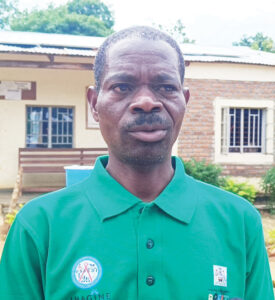
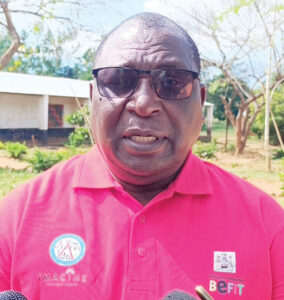
On his part, Mwambazi Primary School Head teacher Morson Banda said the programme has reduced cases of absenteeism of learners and improved literacy and numerical skills among learners.
“However, we face internet challenges, such that it is difficult to send data to district coordinators who are helping us implement the programme.
“Otherwise, the tablets that learners are given have helped to improve education outcomes,” he said.
Nkhata Bay District Commissioner Rogers Newa said they were committed to ensuring that challenges that learners and other stakeholders are facing are addressed.
“We will also advocate for the renovation of schools to ensure that all of them benefit from the Befit programme and other ICT-related initiatives,” Newa said.
Through the Befit programme, learners are given tablets where they learn supplementary lessons for a duration of 30 minutes.
The Befit programme, which began in 2023, has already reached 29 schools in Nkhata Bay District and operates in 18 districts nationwide.
Malawi is not the only country that is promoting the initiative.
Unesco, in an article titled ‘ICT Transforming Education in Africa’, indicates that ICT is key to the development of the continent.
Launched in 2015, its ICT Transforming Education in Africa Project has been lauded for fostering human and social development in African countries through the use of ICT for education.
The beneficiaries of the project are teachers and students, primary and secondary public schools, higher education institutions, policy-makers, educational administrators and leaders. It is part of the Unesco-Korea Funds-in-Trust cooperation.
The project aims to promote and achieve digital pedagogical transformation through ICT-enhanced school models; improve teachers’ competences and confidence on the pedagogical use of ICT; and facilitate the development of national ICT in education policies and master plans and knowledge-sharing.
It also seeks to align with Education 2030 and national education development priorities to maximise synergies with other key stakeholders in education systems; ensure country ownership by establishing project teams led by education ministries and formed with key implementing agencies.
The first phase of the project was implemented in Mozambique, Rwanda and Zimbabwe from 2016 to 2019.
The second phase of the project is being carried out in Côte d’Ivoire, Ghana and Senegal from 2020 to 2023.
“During the first phase of the project, the country teams of each beneficiary country designed an intervention plan to be delivered through corresponding project activities, based on national needs and priorities,” the report says.
And, from the look of things in Nkhata Bay and Nkhotakota districts, Malawi is on course to registering success, albeit facing internet connectivity challenges.