In Chikwawa, cattle are a familiar part of the landscape, often seen roaming freely across open fields, village paths and even along main roads.
This free-range system has long suited local communities, especially with indigenous breeds that are resilient and well adapted to the heat and sparse grazing of the Shire Valley.
However, as more farmers adopt improved breeds valued for higher milk yields and faster growth, questions arise about whether this traditional system still serves their best interests.
Unlike the hardy local breeds, improved cattle are more susceptible to heat stress, disease and poor nutrition.
Allowing them to roam freely, exposed to ticks, unreliable forage and the risk of injury or theft, can quickly undermine their productivity.
- Advertisement -
For John Meleka, however, an unusual aspect of cattle rearing persists.
An elder in the Zambezi Apostolic Church, Meleka breeds cattle as his grandfather did—through natural mating. He does not believe in artificial insemination (AI).
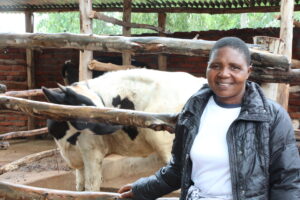
Just across a dusty footpath cutting through Mthumba Village, 43-year-old widow Zikomo Loga has embraced AI, transforming her farm into a model of modern dairy success.
Two neighbours, two worldviews, yet the distance between them seems to be narrowing.
- Advertisement -
- Advertisement -
“I believe breeding is God’s work. Artificial insemination interferes with His design. That is not our way,” Meleka says from the veranda of his sunbeaten house.
For him and others in his church, injecting semen from a distant bull is unnatural and borders on spiritual defiance. The doctrine discourages altering God’s creatures, a belief passed down through generations.
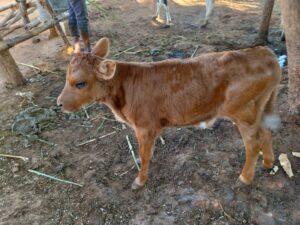
Yet he is not blind to the challenges. His ageing bull is less active and one of his cows has failed to conceive multiple times. Calves are fewer and weaker.
Still, he remains hesitant. “Those who rush to new things may see short-term gains, but at what cost to the soul?”
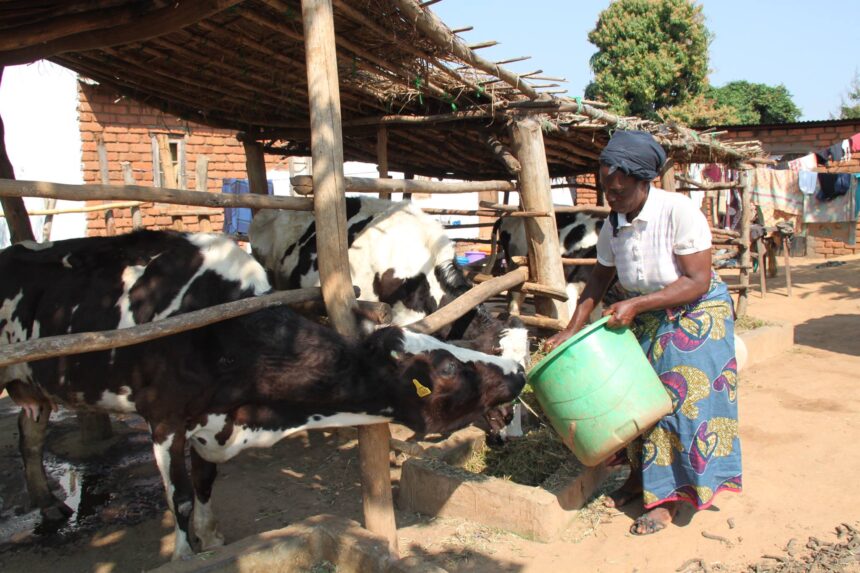
Meanwhile, across the footpath, Loga’s kraal hums with life. Her cows are large, healthy and productive.
She points proudly to a Friesian-Holstein cross, its sleek black-and-white coat shining in the sun. It produces up to 12 litres of milk a day, about four times more than her indigenous breeds.
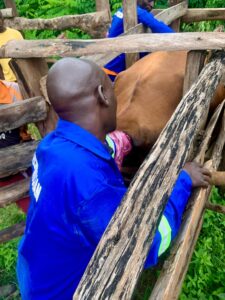
“This one is from artificial insemination, born from semen brought by a technician from the National Artificial Insemination Centre [Naic] at Mikolongwe in Chiradzulu,” Loga explains.
After losing her husband, she faced the burden of raising three children alone. She joined a cooperative linked to an agricultural NGO, where she received training in AI and dairy management.
The experience changed her life.
“At first, I was afraid. People said the calves would not have souls or would not live long. But I prayed. I asked God for wisdom. And I saw that knowledge is also a gift from Him,” she recalls.
Today, Loga sells milk to a processor, supports her children’s education and also trains other women in livestock care and the basics of AI.
Not everyone approves. “Some say I am trying to act like a man. Others whisper that I have abandoned tradition. But my family eats and we survive.”
The winds of change are blowing through the village. Even Meleka is beginning to take notice.
“I see her cows. They are strong. She has done well. Maybe this is something to ask more about,” he says with a sheepish smile.
Although little documentation exists on the influence of culture and religious beliefs on livestock production, particularly AI, agriculture authorities in other parts of Malawi point to this as a factor.
Last year, Mzuzu Agriculture Development Division’s Programmes Manager, Thomas Chigowo, attributed the slow growth of beef production in Rumphi, Mzimba and Nkhata Bay to reluctance to adopt modern breeding methods.
Chigowo highlighted the low uptake of AI as a contributing factor in a division with a combined beef cattle population of just over 400,000, one of the lowest per capita in the country.
“Some farmers are reluctant to use AI due to cultural values and other beliefs, which need to be addressed,” he said.
Emmanuel Mponya, an animal specialist with the Transforming Agriculture Through Diversification and Entrepreneurship project, also acknowledged the impact of beliefs on livestock production.
“Some farmers regard artificial insemination as taboo and that is affecting its adoption even in areas where the service is available,” Mponya said.
Back in Chikwawa, 73-year-old Joseph Msaka, once sceptical of AI, recognises the change and insists there is no need to remain anchored in the past.
Msaka believes the church should help people live better lives, not hold them back.
“We respect our elders and their beliefs, but we also see the changes. Improved cattle breeds bring more milk and more money,” he says during a meeting where an NGO is distributing cows to a cooperative.
An agricultural extension officer, speaking off the record due to the sensitivity of the matter, has observed a pattern.
“Religious beliefs, especially among Apostolic and Zionist sects, have long hindered AI adoption. But now that we are involving chiefs and church leaders in training, they are beginning to listen,” she says.
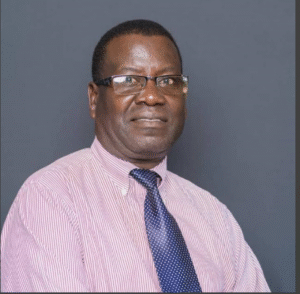
Herbert Chagona is a prominent figure in Malawi’s dairy industry and admits that dairy farming has never been easy despite technologies aimed at improving production.
Chagona, who is also National Coordinator of the Malawi Milk Producers Association, expresses satisfaction at what he describes as signs of progress.
Much of that progress, he believes, can be credited to better breeding, particularly the increased use of AI.
“We have been focusing more on AI because it helps us improve the breeds of our animals. With better animals, we are seeing better milk yields. It is not a massive jump, but compared to five years ago, production has improved,” he says.
Support from government initiatives such as the Agriculture Commercialisation project is said to have made a difference.
Through grants, many farmers have been able to purchase improved animals or expand their herds, which has helped accelerate AI adoption.
However, Chagona is quick to point out that better breeding is only part of the puzzle. Serious challenges remain, especially in feeding the animals, he argues.
“Feed is our biggest headache. Because of climate change, we are struggling to grow enough. Sometimes, the cost of feed and drugs is more than what you earn from selling the milk,” he explains.
According to Naic Coordinator Fatima Kazembe, AI is rapidly becoming a cornerstone of modern cattle production.
“With AI, cattle production is greatly improved. It uses fewer breeding bulls compared to traditional practices, resulting in higher productivity and increased milk yield,” Kazembe says.
She also views cost reduction as a major advantage.
Kazembe adds that keeping a bull is expensive and can even be dangerous.
“AI eliminates that need. It also allows insemination of cows with disabilities, some of which cannot stand properly, because you do not need a bull to mount,” she explains.
Various reports and information from the Ministry of Agriculture indicate that AI adoption in Malawi remains below five per cent, partly due to limited service availability.
Nevertheless, training sessions such as those provided by Naic are said to be helping farmers manage AI processes within their communities, though success rates remain comparatively low.
“You cannot just drop technology into a village and expect change. It must come with dialogue, respect and trust. That is what we are working on,” the extension worker says.
United Nations agencies, particularly the Food and Agriculture Organisation and the International Atomic Energy Agency, caution that while AI is vital for improving livestock productivity, it should not be viewed in isolation.
They acknowledge the role of cultural and religious beliefs in adopting agricultural technologies.
These agencies underscore the importance of integrating local cultural contexts to ensure successful implementation and sustainability.
Back again in Chikwawa, although Meleka and Loga hold different beliefs, they live in the same community and share a desire for a better future.
This shared hope might bring them closer together.
“I do not judge him. Maybe one day he will see how it works. Maybe he will even try it. That is how change begins,” Loga says.
Even Meleka, who once resisted AI on spiritual grounds, is slowly reconsidering.
“I see her cows. They are strong. She has done well. Maybe this is something to ask more about. I am not yet convinced, but I am willing to listen,” he admits thoughtfully.