
At around 10:00, twelve of us, including the driver, packed ourselves in a seven-seat Toyota Sienta which was leaving Mangochi for Namwera.
After one hour, we disembarked from the Sienta at Idrussi, where my friend and I were to use hired motorcycles to proceed to Maleta, a place on the eastern part of Traditional Authority (TA) Katuli’s area bordering Mozambique.
We arrived at Maleta at around 14:00 with little energy to carry out our task that had taken us to this end of Mangochi.
It was, however, a relief that we had finally reached our destination after travelling on a bumpy road for a while.
We had agreed to pay the motorcycle riders K40,000 each.
- Advertisement -
When we arrived at Idrussi, we did not find our key sources as they had gone to attend a funeral ceremony at a nearby village.
This means we had to spend a night at Maleta or go back to Mangochi without carrying out our assignment.
We agreed that we wait a bit for our sources before we could decide to spend the night there.
As it was getting dark, the two motorcycle riders suggested that we release them by giving them their money for them to go back as we wait for our sources.
- Advertisement -
- Advertisement -
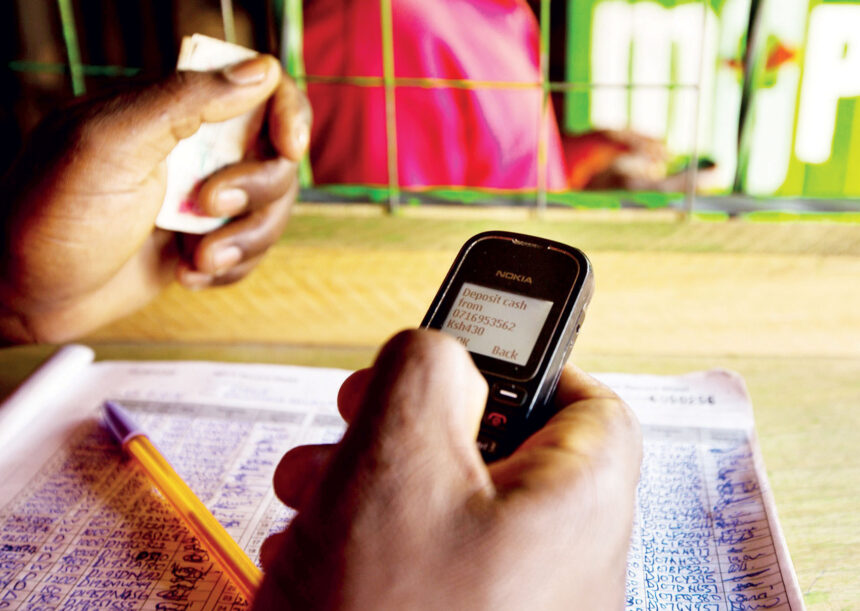
We suggested that we pay them through mobile money.
At this moment, our trouble for the day began.
“If you are thieves, it is not going to work. This is the last day for you to steal from someone. Money is not in a mobile phone; it is in a pocket,” one of the motorcycle taxi riders said.
His name was Fakison Musa.
After an exchange of words, we asked Mussa to lead us to a shop or an agent where we could withdraw our money so that we could pay them for their services.
“The network here is too weak to support a mobile money transaction. Even if we go to the shops, they will not help you because most of them have been duped before,” he said.
We insisted on going to a mobile money booth or shop to try our luck.
We found a shop owner, who said he stopped offering mobile money services for two reasons: unreliable network and cyber theft.
“To transact, I have to move from my shop to a place where network is strong,” he said.
In no time, people started gathering in small groups.
They were speaking in Chiyao, and we could not understand what they were saying.
We realised they thought we were thieves, especially because few days before, they had apprehended a stranger who had firearms.
My colleague decided to disrupt their meetings by asking if they could lead us to a place where we could make a call to TA Katuli or a Mr Magombo.
We walked for about 15 minutes to a place where we found other people sitting on different spots making calls or sending voice notes mostly to their relatives outside the country.
I called Omar Magombo who, through the shop owner, cleared us as not being thieves.
Still, for us to withdraw the money, the shop owner had to deduct 10 percent despite that the service provider was also deducting service fees.
“This is the trend here and other parts whenever we risk our money in these transactions.
“Even for you to buy airtime, you have to add 10 percent on top of its value because we spend a lot of money to go to Mangochi to purchase it,” the shop owner explained.
From the K100,000 that I had transferred into his account, he gave me K90,000.
The Maleta situation is not an isolated one. This is despite that mobile money services have been around for years now.
Official data from the Reserve Bank of Malawi (RBM) and the Malawi Communications Regulatory Authority (Macra) shows that Malawi has over 10.1 million subscribers using mobile money.
A National Payment Systems report for 2023 released by RBM at the end of the first quarter of 2023 indicates that over 288 million mobile money transactions were made, which translated to about K2.5 billion.
However, despite its significance, the mobile money market in Malawi is facing challenges mainly to do with penetration to rural areas and fraud.
According to Macra, an average of K120 million is stolen by fraudsters using mobile money tricks every month in Malawi, hence making the service risky to subscribers.

But the regulator’s director general Daud Suleman says Macra is working with other agencies to make sure the digital economy space is safe for both users and providers.
Suleman adds that Malawi is making headway to ensure that network coverage is available in most parts of the country.
Consumers Association of Malawi Executive Director John Kapito acknowledges that there are a lot of benefits and challenges which the digital economic space has brought on Malawi.
Kapito says the challenges related to fraud, costs of transaction and regulations are among the setbacks which need to be ironed out to make the sector more beneficial.
Minister of Information and Digitalisation Moses Kunkuyu believes Malawi is moving in the right direction in terms of the digital economy.
“We have an understanding with mobile money companies to ensure that their services are available in the remotest parts of the country because we acknowledge that digitalisation is key to Malawi 2063,” Kunkuyu said in an interview.