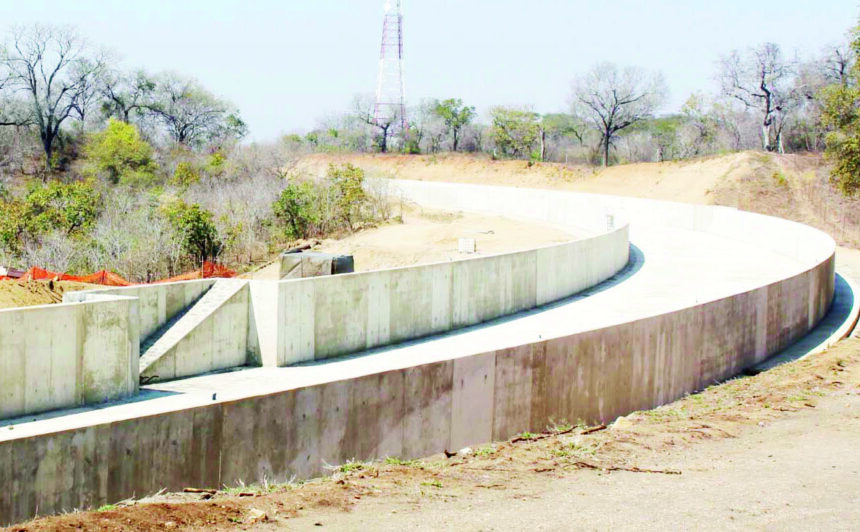
The Shire Valley Transformation Programme (SVTP), once billed as Malawi’s flagship agricultural project capable of transforming the Shire Valley into a commercial farming hub, is facing fresh uncertainty as funding shortages stall critical infrastructure works and force government back to development partners for additional support.
The uncertainty came to light on Sunday when African Development Bank (AfDB) Executive Director for Malawi, Zambia, Botswana and Mauritius, Nalishebo Shebo, toured the project in Chikwawa and signaled that Malawi may need more financial support to complete the ambitious irrigation scheme.
Shebo described the project as “transformational” but acknowledged that changing circumstances, including natural disasters, had forced authorities to revisit designs and costs.
His visit comes at a critical stage for a project that has been in the making for more than a decade and has absorbed hundreds of millions of dollars from international financiers.
The World Bank approved the first major financing package for the programme in 2017, describing it as an agenda to transform Malawi’s irrigated agriculture through the development of a gravity-fed irrigation system covering more than 40,000 hectares in Chikwawa and Nsanje districts.
- Advertisement -
The 14-year programme was scheduled to run from 2018 to 2031.
According to AfDB project documents, the overall programme was estimated at about $563 million and designed to increase agricultural productivity, commercialisation and sustainable natural resource management in the Lower Shire.
Government documents show the programme aims to irrigate 43,370 hectares of land by drawing water from the Shire River at Kapichira and delivering it through a network of canals across Chikwawa and Nsanje.
But nearly eight years after implementation n started, key infrastructure remains unfinished.
- Advertisement -
- Advertisement -
A progress report prepared for Shebo’s visit indicates that construction of Main Canal 1 and Main Canal 2 is only 86 percent complete, with 43 kilometres out of the planned 50 kilometres constructed.
The report says works have been suspended because the project has failed to secure $31 million required to settle outstanding contractor payments.
The same funding constraints have also affected the construction of a water treatment plant expected to serve about 48,000 people in Chikwawa.
The facility was suspended while progress stood at 80 percent.
Perhaps more worrying is the fate of Main Canal 3, which is expected to supply irrigation water to sugar producer Illovo under a commercial water purchase agreement.
The report warns that delays in constructing the canal due to lack of funds could result in Illovo withdrawing from the programme, a development officials say would have serious implications because revenue from water sales is expected to support operation and maintenance of the irrigation infrastructure.
Ministry of Finance Deputy Director Francis Kachule attributed the financing gap to the destruction caused by Cyclone Ana, which damaged infrastructure and forced authorities to redesign parts of the project.
“This gap came to the limelight because we had Cyclone Ana. Infrastructure that was already there was destroyed and it meant revisiting project designs because of the effects of the cyclone,” Kachule said.
He said Shebo’s visit was important because the AfDB board member could help lobby for additional support at the bank.
However, Kachule could not indicate how much additional financing Malawi requires to complete the programme.
The funding challenge is emerging despite significant donor support over the years.
The World Bank approved $166 million for the first phase in 2017, while the AfDB approved a $35 million financing package in 2018.
Other financiers include the OPEC Fund and the Global Environment Facility.
Meanwhile, project records show that nearly 100,000 land parcels have been demarcated, 13 cooperatives have been established, and more than 24,000 cooperative members have received training in commercial farm management.
Off-takers have also been linked to cooperatives to buy crops such as cotton, sesame, groundnuts, beans, rice and mangoes.
Government further expects irrigation farming to commence in October this year at Kambadwe and Mwana-alirenji irrigation blocks, which together cover about 650 hectares.
Will Malawi secure the money needed to finish the project? That is a million dollar question.