
By Imam Wali:
Digitally and electronically-connected, the world is running short of hiding places.
And there is no question that at the heart of the digital and electronic revolution is the mobile phone, which has gained popularity due to its convenience and ease of use, enabling both urban and rural area dwellers to link up without hassles.
To add an icing on the cake, people now transfer money using mobile phones.
Take, for instance, beneficiaries of the government-run Social Cash Transfer Programme (SCTP).
- Advertisement -
Most of them have no bank account, such that they rely on hard cash.
But cash is tricky; it is easy to lose and easy to spend. It attracts thieves as well.
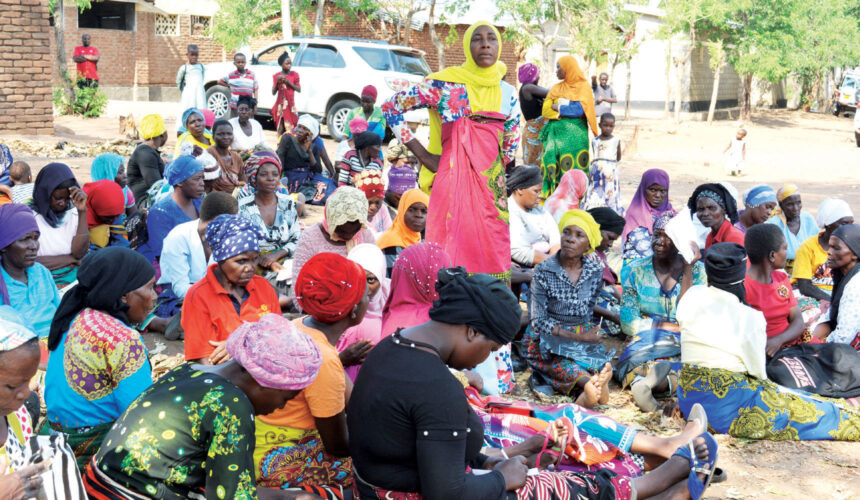
The case in point is that of 46-year-old woman Fatima Bwanaisa, a SCTP beneficiary from Traditional Authority (TA) Kasumbu in Dedza District.
At first, thieves robbed K37,000 from her at knife point.
- Advertisement -
- Advertisement -
In the second instance, she was robbed of K15,000.
“I have been robbed of my Mtukula pa Khomo money several times. These thieves know the dates when we receive SCTP money. They then rob people, with the elderly being most of the victims. After being robbed, I went home empty handed,” she explains.
Dedza District SCTP Desk Officer Emmanuel Khumba says they have, indeed, received reports of beneficiaries being robbed of their cash.
“Such complaints are many, with most of the issues being reported to police. This happens when beneficiaries are on the way home,” he says.
Such cases are not isolated to Dedza District as, when we interviewed SCTP beneficiaries in Balaka, Ntcheu and Nkhotakota districts, they reported being robbed of cash.
To circumvent such problems, some beneficiaries have embraced digital financial services, notably mobile money, thanks to the Ministry of Gender, Community Development and Social Welfare’s decision to be using the system when distributing cash to SCTP beneficiaries in rural areas, where access to financial institutions is a big challenge.
Joyce Nkhwalula of Chikuni Village, TA Matola, in Balaka District is a typical example.
All her cash disbursements are made via mobile money instead of cash, as was the case previously.
“Previously, we were being robbed. It was like we were collecting the money on behalf of thieves. They were waiting for us on the roadside but now cash is transferred directly to my mobile money account. It is convenient. Other beneficiaries also feel safer using digital money instead of having to carry cash around,” she says,” she says.
Nkhwalula and colleagues say this has also eased challenges such as those of theft, long distance to money collection points and money wastage due to impulse buying, among others.
When not in dire need of the cash or not planning to save it for school tuition fee for her daughter, she keeps it intact in the phone.
“The money is always safe. I get my allocation through Airtel Money but others use TNM Mpamba and FDH Bank services. Others withdraw at the bank using the cardless option. Life has become easy since the introduction of the e-payment system,” she said.
Anastasia Chiyembekezo, who once failed to collect her money due to illness, applauds the e-payment method.
“The challenges we were encountering are a thing of the past now,” she points out.
In order for mobile money to work, there must be a network of mobile money agents that can exchange credit for cash, or cash for credit. The mobile money agent network is now developing in rural areas as demand for mobile money services grows.
The main mobile money accounts used by individuals in Malawi are Airtel Money and TNM Mpamba, with the rate of use being at 70.4 percent and 47.5, respectively.
Airtel Money service in rural areas was higher, at 71.7 percent, than 67.9 percent in urban areas. Conversely, the proportion of individuals using TNM Mpamba in urban areas was higher, at 55.6 percent, compared to 43.4 percent in rural areas
Hilda Mbewe, who is a mobile money agent for both Airtel Money and TNM Mpamba, has taken advantage of the introduction of e-payment to scale up operations targeting SCTP beneficiaries.
“Business is always good when SCTP beneficiaries are receiving money. They give us good business. This also serves to demonstrate the importance of information and communication technology in fostering and facilitating the uplifting of community members from poverty to prosperity,” Mbewe observes.
SCTP Director Laurent Kansinjiro says e-payment is proving to be an effective and efficient way of disbursing money to beneficiaries.
“E-payment is reducing the distance covered by beneficiaries as well time spent to access money. Furthermore, it is promoting financial inclusion as beneficiaries can safely keep money in wallets and bank account for later use and better planning,” he postulates.
He adds that most beneficiaries are now using phones for communication, in addition to using them for receiving money.
The programme aims to have all 292,518 beneficiaries on mobile phone platforms.
SCTP receives financial and technical support from the Government of Malawi, the government of Germany through Kreditanstalt für Wiederaufbau (KfW), Irish Aid, the World Bank, European Union, United Nations Children’s Emergency Fund and International Labour Organisation.
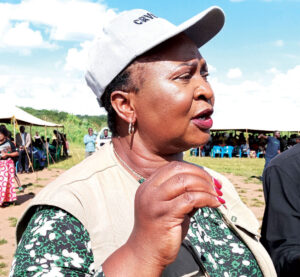
Community Development and Social Welfare Minister Jean Sendeza acknowledges the positive impact the adoption of e-payment system has had on financial inclusion and how it is assisting beneficiaries in budgeting and enhanced security in the disbursement of funds, among other areas.
“It [e-payment] is safe,” Sendeza indicates.
In his remarks, TNM Mpamba Limited General Manager Christopher Sukasuka says the company is committed to supporting the government in various projects, including SCTP, for smooth implementation of the project in the country.
According to the Malawi Communications Regulatory Authority (Macra), there were 8.27 million mobile connections in the country in 2021. The figure has increased by 74,000 between January 2020 and January 2021.
In 2021, the number of mobile connections in Malawi was equivalent to 42.7 percent of the total population.
Macra Director General Daud Suleman reveals that only about 500,000 people own smartphones out of the 12 million that have mobile gadgets in the country.
“The rest of the population is restricted to devices which only allow voice and SMS services. We are trying to change this,” he points out.
Suleman was quick to say they are putting in place interventions to ensure that the remaining population of 11.5 million accesses smart devices.
Malawi’s current population is estimated to be 20,804,383,based on projections of the United Nations.
This means, for Malawi to meet the desired targets, the authorities and community members such as Bwanaisa and Nkhwalula must work overtime.