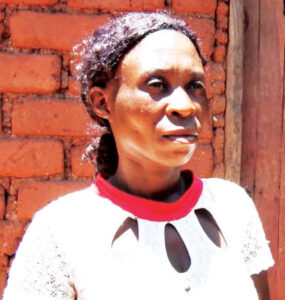
In her village, on the fringes of Mwanza Town, Stiveria Konelio’s life typifies the height of resilience.
But she believes that could change in a few months.
“We risk dying from hunger-related causes. It is difficult to take medication on empty stomachs,” Konelio, who has been on treatment for 22 years, says sombrely.
She is not alone with such fears. About a kilometre from her house, Charles Konzani, who is also a recipient of care, looks at the future with anxiety.
He can no longer afford the six food groups which he feels are essential for the treatment to work.
- Advertisement -
“There is nothing in the fields. Crops have been scorched by the sun and we will not harvest anything,” Konzani says.
These are the stories of several people who are on treatment in Mwanza, one the districts in Malawi that have been severely impacted by the El Nino-induced dry spells.
But Dr Ethel Rambiki, medical director for Lighthouse Trust, which contributes to Malawi’s national response to HIV as a model in providing a continuum of high quality care, feels more information about HIV therapy could be missing.
Rambiki states that most antiretroviral (ARV) drugs that are given in Malawi can be taken with or without food.
- Advertisement -
- Advertisement -
She, however, admits some people might have indeed had some scratchy experiences after taking the medication while feeling faint from hunger.
“Bodies react differently. Some tolerate the drugs well when they have food while others do not. But in principle, according to the evidence that we have, these ARV drugs work with or without food,” Rambiki says.
March into old age
Growing older with HIV was almost unthinkable just three decades ago, but advancements in treatment have blotted out all those fears.
For Konelio, Konzani and several other recipients of care, life cannot be the same without healthful foods which have kept them strong through the years.
The drier-than-usual weather, the worst in recent years, is threatening to strike them at the core of survival, they say.
“In months like this [February], we would be eating pumpkins from our fields. But there is nothing there. We are just waiting for whatever will happen to us,” a recipient of HIV care, Mary Gwembele, says.
She recalls the “good old days” when her health was as strong as it could be and wonders whether her march into older age is failsafe.
Gwembele was diagnosed with HIV in 2000. That was four years before Malawi rolled out antiretroviral therapy (ART).
In the absence of ART, people living with HIV mostly relied on food supplements to stay hale and hearty.
“When I started ART, my health got better. However, my experience is that without adequate and nutritious food, I sometimes feel uneasy.
“Things might get worse this year due to the food crisis, the worst I am experiencing since I was diagnosed with HIV,” Gwembele says, a detached look registering in her eyes.
The National Institutes for Health (NIH) states that in people living with HIV, good nutrition supports overall health and helps maintain the immune system.
NIH adds that good nutrition also helps people with HIV maintain a healthy weight and absorb HIV medicines.
‘Significant progress in HIV response’
And from a health rights perspective, activists concede that Malawi has made significant progress in HIV response.
The country was one of the first to implement a policy which directs that someone who has tested positive for HIV should be put on treatment right away.

Health rights activist Maziko Matemba acknowledges the investments that development partners and government have made to slow down the spread of the epidemic.
Recent data indicates that Malawi is on the cusp of surpassing the 95:95:95 UNAids targets, which seek that 95 percent of people with HIV should know their status, 95 percent of those who know their status should be on ART, and 95 of those on ART should be virally suppressed.
“Malawi has exceeded the… treatment and the [viral load suppression] targets,” the Elizabeth Glaser Paediatric Aids Foundation says.
But Matemba is still worried that the current and anticipated food security crisis could stamp out some of the gains the country has registered in HIV response.
“Investment in food supplements and prevention has not been as much as in other areas. Perhaps, government feels because people living with HIV could be among those targeted in subsidy programmes, then they are food secure,” he says.
He argues that targeting people on treatment with food supplements, especially those facing hunger, would allow them to live longer and healthier lives.
Exit stigma, enter fresh anxiety
During the time HIV treatment was not available in Malawi, medical action regarding people suffering from Aids was limited to the prevention and treatment of opportunistic infections, according to experts.
UNAids says some 86,000 people died of Aids-related causes in the country in 2001.
Probably, that is why HIV was being seen by some as a death sentence, a notion that fuelled stigma and discrimination towards those living with the condition.
“My own relatives used to stigmatise me; they could not use the plates that I used and refused to share meals with me,” Konelio says.
She recounts that with time, after they realised she was outliving even some whom they thought were healthier than her, they accepted she was not a living corpse.
Her fear now, just like several others receiving HIV care in Mwanza, is that without food support, her life may return to the days she looked frail and gave others something “to talk about”.