

The typical healthcare worker—be it a registered nurse, occupational therapist, physician assistant, dietitian, pharmacist, physiotherapist, physician, dentist, speech pathologist, among others— looks resplendent in a gown, apron, gloves, facemask, respirator, goggles, face shield, scrub cap and head covering, shoe covers, disposable stethoscope, among other personal protective equipment.
And, for the most part, they go about their business unperturbed; focused only on the patient.
However, as the government is about to learn from some healthcare workers, make one wrong turn to anger them and it is game over.
Yes, game over because the healthcare profession is, really, about saving patients from preventable deaths.
As for diseases, notably terminal cancer, whose cure eludes them, they try their best to make the end of the patient’s life a bit bearable.
- Advertisement -
Of course, according to Very Well Health, the terminally ill patient also has a role to play by following four steps: Learning about the diagnosis; forgiving oneself in advance; setting a treatment priority plan for oneself; and planning for a ‘good death’.
On the last point, it says: “Consciously endeavour to die on your own terms. Plan for a ‘good death’—one in which you decide how, where, and sometimes when you will die—to ensure that you will be as comfortable and peaceful as possible. While the nature and extent of your illness, treatment methods and the priorities you set will influence your decision, there are multiple options available to you.”
Anyway, this is not the point.
The point is that healthcare workers play a key role in promoting wellbeing, helping people prevent diseases and treat those who can be cured while comforting those with terminal illness so that their end can be welcome.
- Advertisement -
- Advertisement -
As such, it is important for those in charge of the public kitty to be careful when dealing with an irate healthcare worker, ensuring that their ceiling of patience does not drop so low that they are forced to make their grievances known through one public action or the other.
Ironically, this is what is happening in Malawi at the moment.
Case against the State
As at now, healthcare workers under three bodies have resolved to hold nationwide demonstrations on May 2 2024 over government’s alleged failure to fulfil its commitment to increase their allowances.
The organisations are National Organisation of Nurses and Midwives in Malawi (Nonm), Physician Assistants Union of Malawi (Paum) and Society of Medical Doctors (SMD).
The gist of the story is that government representatives and healthcare workers were expected to meet on April 26 2024, when Secretary to the Treasury Betchani Tchereni or his representative was expected to give feedback to the latter on their demands.
It is reported that besides agreeing to implement a 15 percent salary increment, government committed to increasing several allowances, including locum rates, risk or medical allowance and government top-up and professional allowances.
In fact, the healthcare workers were told that the payments would be backdated to November 1 2023.
Initially, Nonm, Paum and SMD gave the government a deadline of April 12 2024 to implement the revised allowances. Representatives of the bodies were hopeful that government representatives would find this to be in order.

However, Secretary for Health Samson Mndolo reportedly wrote the groups, through conciliator Malawi Human Rights Commission (MHRC), to the effect that he was yet to get a response from the Treasury on the matter and that feedback would be provided by April 26 this year.
But, then, Paum President Solomon David Chomba told The Daily Times this week that government representatives were in no-show on Friday, such that feedback was not given.
Chomba indicated to this publication that owing to this, the healthcare workers’ representatives held an emergency virtual meeting during which they resolved to hold peaceful demonstrations nationwide.
In his own words: “All our members who will be off-duty at that particular time, or those who will be on leave, will be on the streets of Malawi. They will be demonstrating to force government officials to listen to our demands. So, our members will put on their professional attire; those who work in theatre will put on their gear just to show the urgency of the matter,” he said.
Chomba stressed that the healthcare workers are neither withdrawing labour nor striking but, rather, peacefully demonstrating and presenting petitions.
The groups say they expect to notify relevant government offices between yesterday and today about their plans.
When The Daily Times contacted some of the officials, notably Tchereni, he referred the reporter to Mndolo, who also referred The Daily Times to MHRC.
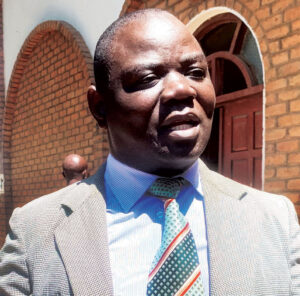
Whatever the case, quality health advocate George Jobe, who is also Malawi Health Equity Network Executive Director, is on point when he says it is a positive sign that parties to the issue have been discussing it.
Jobe indicated that what he would not want to see is a patient suffering due to the disagreements.
“We urge the government to be available. At the same time, the healthcare workers should bear in mind that when we lose the life of a patient, that life will never be brought back. There must be a lasting resolution to this,” Jobe pointed out.
According to an agreement which was made in February this year, healthcare workers under different grades are supposed to have their allowances hiked by various percentages.
But, so far, the government has not played ball, as it is yet to effect the same.
Bewildered, healthcare workers have summoned some ancient force of belief, putting to use the adage that push comes to shove.
And it is not one-man or one woman action they are taking; it is a group endeavour in the form of public action.
The setting: Mal a w i “Nationwide” they say.
Actors: Government officials and healthcare workers.
But the sufferer could be a rank outsider, namely the patient.
The victor? Disease of course, which may be given the leeway to claim an innocent life or more.
It is a precarious situation.
Unsung heroes list
And, according to the World Health Organisation (WHO), no matter what their international classification, health workers’ goal is one: To save a life from preventable death.
Talking about classifications, the global body puts it this way: “The international classification of health workers is largely based on the International Standard Classification of Occupations (Isco, 2008 revision), a system for classifying and aggregating occupational information obtained by means of population censuses and other statistical surveys, as well as from administrative records.
“The classification uses a hierarchical structure of occupational titles and codes, essentially reflecting the distinction of subgroups of the health workforce according to assumed differences in skill level and skill specialisation required to fulfil the tasks and duties of jobs.”
Healthcare professionals can, therefore, be put in the following categories:
Generalist medical practitioners, specialist medical practitioners, nursing professionals, midwifery professionals, traditional and complementary medicine professionals, paramedical practitioners, dentists, pharmacists, environmental and occupational health and hygiene professionals, physiotherapists, dieticians and nutritionists, audiologists and speech therapists, optometrists and opthalmic opticians, health professionals not elsewhere classified (the likes of podiatrist, occupational therapist, recreational therapist, arts therapist, dance and movement therapist).
Not just that; there are medical imaging and therapeutic equipment technicians, medical and pathology laboratory technicians, pharmaceutical technicians and assistants, medical and dental prosthetic technicians, nursing associate professionals, midwifery associate professionals, traditional and complementary medicine associate professionals, dental assistants and therapists, medical records and health information technicians, community health workers, dispensing opticians, physiotherapy technicians and assistants, medical assistants, environmental and occupational health inspectors and associates, ambulance workers, health associate professionals not elsewhere classified (the likes of chiropractor, osteopath, respiratory technologist, anaesthesia technician, HIV counsellor, family planning counsellor).
In addition to these, there are healthcare assistants (those that work as nursing aide at a hospital or clinic, patient care assistant, birth assistant at a hospital or clinic, psychiatric aide), home-based personal care workers (nursing aide at home, home care aide, home birth assistant, personal care provider), personal care workers in health services not elsewhere classified (the likes of dental aide, first-aid attendant, hospital orderly, medical imaging assistant, pharmacy aide, phlebotomist and sterilisation aide).
Not just that, others are health service managers, health management personnel not elsewhere classified (notably government health department head, human resource manager, medical commodities procurement manager, regional health planning director, aged care service manager, social welfare manager, information and communications technology service manager), life science professionals (air pollution analyst, bacteriologist, biotechnologist, cell geneticist, ecologist, environmental protection adviser, microbiologist, molecular biologist, molecular geneticist, pharmacologist, water quality analyst).
That is not the whole list, though, others include biomedical engineers, clinical psychologists, social work and counselling professionals, non-health professionals not elsewhere classified (examples being accountant, biomedical engineer, clinical psychologist, environmental engineer, health economist, health policy analyst, health policy lawyer, health statistician, health vocational education teacher, medical and pharmaceutical products sales representative, medical physicist, operations research analyst, optical engineer, safety engineer, software developer, staff training officer, university medical lecturer, veterinary epidemiologist), life science technicians (bacteriology technician, biochemistry technician, pharmacology technician, serology technician and tissue culture technician).
Are these all? Far from it. WHO also lists medical secretaries (medical secretary, medical office administrative assistant, hospital ward secretary, patient care secretary, medical insurance billing secretary, medical laboratory secretary, medical stenographer, medical transcriptionist, pathology secretary, dental secretary), social work associate professionals (community development worker, community services worker, disability services worker, family services worker, mental health support worker), non-health technicians and associate professionals not elsewhere classified (bookkeeper, computer network technician, data entry supervisor, disability services officer, faith healer, fitness instructor, forensic science technician, health insurance claims officer, health facility licensing officer, medical supplies procurement officer, mental health support worker and water treatment plant operator).
WHO adds to the list clerical support workers (these include general office clerk, general secretary, general receptionist, accounts clerk, data entry clerk, health insurance clerk, hospital admissions clerk, human resource assistant, medical appointments schedule clerk, medical commodities stock controller, payroll clerk), service and sales workers (building caretaker, facility cafeteria cook, hospital security guard, medical products sales demonstrator, undertaker, pharmaceuticals retail shop cashier), trades workers (the likes of ambulance mechanic, building exteriors cleaner, computer hardware technician, health information typesetter, malaria control sprayer, optical lens moulder, orthopaedic appliance maker, surgical instruments maker and refrigeration mechanic).
At the end of WHO’s list are plant and machine operators and assemblers (ambulance driver, eyeglass frame assembler, laundry machine operator, pharmaceutical products machine operator), elementary occupations (hospital garden labourer, kitchen helper, lavatory attendant, medical commodities stock handler, refuse collector, window washer advertisement spend), armed forces occupations (commissioned armed forces medical doctor, combat medical technician, navy corps nurse, veteran hospital nursing aide), other health service providers not elsewhere classified (medical student intern and hospital volunteer), among others.
Tall order
In Malawi, these workers have to get a piece of the cake of the K729.47 billion, representing 12.2 percent, which has been allocated to the health sector in the 2024-25 national budget.
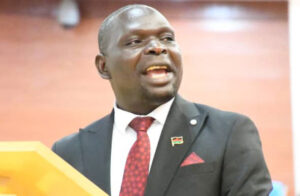
When Finance Minister Simplex Chithyola Banda presented the budget policy statement to Parliament, he indicated that the health sector was one of the big winners.
The question is: Is the money enough?
Health rights advocate Maziko Matemba does not feel so; more so because the Abuja Declaration which Malawi is party to set 15 percent as the minimum rate African governments have to allocate to the health sector in national budgets.
From the look of things, this remains a tall order.
Meanwhile, healthcare workers continue to be united by the general desire to save a patient’s life. In so doing, they have vowed to make disease their mortal enemy.