





By Jaclynn Ashly:
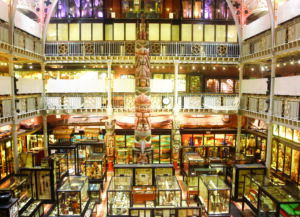
In 1905, a colonial British officer killed Koitalel Arap Samoei, the supreme leader of the Nandi tribe. According to oral history, his severed head was taken to the UK. The Nandi have been searching for it ever since.
As a child, Anne Machii Samoei, now 87, heard many stories about her grandfather Koitalel Arap Samoei, the orkoiyot or supreme leader of Kenya’s Nandi tribe who led a revolt against the British for more than a decade in the late 19th century.
Wide-eyed and sitting around a fire flickering into the night, she would hang tightly onto each word her father spoke as he traced an image of his father as a powerful and majestic leader.
Koitalel, dressed in clothes made from the skins of monkeys and grasping a sacred wooden staff – which symbolised his ultimate and indisputable leadership – would at about 25 years of age, command an army of thousands of loyal men who used spears and arrows to strike fear into the hearts of gun-wielding British soldiers and their African supporters.
- Advertisement -
Koitalel’s fierce resistance was sparked by the construction of the Kenya-Uganda Railways in the 1890s, which started from the coastal city of Mombasa and cut through Nandi territory – pummelling deep into the country’s interior. Along with it came British colonial administrators and Christian missionaries. The Nandi are a subgroup of the larger Kalenjin tribes; their warriors responded by launching deadly ambushes on colonial convoys along the railway line.
“I loved hearing the tales of my grandfather,” said Machii, sitting on a couch in her dimly lit home in Nandi County, in the country’s North Rift. “He was the last true leader of the Nandi people. His legend has given us a lot of pride even though we lost our lands and grew up in so much poverty.”
But there was one story of her grandfather that haunted her: in October 1905, Richard Meinertzhagen, a British military intelligence officer, killed Koitalel after inviting the leader to a truce meeting.
According to Nandi oral history, Meinertzhagen decapitated Koitalel. Elders believe he transported the slain leader’s severed head, along with several of his possessions, back to the United Kingdom.
- Advertisement -
- Advertisement -
“I felt this disturbance inside me ever since my father told me about the British stealing Koitalel’s head,” Machii continued, glancing down at the cement floor. “Ever since I was a small girl until now, in my old age, I have never lost this disturbed feeling. It still affects me.
“I never understood how human beings could do things that are so cruel,” she said, shaking her head. “It made me very scared of the British. Any time I saw a white man I would run away very fast.”
Meinertzhagen’s killing of Koitalel, who comes from the sacred Talai lineage – a clan the Nandi believe have supernatural and prophetic abilities and was chosen by God to lead and deliver God’s messages to the people— was just the beginning.
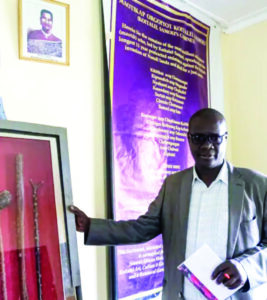
According to Kipchoge araap Chomu, a Nandi historian and co-author of the book Unyielding Hope: The Life and Times of Koitaleel Somoei, Meinertzhagen and his men also killed 25 Nandi warriors at the same meeting, which was held in the Nandi Hills – the tribe’s most fertile lands – before fleeing the scene and indiscriminately killing men, women and children along the way. On that day alone, at least 250 Nandi were killed.
Elders say Koitalel’s headless corpse was found under a sacred fig tree, where he had staggered for almost 100 metres after being shot. Many Nandi believe Meinertzhagen or one of his men decapitated Koitalel.
Meinertzhagen, who died in 1967, admitted to killing Koitalel in his memoir, Kenya Diary: 1902-1906. He does not, however, mention severing his head. Meinertzhagen claimed that he removed “two stone-headed knobkerries” from Koitalel’s belt after murdering him.
With their sacred leader no longer around to protect the Nandi, the British quickly unleashed devastation across the tribe’s territory.
Two days after Koitalel’s killing, on October 19, the British launched the “final Nandi campaign”, said Chomu, in which they slaughtered hundreds of Nandi men of fighting age and expelled them from the Nandi Hills.
Like other Africans in the colony, the Nandi were corralled onto a “native reserve” on the tribe’s drier pasture land. The lands of the Nandi Hills were then allocated exclusively for European settlement, with white settlers establishing large colonial farms and tea plantations. Africans were also forced into paying various taxes on the reserves that applied to only Africans. Therefore, many Nandi had no choice but to work on the same colonial farms established on their stolen lands.