By Patience Lunda
Malawi has been tirelessly searching for solutions to combat malaria. Malawi accounts for two percent of malaria cases worldwide and is among the top 15 countries with a high malaria burden, according to the United Nations Children’s Emergency Fund.
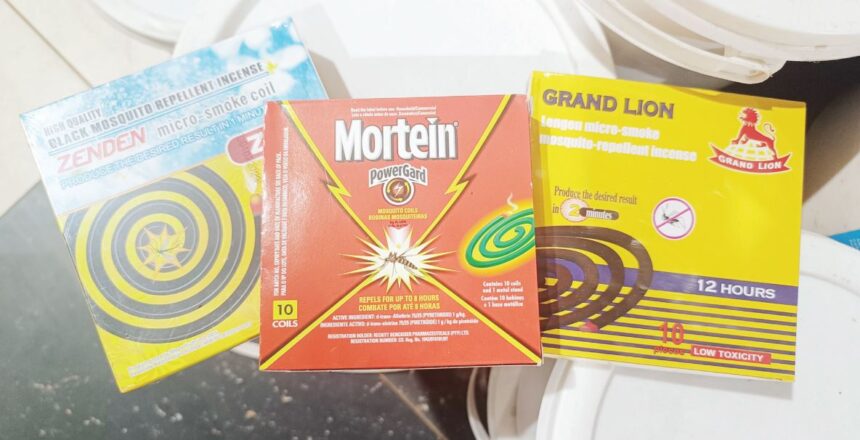
This has created the need for solutions to the problem, with mosquito coils being among the products being used for preventing malaria in the country.
These seemingly harmless repellents have become a regular product in many households but beneath their apparently harmless nature seem to be disturbing findings.
Studies conducted across the world have revealed that mosquito coils can cause cancer, respiratory problems, neurological damage and cardiovascular diseases.
- Advertisement -
Research findings released in 2018, titled ‘Indoor Air Pollution from Mosquito Coils and Respiratory Health’ and published in the Journal of Exposure Science and Environmental Epidemiology, found that mosquito coils use increased respiratory symptoms such as coughing, wheezing and shortness of breath in 73 percent of participants.
Another research released in 2018, titled ‘Mosquito Coil Use and Lung Cancer’ and published in the Journal of Thoracic Oncology, found an association between mosquito coil use and lung cancer risk and identified duration of coil use as a significant predictor of lung cancer.

On neurological effects studies, research, titled ‘Mosquito Coil Exposure and Neurobehavioral Problems’ and released in 2019, linked mosquito coil exposure to neurobehavioral issues, including attention hyperactivity disorder (ADHD) like symptoms, in children.
The World Health Organisation (WHO) estimates that indoor air pollution from mosquito coils causes over 100,000 deaths annually in sub-Saharan Africa alone.
- Advertisement -
- Advertisement -
Malawi does not produce mosquito coils on its own but imports them from other countries such as China, Zambia, South Africa and India.
When asked about the issue, the Malawi Bureau of Standards (MBS) referred us to the Pharmacy, Medicines Regulatory Authority (PMRA), who referred us to the Pesticides Control Board.
In an interview, Pesticides Control Board Assistant Registrar, Rhodrick Ndawala admitted that it is their board that approves the importation of mosquito coils but said they depend on the material safety data sheet and toxicology information from a product manufacturer to make a conclusion on whether a product is fit for importation and use in the country.
Ndawala said if the two pieces of information lack other data, such as the product’s dangers; it becomes hard to know since the country does not have equipment to test that.
Further, he said, they allow products that are approved by WHO.
“If the material safety data sheet does not provide some information it becomes difficult to speculate if a product is fit for use or not and, so, we let it enter the country because, as [things are] right now, we do not have equipment that would allow us to test the products,” he said.
Currently, Malawi has made progress in reducing malaria cases as between 2010 and 2021, the national malaria prevalence decreased from 44 percent to 10 percent, representing a 52.2 percent reduction.

Similarly, malaria incidence and mortality rates have dropped, with a 65.2 percent decrease in mortality from 23 per 100, 000 to eight per 100, 000 populations.
Epidemiologist Adamson Muula said effects of mosquito coils would differ from person to person based on underlying health conditions and prolonged use.
Muula added that minimal exposure to mosquito coils would reduce the negative health impacts that the coils have on people, adding that, in most cases, most Malawians use them sparingly.
“Some people would experience adverse effects while others wouldn’t and at the same time, the mosquito coils are beneficial to some people who prefer them to other ways of getting rid of mosquitoes and, so, this is a matter of choice of what works for you and what doesn’t,” he said.
Ministry of Health spokesperson, Adrian Chikumbe, said there are numerous health studies and the ministry cannot have access to all research findings.

He added that they, therefore, rely on WHO to advise against the use of mosquito coils. Chikumbe then said condemnation of mosquito coils would be done if the risk is high.
“We would weigh the options if we were to discourage the use of the mosquito coils,” he said.
Malawi Health Equity Network executive director, George Jobe, said studies show that Malawians have been using mosquito coils ignorantly, such that they were being exposed to harm.
Jobe suggested the need for the country to seek help from neighbouring countries to test such products. He added that, in the long run, there should be plans to have such equipment and promote indigenous methods of dealing with mosquitoes. “
We don’t have to sit down and just look on. “Instead, there is a need for an action to be taken so that people should be safe from harm. In the past, we used to have local ways of dealing with mosquitoes. There is a need for researchers to look into them [ways] and come up with products that wouldn’t be causing more harm than good to people,” he said.

On the packaging of mosquito coils found in Malawian shops include warnings that they may cause irritation of the skin, eyes, mucous membranes and skin sensitisation.
They further caution people of instances of poisoning. As such, people are urged to seek medical help if the symptoms occur to them.
In addition, people are warned to avoid continuous exposure in insufficiently ventilated rooms.
However, while these fragrant, spiral shaped repellents seem like a necessary evil when they provide temporary relief, the long-term consequences are dire.
This raises a crucial question: Are mosquito coils really protecting us or are they enabling us to be trading one risk for another.