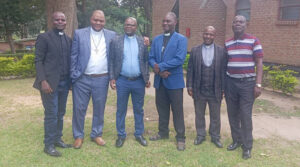
Our three CCAP synods, Livingstonia, Nkhoma and Blantyre, have long been perceived as politically inclined religious establishments.
The truth is, religion and politics are inseparable for several reasons.
Both influence societal values, both seek to guide human behaviour and, historically, religious institutions have played crucial roles in shaping political discourse and leadership.
In Malawi, the Church has consistently contributed to the development of political agency and public consciousness.
It would be disingenuous, therefore, to now demonise its involvement in politics.
- Advertisement -
However, problems begin to emerge when churches openly align themselves with specific political parties. That is when matters start to go awry.
Let us not be deceived— no church is entirely free from political influence.
Even the Catholic bishops, often regarded as paragons of moral authority in confronting injustice, have demonstrated political leanings.
During the height of the UTM’s popularity, they appeared closely aligned with the late vice president Saulos Chilima and his party. Some of their public statements seemed overtly supportive of UTM.
- Advertisement -
- Advertisement -
But that is a subject for another time.
Today’s focus is CCAP and its synods; a denomination never short of controversy.
CCAP has often made headlines for the wrong reasons.
Territorial disputes have seen synods aggressively extend their prayer houses into areas traditionally regarded as belonging to others. This has typically been a desperate bid to secure more congregants.
There are uncomfortable political truths that must be acknowledged when discussing these synods.
Livingstonia Synod, for example, has historically thrown its support behind whichever political party gains traction in the Northern Region— excluding, perhaps, the Alliance for Democracy, which lost its relevance following the death of its founding leader.
Ahead of the 2020 presidential election, Livingstonia Synod appeared to support UTM and celebrated the Tonse Alliance’s victory, in which UTM was a major partner.
Nkhoma Synod has largely aligned itself with the Malawi Congress Party (MCP). While not all its pastors are overtly political, a notable number have expressed favour towards the current administration.
What is particularly striking about Nkhoma is its apparent lack of concern about concealing this alignment. Its loyalty to MCP has been relatively open.
Blantyre Synod, by contrast, was once a firm supporter of the Democratic Progressive Party (DPP), particularly during the leadership of Reverend Billy Gama as General Secretary.
Under its current administration, the synod seems less openly partisan, perhaps as a result of genuine neutrality, or perhaps in an effort to appear apolitical.
Nonetheless, the recent summoning of ministers who participated in a prayer service at former president and DPP leader Peter Mutharika’s residence in Mangochi suggests ongoing internal tensions and conflicting allegiances.
Like other synods, and indeed like the Catholic Church, Blantyre Synod includes pastors with a broad range of political sympathies. This diversity in itself is not problematic.
What is troubling, however, is the overt and often divisive manner in which these allegiances are expressed.
It is true that religion and politics cannot be wholly separated. Yet church leaders ought to exercise discretion and restraint in the way they present their political views to the public.
There was a time when leaders within Livingstonia Synod publicly attacked each other over accusations that one faction had drawn the Church into partisan politics.
It soon became apparent that the accuser was, in fact, sympathetic to a different political party.
Objectivity was lost in the process. There was no genuine attempt to protect the Church from political interference.
Much has been said about churches attempting to project neutrality. However, many clergy members seem driven more by the pursuit of power and financial reward than by any spiritual mission.
The Church lost its salt long ago. The message of salvation, the foundation of its sacred calling, has been pushed to the margins.
Today, the Church appears so consumed by political activity that congregants are beginning to question whether we are entering a new era altogether.
Perhaps a new reformation is unfolding, one that veers far from the long-cherished creed of salvation.
It is important to note that calling for political neutrality is not the same as asking the Church to be silent in the face of injustice.
Faith institutions have a moral obligation to speak truth to power and to advocate for the marginalised.
However, endorsing political parties or individual politicians undermines the very credibility that makes such advocacy meaningful.
When pulpits become platforms for party politics, the prophetic voice of the Church is silenced by partisanship.
Our churches must reclaim their original mission—to be beacons of hope, spaces of reflection and communities centred on spiritual growth.
Their influence is too valuable to be squandered on fleeting political gains.
Only when the Church disentangles itself from the web of partisan politics can it truly serve the people and remain a force for justice, peace and moral clarity in Malawi.