By Nelson Gonjani & Mike Mataka:
On a late afternoon in Kasungu, dust hangs lightly in the air as children scatter across a narrow village path, their laughter rising and falling with the rhythm of play.
One boy breaks away from the group and runs towards a small brick house, his feet quick and his voice excited.
“Amama! Kwabwera anthu! (Mum, we have visitors).”
For a moment, it is hard to believe this boy is Prince.
- Advertisement -
Just a year ago, his world was defined by hospital visits, laboured breathing and a fear that sat heavily in his parents’ hearts.
He could not play for long without coughing, his energy would suddenly fade and his life hung on a diagnosis that Malawi’s health system could not fully address.
Today, he is racing barefoot, strong and loud, very much alive.
Prince’s story is about what happens when a mother refuses to surrender to despair, when journalism does more than inform and when a charity hundreds of kilometres away chooses to act.
- Advertisement -
- Advertisement -
It is a story of human connection, carried by words on a Facebook page and answered with generosity.
Prince was born in Kasungu District, in Chinkhoma Village under Traditional Authority Njombwa. From the beginning, something was not right.
“Since his birth, he never had peace. He was always coughing. Sometimes he would be fine, then suddenly he would be down again,” his mother, Esnart Mhango, recalls.
At first, Mhango hoped it was something Prince would outgrow. Children get sick and recover. But as months passed, the pattern became impossible to ignore.
Prince’s health was unpredictable. He tired easily and his breathing worried them. By the time he was one year and eight months old, the family knew this was more than an ordinary childhood illness.
“We realised the problem early, but we did not know exactly what it was. It was painful to watch our child struggle and not understand why,” Mhango says.
In 2024, a glimmer of clarity arrived. Specialists were visiting Kamuzu Central Hospital and Mhango’s sister urged her to take Prince for assessment. She made the journey, carrying her child and her hope.
The diagnosis was devastating and relieving at the same time. Doctors told her Prince had a heart condition. There was a hole in his heart.
“They explained that his heart was not normal. They said there was a hole,” Mhango says.
Relief quickly gave way to fear. The specialists were honest. Prince’s condition could not be treated in Malawi. He needed specialised care, most likely in India.
“I was told that if my child was to survive, he had to be treated outside the country,” she says.
Doctors advised Mhango to process passports so the government could consider sponsoring their travel for treatment. She acted quickly and soon submitted documents to the Office of the President and Cabinet (OPC).
Then came the waiting.
“We went to OPC several times. Each time we were told the trip was not ready. There were many people on the waiting list,” she says.
Weeks turned into months. Prince’s condition worsened. His cough persisted and his strength faded. At home, the family lived in constant fear.
“Psychologically, the whole family was affected. We could not concentrate on anything else apart from trying to find a solution,” she explains.
The financial strain was just as severe.
“Economically, things were not okay. Every penny was being spent on trying to find help,” she says.
Hope began to slip away.
“It reached a point where we became hopeless. We were watching our child get worse and nothing was moving,” Mhango admits.
In desperation, Mhango turned to the media. A friend, then a student at Mzuzu University, suggested telling Prince’s story publicly.
“He asked if I could allow my case to be posted on the Times 360 Malawi page. It was not easy, but we had no choice,” she says.
She contacted Times journalist Nelson Gonjani. The story was written with care and published on the Times 360 Malawi Facebook page on January 19, 2025.
The response was immediate.
“People started calling me. Some sent gifts, others sent money. Even words of encouragement helped,” Mhango says.
One call changed everything.
Members of the Hindu Social Group, a charitable organisation rooted in the Hindu community, saw the story and were moved to act.
“When we saw the story on Times 360 Malawi, it struck our hearts. We felt we needed to learn more,” says Mahel Acharya, a member of the group.
They contacted Times offices in Blantyre, were linked to the reporter and then to Prince’s family.
“This is where media becomes powerful. Without that story, we would never have known about Prince,” Acharya says.
The group began with verification and medical assessment.
“We arranged for the mother and child to travel to Blantyre. A heart specialist at Queen Elizabeth Central Hospital assessed Prince and gave recommendations,” Acharya says.
They covered transport, logistics and remained in constant communication.
“They treated us like family,” Mhango says.
Based on the specialist’s recommendations, preparations for treatment in India began.
“This was the first case of its kind that we were supporting in Malawi,” Acharya says.
Through networks in the United Kingdom and India, the group secured a hospital, covered medical costs, processed visas and bought return air tickets.
“They even gave me an ATM card for basic needs,” Mhango says.
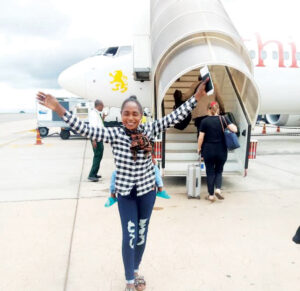
In March 2025, Prince and his mother travelled to India.
“The welcome was very warm. The people were caring,” she says.
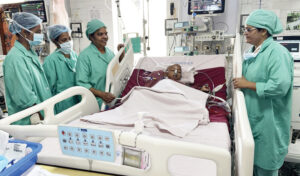
Prince was admitted to a Hindu hospital. Further tests revealed additional heart complications that had not been diagnosed in Malawi.
“My worries grew. My hope started to shatter,” Mhango admits.
She turned to faith.
“I trusted in the Lord. He had led me to these angels on earth,” she says.
Doctors assured her the condition was manageable. She stayed in hospital for three days before signing consent for an eight-hour procedure.
“I was afraid, but I had no other choice,” she says.
The surgery was successful. She was then asked to leave Prince at the hospital overnight.
“I did not sleep. I prayed and waited,” she says.
Before visiting time the next day, she was called to the Intensive Care Unit.
“I was afraid because it was earlier than expected,” she says.
Inside, she found Prince awake.
“At that moment, I knew God had answered my prayers,” she says.
Prince spent a week in intensive care before moving to a general ward. His heart was functioning well. Eventually, he was discharged and they returned to Malawi.
“Ever since then, Prince has been alright,” Mhango says.
Months later in Kasungu, Prince plays outside with other children. He runs freely and laughs easily. He is the one who spots visitors first.
At first, it seems like his brother is running, but it is Prince. For a family once living under the shadow of loss, the change is profound.
“I never thought people could be so generous. This was unconditional love,” Mhango says.
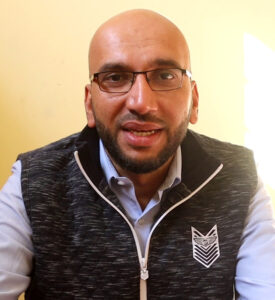
For Acharya and the Hindu Social Group, the story reaffirmed their mission.
“It is our wish to help where we can. We are part of Malawian society,” he says and credits the media for carrying the story.
“Journalism does not only report problems. It can also create solutions,” Acharya says.
Back in Kasungu, as the sun dips lower, Prince slows down. He leans against his mother, tired from play, not illness.
“He is strong now,” Mhango says. “He is just like other children.”
Prince’s scar is hidden beneath his clothes. His past lives quietly in memory, but his future runs ahead of him, full of noise and possibility.