The compound is unusually quiet. No laughter, no shouting, no children racing through the yard.
Rabson Joseph, 42, walks past neat maize plots and rows of tobacco and notes the stillness of the fields.
The adults are resting after the morning chores and his children are at school. The calm around his home reflects a deliberate choice.
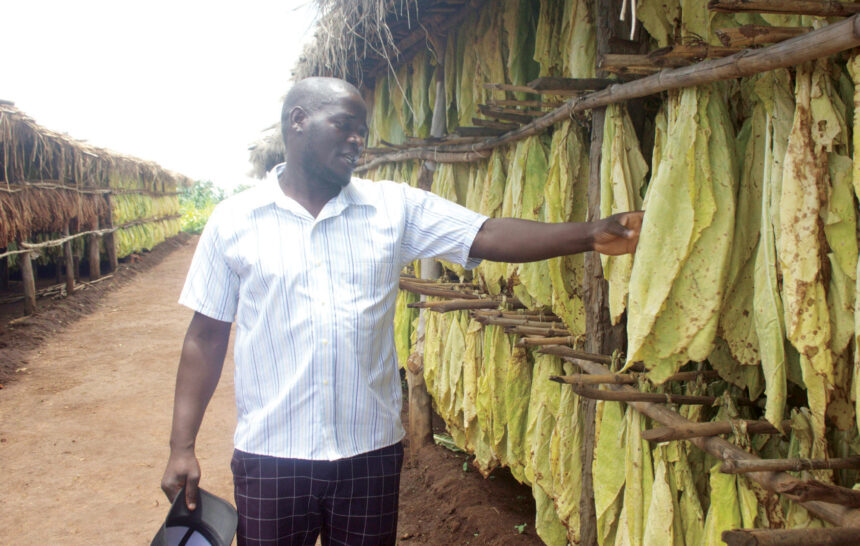
“I know what it means to grow up working instead of learning. I will not let my children go through what I went through,” Joseph says, glancing at the drying tobacco leaves stacked nearby.
Born into a family that grew tobacco out of tradition rather than profit, Joseph, a resident of Dowa’s Madisi Extension Planning Area, left school before completing primary education.
- Advertisement -
He watched his parents toil for little return and often struggle to feed the family.
Like many children in tobacco-growing communities, he spent long hours helping in the fields instead of focusing on school.
“I want my children to excel. Even the smallest task on the farm is dangerous for a child. It can affect their health, stunt growth and steal their future,” he says.
According to the International Labour Organisation (ILO), children who carry heavy loads, bend for long hours or handle pesticides risk long-term health problems and disrupted schooling.
- Advertisement -
- Advertisement -
“Work in tobacco farming can be physically hazardous and exposes children to toxic substances that are detrimental to their health and development,” the United Nations agency says.
It adds that child labour deprives children of their childhood, potential and dignity and perpetuates cycles of poverty.
Joseph admits that before partnering with Alliance One Tobacco Limited, he relied on his children to help with farm work.
“I did it because I thought I had no choice. But I was wrong. Now my children are in school and the farm runs safely with adult labour,” he says while standing in a blooming tobacco field outside his compound.
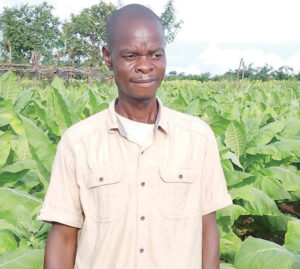
Elsewhere in Dowa West, 35-year-old Fatsani George also manages his tobacco farm with care.
He grows three hectares of burley tobacco and keeps cattle, goats and flocks of chickens and ducks. His solar-powered home supports his family of six comfortably.
“During school hours the house is quiet and the fields are still. My children do not work in the fields or help with livestock. It is the right thing to do,” George says.
Both farmers also cultivate maize to ensure their families have enough food and do not need to sell tobacco to buy it.
This approach has strengthened their households, giving them income and the ability to invest in their children’s education.
Joseph’s firstborn son is now in Standard 8 at a private boarding school, something he never imagined possible.
“For me, education stopped early. But my children will have opportunities I never had,” he says.
The ILO says agriculture has the highest prevalence of child labour globally, with tobacco farming among the most hazardous activities.
Children working on farms often perform tasks that are “mentally, physically, socially or morally dangerous and harmful” and interfere with education.
Both Joseph and George are part of a support system under Alliance One Tobacco Limited, which provides fertiliser, seed, chemicals, personal protective equipment and training to help farmers improve yields while protecting children.
The company also supplies materials for maize production to strengthen food security so farmers can focus on tobacco without compromising their families’ needs.
Corporate Affairs Manager Fran Malila says the company promotes responsible tobacco production that protects labour rights while supporting farmer livelihoods.
“Field technicians conduct announced and unannounced visits to monitor adherence to agricultural labour practices, which prohibit child and forced labour, ensure safe working conditions, fair income and proper terms of employment,” Malila says.
Serious violations are escalated to authorities, including the Ministry of Labour.
Community-based agricultural labour practices committees complement field technicians by raising awareness, monitoring farms and providing safe channels for complaints.
“A 2020 memorandum of understanding with the Ministry of Labour allows district officers to inspect farms and assist with the remediation of child labour risks,” Malila says.
Joseph says the training and monitoring have helped farmers understand the dangers children face in tobacco fields.
“Carrying heavy loads, spraying chemicals or bending all day steals their childhood,” he says.
George agrees.
“It is not just about following rules. It is about their future. If children work in the fields instead of going to school, they remain trapped in poverty,” he says.
Official estimates show that about 2.1 million children aged five to 17, roughly 38 percent of children in that age group in Malawi, are engaged in child labour, including in agriculture and tobacco farming.
However, farmers working under contract with Alliance One say they are committed to eliminating child labour and other unsafe production practices.
As the afternoon progresses, Joseph’s tobacco fields remain calm. The leaves rustle gently in the breeze but there are no children among the rows.
“I farm and provide, but my children will have a future I never had,” Joseph says.
Miles away in Dowa West, George says the same quiet greets his farm every school day.
It signals children who are in classrooms instead of fields, spared from work that could harm their health, dignity and development.
“Adults like me tend the fields and the animals. The children don’t,” George says as he watches the cattle and goats disappear into the distance with the herder in tow.