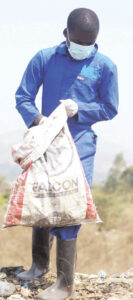
Studies show that some 1.5 million metric tonnes (mt) of plastic end up in junkyards, rivers and lakes in Malawi.
Only five percent of the materials get recycled.
It is estimated that Malawi produces over 70,000mt of plastic every year, 80 percent of which can only be used once.
In Zomba, entrepreneur Lumbani Mvula is making bricks and pavers using discarded household and industrial plastic to fight their proliferation.
“Poor management of plastic in public places such as markets contributes to health challenges. The materials also clog drainage systems,” Mvula, who founded Trash2Cash, says.
- Advertisement -
He looks at the never-ending prevalence of plastic as a blessing in disguise.
His desire is to have an advanced machine for processing more trash into useful products.
“It pains me to see plastics being dumped under bridges in huge quantifies. So, I came up with the idea of turning them into bricks and pavements,” Mvula says.
Plastic is fibrous in nature and the unique production process prevents air pockets from forming within the bricks.
- Advertisement -
- Advertisement -
This results in greater compression strength than conventional paving stones that crack under heavy force or prolonged weather exposure.
Mvula explains that he started implementing the project in November last year after he observed how poorly plastic waste was being treated in Malawi.
The Zomba-based innovator turns plastic into bricks every day. At his factory, they churn out 1,500 bricks made from plastic trash that would, otherwise, have been dumped in the city’s rivers and other undesignated places.
This year, they recycled 50mt of plastic, but Mvula hopes to double that quantity as production expands.
He is hopeful that, once people realise that pavers serve as an alternative building material, they will embrace their use, saving money and the environment in the process.
Through the project, he has employed six direct workers and 20 indirect ones, including plastic pickers, helping both livelihoods and the environment.
His work has attracted accolades, such that he has been selected to participate in this year’s Youth Alliance for Leadership and Development in Africa I-Boot Camp which will take place at University of Pretoria in South Africa.
“I will take advantage of the event to pitch more ideas about my innovative project and stand a chance of winning $10,000, which would help my project maximise production and create more jobs,” Mvula says.
However, he cannot afford to fund the trip to South Africa, which will require him to source K1.7 million to cover travel costs, registration, which is $250, and a passport.
He learned about the opportunity through a friend from Tanzania who happens to be involved in the same project in her country.
He says young people in Malawi will also benefit because, after the boot camp, he will train more youths in how to sharpen entrepreneurship skills, among others.
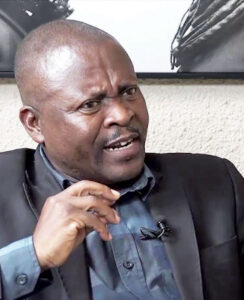
The proliferation of thin plastic has been an issue of concern to authorities such as Minister of Natural Resources and Climate Change Michael Usi.
Usi has since pleaded with the courts to swiftly make a determination in a case where some plastics manufacturers obtained an injunction stopping government from implementing the ban on thin plastics.
“Let me also ask the captains of the plastics’ industry to rethink their actions and start producing environment-friendly alternatives to plastics, such as paper bags, to reduce the threat that plastics pose to human health and the environment,” Usi said recently.
He added that apart from destroying the environment, single-use plastics also affect tourism businesses and end up depriving the country of the “much-needed” foreign exchange.
Usi says at global level, United Nations members such as Malawi started negotiating a legally binding agreement to end plastics pollution last year.
He indicates that, at national level, the government and his ministry gazetted the Environment Management (Plastic Regulations) 2015 to ban the use of thin plastics, but he points out that every effort to implement the regulations and end plastic pollution is frustrated by manufacturers and traders.
Usi, however, maintains that the government will not relent in fighting plastics pollution in the country.
In the meantime, Mvula is doing his part by scavenging through dirty places to take out discarded plastics from which he is making bricks and pavers.
“With more support, I can scale up production to other parts of the country,” he says.