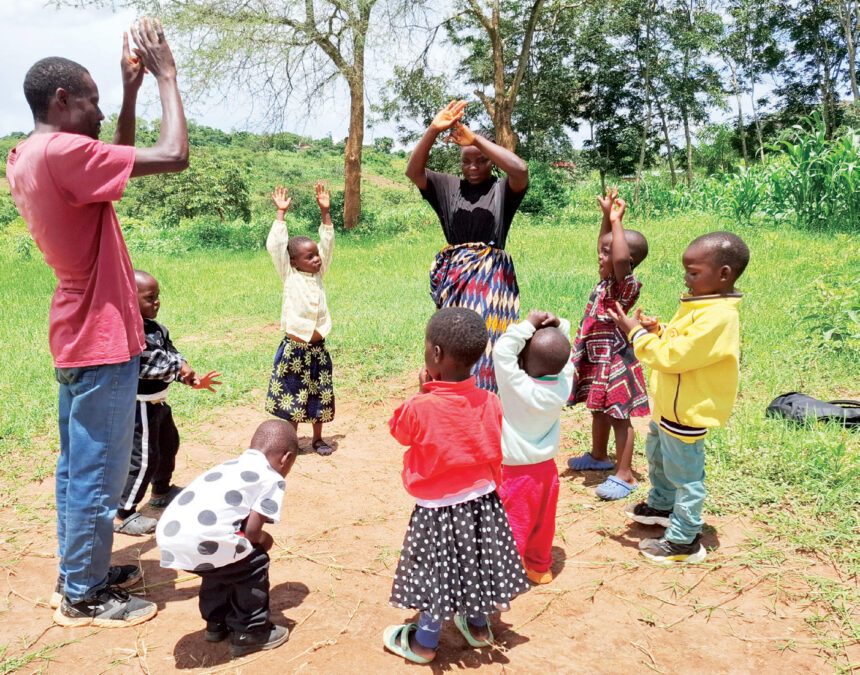
The sight of Mkhaya Community-based Childcare Centre (CBCC) in Ekwendeni, Mzimba District, would make one think it is an isolated learning centre dumped decades ago.
But reality hits when community members say they only shifted weeks ago when they could not contain the dust and the dangerous conditions of the centre.
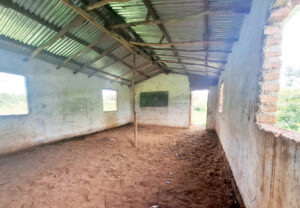
The building, which has two rooms, has no concrete floors; just dust, no doors or windows.
Indeed, it is infested with cracks.
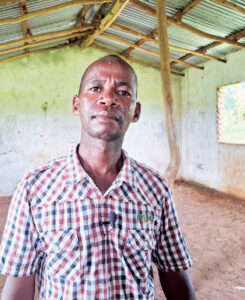
Misheck Mtete, a caregiver, tells us the centre was established in 1998 and has been undergoing renovations from time to time.
- Advertisement -
However, this time around, the building is tired and, owing to the poor condition of the infrastructure, classes are now being conducted on the veranda of the area’s traditional leader.
“We were exposing the children to too much dust and coughs were frequent. Even the poles supporting the building can no longer hold, which is dangerous to the children, considering that this is the rainy season.
“So, together with members of the school’s committee, we agreed that learning should continue but that it should be done at another venue. That is how we ended up at the veranda of our chief,” he said.
The school has 24 learners with two caregivers.
- Advertisement -
- Advertisement -
The situation at Mkhaya is not different from that of Mikuyu CBCC in the same district, Mzimba.
Here, caregivers said they could no longer wait for the government’s support, in the form of honoraria.
They abandoned the school, which is now falling apart despite concerted efforts from community members and well-wishers to build it.
One of the caregivers, Mercy Nyirenda, expressed concern over the state of affairs.
“I tried to convince fellow caregivers not to stop teaching but they could no longer wait. Some caregivers had taught for about six years, others even 10 years, without receiving anything. As such, they were tired. That is how the school was abandoned.
“What saddens me most is that constructing this school was not easy. We were teaching under a Mkuyu [fig] tree. In fact, that is where we got the name [Mikuyu]. Now, after appreciating community members’ passion for ECD, we, through the 13 chiefs around the school, started mobilising money and built this structure,” she said
Talking of caregivers, Witness Wiki, 48, has been in the profession since 2012.
She has been teaching at Kaweluwelu CBCC her entire career.
She says if it were not for her passion for early childhood education, she would have quit long ago.
Wiki confesses that volunteering is not for the faint hearted.
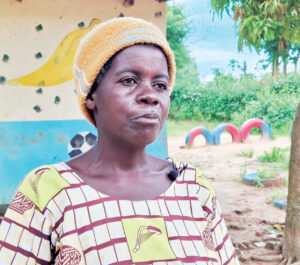
“This is a tiresome job with no token of appreciation. You can imagine our colleagues, namely parents, are in their fields, taking care of their crops, but I am here teaching their children at no cost. It hurts a lot because, at the end of the day, I also need food at home but where do I get it? But, then, if I stop teaching, what will happen to these children? So, it is the passion that drives me but volunteering is not easy,” she said.
The establishment of Kaweluwelu CBCC was community-driven, spearheaded by Group Village Head Matchonisa, who provided a piece of land and mobilised support.
While he describes the centre as vibrant, he acknowledges that food contributions are often inadequate to sustain learners throughout the school term.
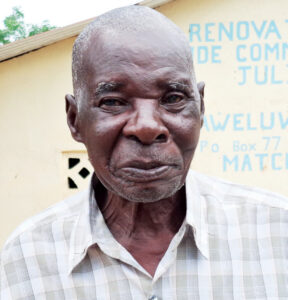
“We have a small garden where we grow crops such as maize for our children. Households also contribute some food for the children. But, then, in most cases, the food is not enough to take us the whole term. Apart from this, this is a beautiful CBCC but children learn while sitting on the floor, which is a challenge when it is cold or raining,” he explained.
Commenting on the broader challenges, the Livingstonia Synod Early Childhood Development (ECD) Department acknowledges that most of the problems stem from inadequate funding for the ECD sector.
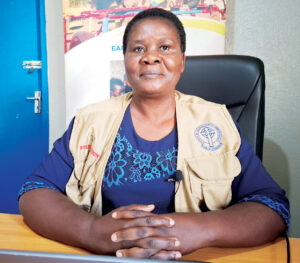
Caroline Kachilika, Programmes Manager for the Livingstonia Synod ECD Department, says the sector requires approximately K90 billion to function effectively, yet it receives only about K1 billion.
Kachilika suggests that the government should allocate at least 10 percent of the education budget to the ECD sector and consider constructing at least two modern CBCCs in every constituency nationwide.
“Apart from this, most of the caregivers in the country are not trained but, in the case of the few that are trained, some of them end up leaving the profession because they are not motivated. This is a concern because it is not cheap to train them. To train a caregiver, you need over K500,000,” she said.
To better understand the scale of the challenge, one only needs to look at Mzimba North.
The district has approximately 340 CBCCs—ranging from well-structured facilities to dilapidated buildings, centres operating in churches, on verandas of private homes, and even under trees.
There are over 3,000 caregivers in the district. Fewer than 2,000 are trained, and only 60 are on the government payroll. The rest serve as volunteers.
Mzimba North District Social Welfare Officer, Hellen Simwaka, acknowledges these challenges but says the government remains committed to improving the situation.
“We, as government, have an allocation special to assist in the renovation of ECD centres. In the 2025-26 financial year, we, as Mzimba North, are renovating Thukutu CBCC in Josiah Village, Traditional Authority Mtwalo. Talking of caregivers; yes, we have them but their capacity is limited because most of them are not trained. This is because training of these people is expensive,” she said.
Earlier last year, the government said it was set to train about 30,000 caregivers by 2026 and also ensure they are all on honoraria programmes.
Acting Director of Child Affairs in the Ministry of Gender and Social Welfare, Justine Hamira, said at that time that out of 26, 000 trained caregivers the country had, 2,000 were getting honoraria, with 3,000 others on the pending list.
As of last year, figures from the ministry showed that the country had about 46, 000 caregivers.
Despite the glaring challenges, research consistently shows that early childhood education shapes brain development and lays the foundation for cognitive, social and emotional growth for children.
It is, therefore, not by chance that the Malawi 2063 vision prioritises transforming the ECD sector through modern infrastructure, trained caregivers and adequate nutritional support, recognising it as a catalyst for national development.
However, as 2030 draws closer, Malawi could fail to meet Sustainable Development Goal target 4.2, which seeks to ensure all girls and boys have access to quality ECD, care and pre-primary education, preparing them for primary school.