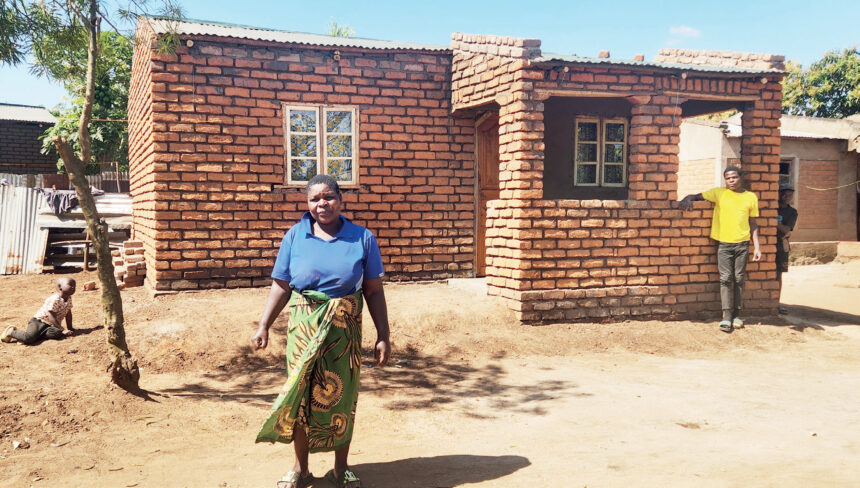
In Nankhumwa Village in Chiradzulu District, visible changes are beginning to take hold. New iron-sheet roofs glint in the sun where thatch once sagged.
The sound of construction tools echoes across the village and conversations now centre on farming plans and business ideas rather than food shortages or petty theft.
For many residents, this shift marks the beginning of a new chapter.
The transformation began with the arrival of unconditional cash transfers. These were not loans or handouts tied to restrictive conditions but a demonstration of trust in people’s ability to make the best choices for their families.
Forty-five-year-old Befia Jalison explains how difficult it once was to put food on the table.
- Advertisement -
“For the first time, three-quarters of the people here can afford to eat three meals a day,” Jalison says.
Chiradzulu is one of the districts in Malawi experiencing significant hunger due to a combination of factors including drought, erratic rainfall and limited access to agricultural inputs.
“Crime has gone down. Even our houses look different. You see iron sheets everywhere now. Things are good now. Really good,” she adds.
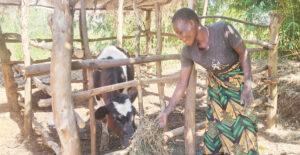
Sixty-year-old Bertha Billiat knows this change all too well. A tomato and maize farmer, she used to struggle to make ends meet, often earning as little as K800 from her produce.
- Advertisement -
- Advertisement -
“Now, I make K80,000. My husband and I decided to buy fertiliser and start keeping livestock. In two years, we will have five cattle and some pigs,” Billiat says.
She has also introduced crop rotation to her fields and has harvested five bags from winter cropping for the first time.
Billiat no longer worries about thieves stealing her harvest and she feels empowered by receiving money directly into her account.
For Lucy Joseph, the changes have meant dignity and new possibilities. Working as a housemaid in Manja, Blantyre, she has stopped sending money home to support her mother and two children.
“Before, life was so difficult. Now my mother can buy food and she has started a small business,” she says.
Village Head Mwamadi says the entire community has been transformed.
“I reroofed my house, which was leaking during the rainy season. I managed to buy a motorbike and I even managed to buy land,” he says, standing near a newly built nursery school.
The local leader adds that it is now easy to tell parents to send their children to school because they can afford it.
Once a potato farmer, the chief states that hunger and crime have both sharply declined. Disputes are also easier to resolve.
He notes that domestic violence often occurs when men lack income and he expresses hope that new economic opportunities would reduce tension in households.
Mwamadi now uses his motorbike and a newly acquired fridge for small business ventures.
In one corner of the village, Ketelena Witness points to her neighbour’s home. “John Kholowo now has green iron sheets on his roof,” she says. “We are helping each other buy roofing sheets.”
Nearby, 60-year-old Gogo Mwayi recently slept on a bed for the first time in her life.
Over the past 15 years, Malawi has received an estimated $16.5 billion in development assistance. Yet poverty remains persistently high, with 70 percent of Malawians still living below the extreme poverty line of $2.15 per day.
Climate change, declining agricultural productivity and frequent economic shocks keep many families trapped in cycles of hunger and debt.
In 2019, however, the nonprofit organisation GiveDirectly began working in partnership with the Government of Malawi to change the approach to aid.
Instead of distributing goods or services, they send cash directly to recipients with no conditions attached.
Since then, the organisation has delivered more than $101 million to over 226,000 households in some of the country’s poorest areas.
“Our aim is to lift every person in Malawi above the extreme poverty line. We believe people know best what they need. We simply give them the resources and the dignity to decide for themselves.” External Relations Senior Manager at GiveDirectly, Martin Kalima, says.
Across 11 districts and four cities, families are using the money to start businesses, pay school fees, buy livestock and improve their homes.
In places such as Nankhumwa, the results are visible and deeply personal. This is proof that a small amount of cash, placed in the right hands, can ignite a chain reaction of hope and resilience