By Brenda Kayo:
For years, farmers in Ntchisi and Dowa struggled to make ends meet. Their days began before sunrise, tending tiny plots of maize and vegetables, often with little hope of a full harvest.
Unpredictable rains, poor soils and pests meant many families went hungry, while dreams of improving their livelihoods seemed out of reach.
Today, however, the landscape is changing. Fields are greener, harvests larger and hope is returning.
The change is driven by the Agro-ecology project, implemented by the Catholic Development Commission (Cadecom) and funded by the Norwegian Church Aid and Danish Church Aid (NCA-DCA).
- Advertisement -
The project teaches sustainable farming techniques while providing critical support such as livestock, seeds and training.
On this morning, Elena Chibwazi, a 35-year-old mother of five from Njolomole Village under Traditional Authority Mponela in Dowa, crouches in her garden, examining her rows of thriving vegetables and fruits.
A few years ago, this scene would have been unimaginable.
“We used to eat only once a day. Some mornings I could not even give my children breakfast before school. I felt hopeless,” she recalls.
- Advertisement -
- Advertisement -
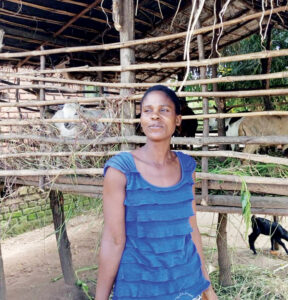
That began to change when she joined the agro-ecology programme. She received goats as part of a group, with 60 percent sold collectively to raise capital and 40 percent distributed individually to farmers.
“We sold some of the goats together and used the money to buy seeds, tools and other supplies. The goats I kept individually now provide manure for my crops, and the difference is incredible,” Chibwazi explains.
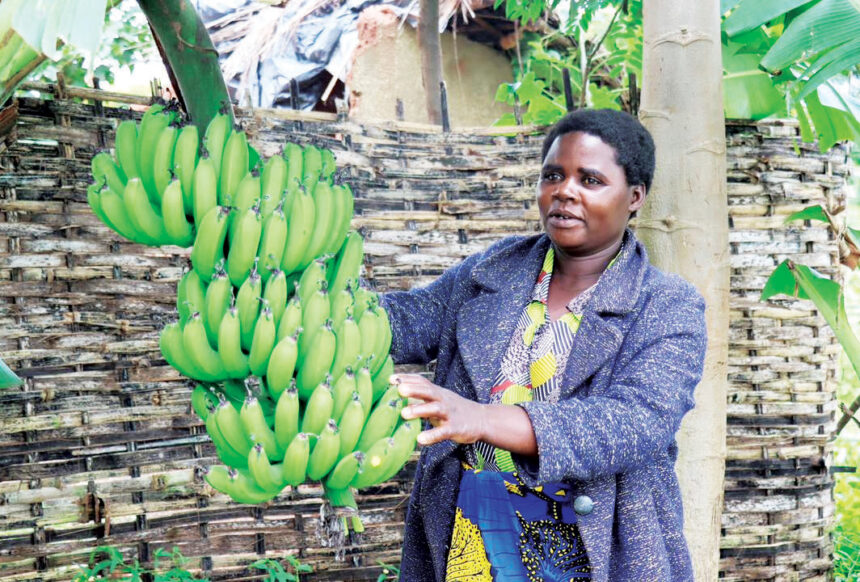
Her garden is a testament to what agro-ecology can achieve. Intercropped maize and beans, vegetables and soya thrive side by side, nourished by goat manure.
Fruit trees such as bananas, oranges and pawpaw line the corners of her farm, capturing rainwater and providing shade.
“The trees give us food and extra income. I can sell some fruit and buy things my family needs,” Chibwazi says, beaming.
Agro-ecology has transformed not just her farm but her family. With larger harvests, her children are now well fed.
Some kilometres away, Haward Kapheni kneels in his rice paddies.
Mud clings to his hands as he carefully applies organic manure to the young rice shoots.
“Before, I could barely harvest enough to eat, let alone sell,” he says.
Through the agro-ecology programme, Kapheni learned how to use manure to restore soil fertility and rotate his crops.
“My harvest doubled in one season. The grains are bigger, healthier and I can sell the surplus. Now I can invest back into the farm and plan for the future,” he says.
Kapheni’s rice farm is a living classroom. Neighbours often visit to see his techniques in action, asking questions and taking notes.
Meanwhile in Ntchisi, Sathyoleka Millward tends a small herd of goats. He also raises rabbits and pigs, using manure from all his animals to nourish his vegetable gardens.
Millward received goats through the programme in a group. Sixty percent are sold collectively, while the remaining 40 percent are kept individually.
“My farm produces maize, beans and vegetables throughout the year. The animals give us income and improve the soil for crops. I can sell produce and animals, reinvest in the farm and feed my family. Life is completely different from a few years ago,” he says.
Millward has also planted fruit trees to capture rainwater. The trees provide food and shade and act as a natural water reservoir for his garden during dry spells.
His children often play under the trees, collecting fallen fruit while learning the value of hard work and sustainability.
Cadecom Project Coordinator Madalitso Chilalire says that across Ntchisi and Dowa, families are experiencing a ripple effect of change.
Chilalire explains that through livestock rearing, crop rotation, organic manure and fruit tree planting, farmers are seeing higher yields, increased incomes and healthier families.
He adds that the goat programme is a cornerstone of this success. Selling 60 percent of goats collectively generates capital for reinvestment, while the 40 percent distributed individually allows each farmer to benefit directly.
The manure produced by the animals nourishes crops, boosting harvests across the community. Families now raise a mix of livestock and crops, creating multiple income streams and improving food security.
“Agro-ecology is more than growing crops. It is about empowering communities, building resilience and ensuring sustainable livelihoods. The progress we are seeing is very encouraging,” Chilalire says.