Agriculture transformation experts agree that mechanisation is crucial for Malawi, a country whose economy relies heavily on agriculture.
Despite the introduction of the National Agriculture and National Irrigation policies by then-President Peter Mutharika, farmers continue to face challenges with mechanisation due to high costs.
These policies aimed to enhance agricultural investment and optimise land use through modern technologies.
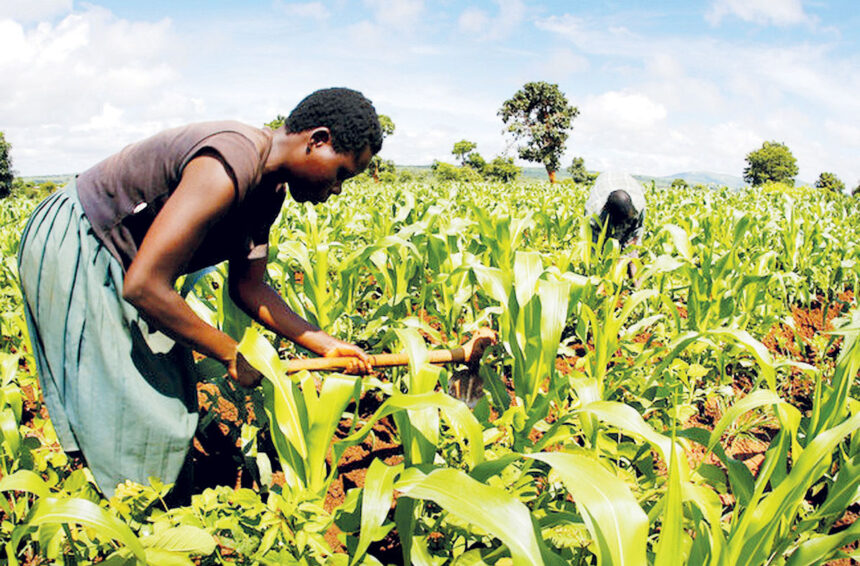
For smallholder farmers, who are often focused solely on daily survival, the shift from manual methods such as using a hoe seems almost impossible.
Even basic machinery for tasks like shelling and winnowing remains out of reach for these farmers, who are looking to the government and other stakeholders for meaningful support.
- Advertisement -
“I have interacted with farmers from other countries who are producing more than fivefold the yield on similar land with minimal effort because most processes are mechanised,” tobacco farmer Fanizo Mtsitsi from Ntchisi says.
Mtsitsi has heard that the government is working to make mechanisation a reality for Malawian farmers but is sceptical about whether he will benefit from these initiatives within his lifetime.
He admits he cannot afford mechanisation on his own, citing the high costs involved.
“Otherwise, we shouldn’t be stuck with the hoe in this generation. Manual production should be a thing of the past, but we don’t have a choice,” Mtsitsi says.
- Advertisement -
- Advertisement -
Commercial farmer Joseph Banda notes that manual farming methods should be outdated, given the technological advancements available to ease crop production.
However, he acknowledges that mechanisation requires significant investment, which many farmers cannot afford due to low incomes.
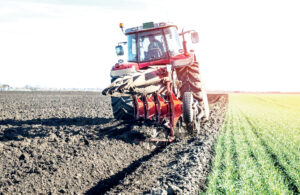
“We need to move from traditional methods to more efficient processes that require less effort. Manual tasks like winnowing, cleaning produce and tilling should be obsolete.
“But how many farmers can afford a tractor or even a basic winnowing machine? How many have the skills to operate farm machinery? There is still much to be done to improve agriculture,” Banda says.
He adds that mechanisation often requires large plots of land, which most smallholder farmers in Malawi do not have.
Machinery is most effective on larger plots of up to 50 hectares, while most smallholder farmers manage less than three acres.
“Additionally, much of our land is unsuitable for mechanisation due to uneven terrain, making the use of machinery like tractors nearly impossible.
“In countries like Brazil, South Africa, Zimbabwe and Nigeria, they had to level the land in some cases to facilitate mechanisation,” Banda explains.
He hopes that agricultural financing will eventually be amplified so that farmers, who significantly contribute to Malawi’s economy, can transition from manual methods to machinery.
“At present, there is no clear programme to move away from traditional agricultural practices. Despite extensive discussions about mechanisation, no tangible progress has been made,” he laments.
The government, which has long promoted agriculture without much success, has now introduced the ATM Strategy—Agriculture, Tourism and Mining.
President Lazarus Chakwera believes that Malawi can overcome poverty through strategic investments, including in agriculture, with a focus on mechanisation.
Under the ATM Strategy, Malawi aims to enhance productivity through commercialisation and digitisation, improve value through industrialisation and promote sustainability through climate-smart practices.
However, for farmers like Banda, what is needed is access to the tools that make mechanisation feasible, even at the smallholder level.
“Agriculture cannot thrive if farmers at the grassroots level are left out. We are the ones who feed the country and should be able to continue, and even expand, with this task,” he says.
Banda, on the other hand, acknowledges that operating farm machinery requires technical expertise but insists that training for farmers is essential.
“For instance, there are tractors in local councils that we could use, but accessing them is not easy. That would have been a good starting point for mechanisation for small-scale farmers,” he concludes.