By Nelson Gonjani:
Poverty remains one of the leading drivers of school dropout rates, child marriages and teenage pregnancies in Malawi, vices that continue to rob children, especially girls, of their future.
In many communities, the problem is compounded by marital breakdowns that leave women as single heads of households, with little or no means of survival.
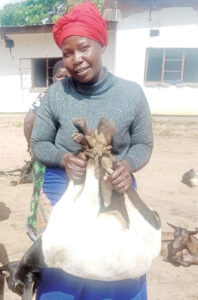
In Group Village Headman Kabera, under Senior Chief Lukwa, in Kasungu District, the story of single mother Funny Shadreck reflects the harsh reality faced by many families.
Her daughter, Mercy Chisale, was on the verge of child marriage after dropping out of school due to extreme poverty.
- Advertisement -
Shadreck recalls how her life took a drastic turn after her husband divorced her, leaving her solely responsible for the welfare of their three children.
“Life became very hard after my husband divorced me and disappeared. I became the breadwinner by default, albeit without any source of income,” she says.
She tried to survive through casual piecework but the income was unreliable and insufficient.
“There were times when we spent days without food. As a parent, it was heartbreaking and the situation kept getting worse,” Shadreck explains.
- Advertisement -
- Advertisement -
The hardship soon forced her firstborn daughter, Mercy, to drop out of school at the age of 13 while in Standard 3.
With no money for basic necessities, Mercy remained at home, helping with household chores and farming.
“I tried my best to provide for her education but failed. Eventually, she dropped out of school because I could not meet the basic requirements,” Shadreck says.
As a school dropout with little hope for the future, Mercy began considering marriage as an escape route.
Despite her mother’s efforts to discourage her, the situation seemed out of control.
“My daughter was almost married. I tried to encourage her not to take that path but I felt powerless,” Shadreck recounts.
Hope came when Lisitu Community-based Organisation (CBO) identified Mercy and other vulnerable children who had dropped out of school due to poverty and were at risk of getting into child marriage.
“The organisation encouraged my daughter and others to return to school so that they could achieve their dreams,” says Shadreck, smiling.
Mercy returned to school and is now in Standard 4, with her dream of becoming a nurse rekindled.
“Her dream of becoming a nurse was almost buried when she wanted to get married. Now she is back in school but our challenge has been lack of sustainable income for the provision of basic needs,” Shadreck adds.
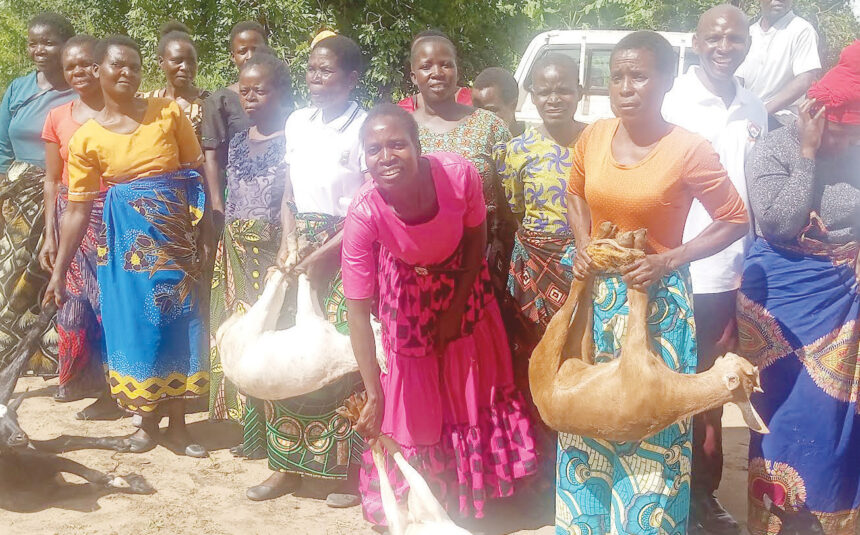
To address this, Lisitu CBO provided a two-day livestock farming training, followed by the distribution of goats to 20 vulnerable households whose children had dropped out of school due to poverty.
The initiative is part of the organisation’s Community- Driven System Change for Ending Child Marriages Programme, which includes a ‘Pass-on Goat’ model supported by Firelight Foundation to improve household livelihoods.
Lisitu Executive Director Frazer Sungani says the training was designed to ensure sustainability before the goats were distributed.
“Child marriages are rampant in this area, largely driven by poverty and the high number of female-headed households resulting from divorces. Through this initiative, we have disrupted and ended over 267 child marriages,” he says.

Sungani adds that not all children can return to formal schooling due to age.
“Some children are over-aged and uncomfortable going back to primary school. We support them to acquire vocational skills at Bowe Vocational Technical College instead of resorting to early marriage,” he explains.
For Shadreck, receiving a goat marked a turning point.
“This is a milestone for my family. I will treat this as a business and also use the manure to improve my farming. I am optimistic that our lives will change for the better,” she says.
Kasungu District Child Protection Coordinator Samuel Kamalonda has expressed concern over the rising cases of child marriage in the district. He reveals that more than 6,000 cases were recorded in 2025, up from about 4,000 in 2024.
“These figures are alarming. We are calling upon stakeholders to intervene urgently with different approaches, just as Lisitu is doing,” Kamalonda says.
He also urged beneficiaries to ensure their children remain in school.
“Parents must not allow their children to drop out of school again. Failure to do so may attract legal action for negligence,” he warns.
Kasungu West Constituency Member of Parliament (MP) Jailosi Bonongwe has also applauded the intervention, pledging his support to protect children’s rights in the constituency.
“I am impressed with this initiative and will ensure that children in this area receive the necessary support to stay in school,” he says.
Bonongwe further called on traditional leaders to enact and enforce by-laws that protect children from early marriage.
“This fight requires collective effort. By-laws are key to safeguarding children’s rights,” he adds.
Responding to the call, Senior Group Village Headman Kabera assured stakeholders of his commitment.
“We, as custodians of culture, are deeply concerned by the rising cases. We will enact by-laws to protect our children,” he says.
In 2025 alone, Kasungu District recorded 10,742 teenage pregnancies, many of which resulted in school dropout and child marriage, highlighting the urgency of sustained community-based interventions.