By Isaac Salima:
As Malawi joins the rest of the world in commemorating World Environment Day today, one remarkable conservation story from Neno District highlights the impact a single determined individual can have on protecting natural resources.
For more than 20 years, Ian Bartlett has quietly dedicated himself to protecting a tract of indigenous woodland along the Shire River.
The woodland is known as Mpatamanga Wildlife Ranch.
What began as a personal commitment to preserve a threatened landscape has evolved into one of Malawi’s most significant examples of long-term private woodland conservation.
- Advertisement -
Bartlett is perhaps better known internationally as ‘The Real Crocodile Hunter’, a title earned during a decade spent assisting with problem crocodile control operations in Malawi.
However, while his crocodile hunting experiences have attracted worldwide attention, it is his conservation work that may ultimately leave the greater legacy.
An independent forest inventory conducted by the Forestry Research Institute of Malawi (FRIM) found that Mpatamanga Wildlife Ranch covers approximately 238 hectares and contains an estimated 519,180 indigenous trees.
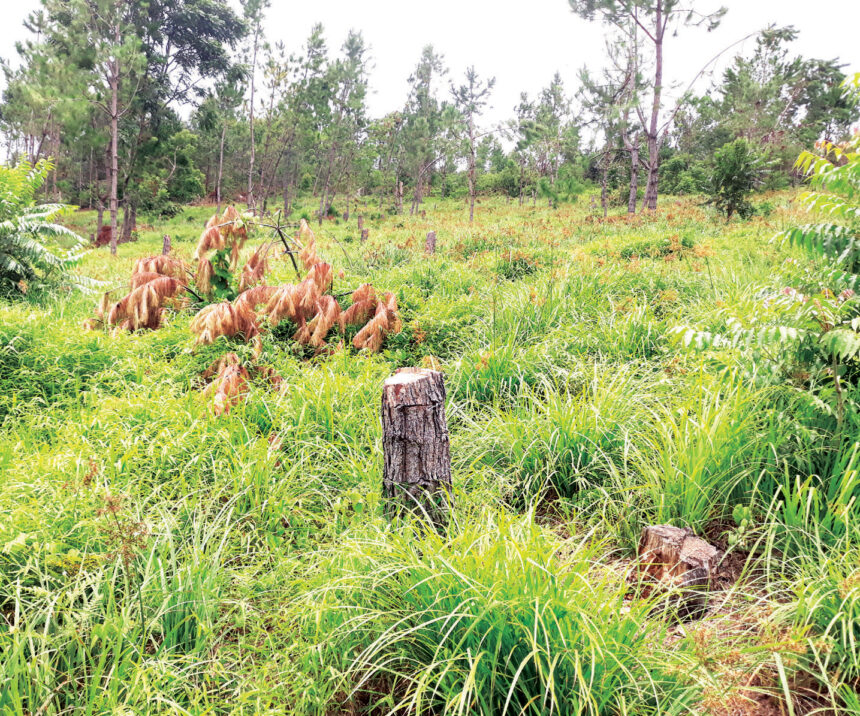
The assessment concluded that the woodland is recovering from historical disturbances, including charcoal production and illegal logging, that affected the area before it came under improved management.
- Advertisement -
- Advertisement -
The inventory identified 68 indigenous tree species and documented the presence of several protected and threatened species, including African Blackwood (Dalbergia melanoxylon), Burkea africana, Pericopsis angolensis, Pterocarpus angolensis, and Terminalia sericea.
Forestry experts involved in the assessment noted that the woodland exhibits the characteristics of a recovering miombo ecosystem. The overwhelming majority of trees recorded were younger regenerating stems, suggesting that years of protection have allowed natural regeneration to occur on a significant scale.
The findings come at a time Malawi continues to face serious environmental challenges. Deforestation remains one of the country’s greatest threats, driven by charcoal production, fuelwood demand, agricultural expansion and population growth.
The loss of indigenous woodland affects biodiversity, water resources, soil stability and the country’s resilience to climate change.
Against this backdrop, Mpatamanga represents a rare example of environmental recovery.
The FRIM report found no evidence of illegal logging or charcoal production during the assessment and recommended continued protection, monitoring and sustainable management to safeguard the recovering forest.
Located along the scenic Mpatamanga Gorge on the Shire River, the ranch not only protects woodland but also preserves an area of exceptional natural beauty. The gorge, with its dramatic landscape and riverine ecosystem, forms part of a wilderness that is increasingly rare in many parts of Malawi.

Environmentalists often argue that conservation success depends upon long-term commitment. Mpatamanga appears to support that argument.
More than two decades of continuous protection have transformed an area once vulnerable to degradation into a recovering woodland that is supporting hundreds of thousands of indigenous trees.
Beyond conservation, Bartlett has shared his experiences through his book, Memoirs of a Real Crocodile Hunter, which chronicles his years hunting dangerous crocodiles and dealing with human-wildlife conflict in Malawi. The book is available worldwide in paperback, hardback, e-book and audiobook formats and has introduced international audiences to both Malawi’s wildlife and the challenges facing those who live alongside it.
As Malawi marks World Environment Day 2026, the story of Mpatamanga Wildlife Ranch serves as a reminder that conservation is not always driven by large organisations or international funding; sometimes, it begins with one person deciding that a piece of wilderness is worth protecting.
At a time indigenous forests continue to disappear across much of Africa, the recovery of more than half a million trees at Mpatamanga offers a message of hope: given protection, patience and long-term stewardship, nature can recover.
And in an era of increasing environmental pressure, that may be one of the most important lessons of all.