By Given Chichitike, contributor:
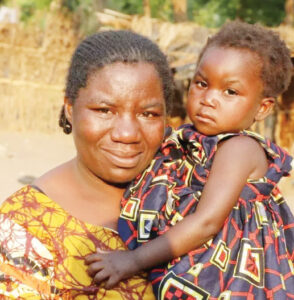
Alice Pearson, from Traditional Authority (TA) Kasisi, can now smile as her four-year-old daughter, Samchristwell, has recovered from malnutrition.
Unicef, in collaboration with the government of Malawi and with support from the United Kingdom in Malawi, has supported the early identification and referral for treatment of children under five with severe acute malnutrition through nutrition mass screening.
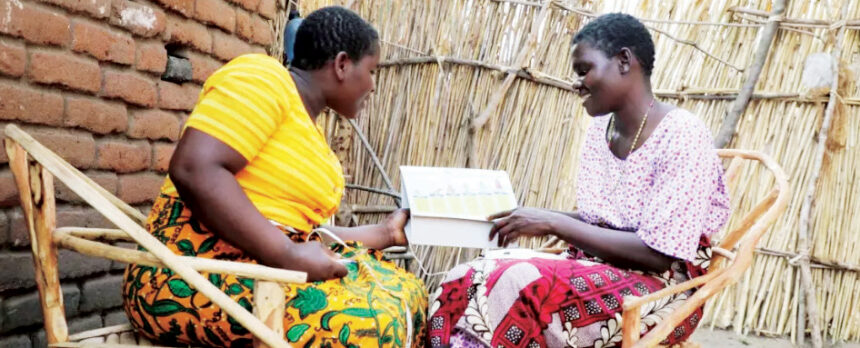
Pearson explains how the nutrition cluster leaders, who are going door to door in her area, found her at home to assess her child’s nutritional status.
“Before the cluster leader visited me, I did not know that my child was malnourished. But when the cluster leader came and assessed my child using the mid-upper-arm-circumference measuring tape, I realised that my child was malnourished,” she says.
- Advertisement -
Pearson adds that the cluster leader then took her through a step-by-step counselling session on how to improve her child’s nutritional status.
“I immediately began following the guidance on preparing diverse meals from six food groups and I noticed that after a few months, my child’s nutritional status improved,” she adds.
Janet Siliya, a nutrition promoter in Mwingama Village, TA Kasisi, states that the door-to-door nutrition screening for children under five is facilitating the early identification of undernourished children, which in turn ignites immediate community support for their recovery.
“Firstly, we map households with children under five and pregnant women. Then, we develop a work plan for our care group to ensure we reach every household for screening.
- Advertisement -
- Advertisement -
“During our visits, we use the Mid-Upper- Arm-Circumference (Muac) tape to assess the children and depending on the results, we provide tailored counselling to the caregivers,” Siliya says.
Siliya, who oversees three care groups comprising 343 under-five children from 336 households, further explains that their goal is to utilise community efforts and locally available diverse foods to eliminate malnutrition in their area.
“Our aim is to ensure that every child in our area is ‘on green’ when measured using the Muac tape, as this signifies that the child is healthy and we are determined to achieve it,” she explains.
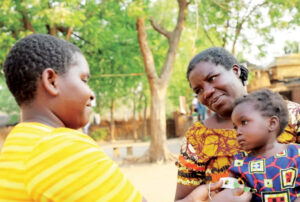
Alinafe Chinkhali, a nutrition cluster leader in TA Kasisi, says their care group meets twice a month to discuss the results of the nutrition assessments and the necessary actions to improve the health of the children.
“We identify the needs of each child found to be undernourished so that they recover quickly. For some children, we simply mentor their caregivers to prepare diverse, nutrition-rich meals for about two weeks, and they recover. For others, we refer them to the health centre for further support,” Chinkhali says.
Chinkhali adds that they continue to engage the parents of the undernourished children until their nutritional status improves.
Angella Petro, a Health Surveillance Assistant in TA Kasisi, praised the support received from Unicef, funded by the United Kingdom in Malawi, which has enabled the monitoring of nutrition assessment activities in the area.
“The community volunteers have been trained and well equipped to conduct nutrition assessments at the household level.
“This has helped us identify malnourished children early, before their condition becomes severe, thereby reducing the number of children reporting to health facilities for support,” Petro says
A total of 465,600 children under five were screened for child wasting and nutrition oedema, representing 62 percent of the target 750,000, in the five targeted districts of Mangochi, Lilongwe, Kasungu, Chikwawa and Nsanje between October 2024 and January 2025.
This initiative contributed to the admission of 5,760 children with severe acute malnutrition into the Community Management of Acute Malnutrition programme in the five districts.