
By Blessings Tambala:
Every day, the maternity wing and labour ward at Machinga District Hospital offer a painful glimpse into a growing crisis.
Teenage girls sit and wait for their turn to deliver, some looking anxious as they prepare to become mothers while they are still children themselves.
In the labour ward, others endure childbirth while some leave the hospital carrying newborn babies.
This has become an almost daily reality for health workers.
- Advertisement -
Machinga District Hospital records more than 2,800 births every month, with about 60 percent involving teenage mothers aged between 13 and 17, according to hospital spokesperson Wongani Nyirenda.
“This is a situation that requires serious attention because many of these girls are still children themselves. This puts their lives at risk and puts pressure on our health workers and resources here,” Nyirenda says.
He adds that the high number of teenage pregnancies is putting pressure on the hospital’s health workers and resources while exposing young girls to risks associated with pregnancy and childbirth.
The trend is equally worrying in other parts of the district.
- Advertisement -
- Advertisement -
According to district youth-friendly and health services coordinator Kenneth Mkandawire, Traditional Authority (TA) Ngokwe recorded 279 teenage pregnancies during the first half of this year, 70 more than the 209 recorded during the same period last year, representing an increase of about 34 percent.
“The figures show that teenage pregnancy is increasing. This is a serious concern because we are seeing more young girls becoming pregnant, and this calls for stronger interventions at community level,” Mkandawire says.
Machinga District Social Welfare Officer Charles Kazembe described the figures as worrying, saying the district continues to face a high burden of teenage pregnancies and child marriages.
Kazembe said the figures show the need for communities to intensify efforts to prevent teenage pregnancy and child marriage.
“Teenage pregnancy and child marriage remain serious challenges in Machinga. We need concerted efforts from communities, traditional leaders, parents and other stakeholders to protect girls and ensure that they remain in school,” he said.
Behind the statistics are girls whose lives can be disrupted by early pregnancy, with poverty, peer pressure, child marriage and cultural beliefs among the challenges facing communities.
To address the problem, Girls Not Brides Malawi, a national partnership of civil society organisations working to end child marriage, has intensified engagement with traditional leaders and other stakeholders in areas under TA Nsanama and Senior Chief Ngokwe through its Malawi Accelerator Programme (Map).

The programme is funded by the UNFPA-Unicef Global Programme to End Child Marriage.
Under Map, the organisation is working with traditional leaders and other local stakeholders to strengthen community action against child marriage and teenage pregnancy.
Map Programme Officer for Girls Not Brides Malawi Yamikani Flao says traditional leaders are central to changing harmful social norms in communities.
“Traditional leaders are important in this fight because they are closer to the communities. They can influence parents, young people and community members to change harmful practices and protect girls from child marriage and teenage pregnancy,” Flao says.
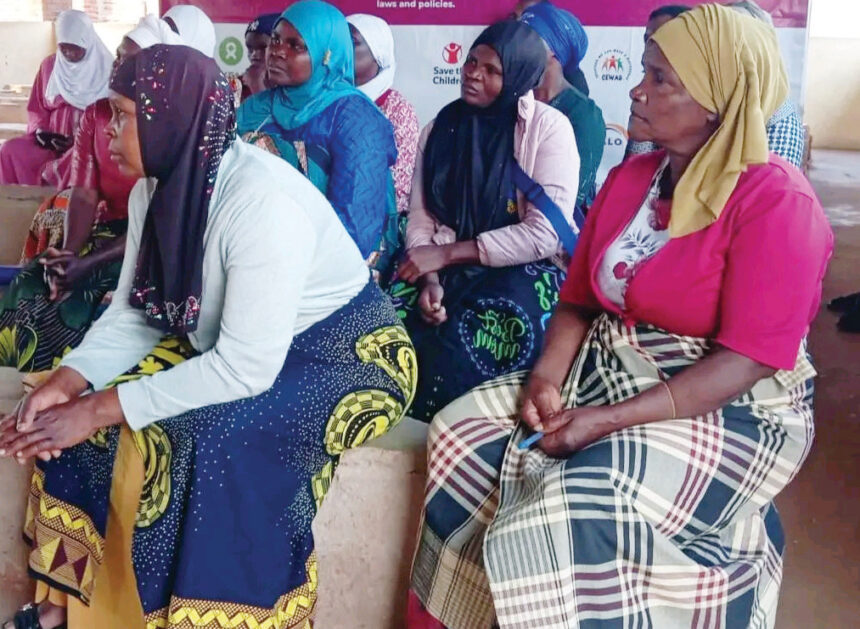
Speaking in TA Nsanama during a training session for local leaders and their spouses on child marriage prevention and response, Josephine Mwapasa, a spouse of Group Village Head Nturuma, said some cultural practices may be contributing to teenage pregnancy.
“A lot of girls are getting pregnant before they reach the age of 18. Some of the cultural beliefs contribute to this because, especially during chinamwali (initiation ceremonies), girls are sometimes told that they are now old enough and can bear children. When they leave the initiation camps, some of them try to put into practice what they have been taught,” she says.
Mwapasa commends Girls Not Brides Malawi for organising the training, saying it had equipped local leaders and their spouses with skills to help address teenage pregnancies in their communities.
Meanwhile, Girls Not Brides Malawi Southern Region Coordinator Russel Msiska called on stakeholders in the district to work together to end child marriages.
Girls Not Brides Malawi, a consortium of 90 organisations, is implementing the Malawi Accelerator Programme in Machinga and Mzimba districts, with a focus on ending child marriage.