
By Deogratias Mmana:
Japan is the only country to have ever suffered atomic bombing during World War 2 in 1945. Since then, the country has remained fully committed to realising goals of a world without nuclear weapons.
For example, it has been submitting resolutions on nuclear disarmament to the First Committee of the United Nations General Assembly since 1994.
Malawi, as a co-sponsor, has been supporting this Japanese initiative for long.
For the first time since the establishment of bilateral cooperation between the two countries, Japan held the Hiroshima-Nagasaki bomb exhibition in Lilongwe from December 10 to 13, depicting the situation in the two cities before and after they were bombed.
- Advertisement -
promoting peace
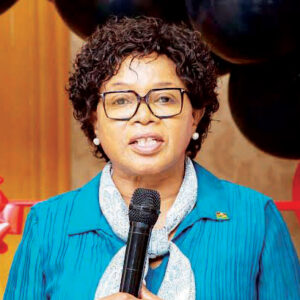
Malawi’s Minister of Foreign Affairs Nancy Tembo described the exhibition as significant, saying it gave a clear picture of what Japan went through during and after the bombing.
She said it was heart-breaking to see how bodies were vapourised.
Tembo said Malawi and Japan would not want to see a repeat of that incident.
“I urge Malawians to continue promoting peace,” Tembo said, adding that what happened in Hiroshima and Nagasaki was dehumanising.
- Advertisement -
- Advertisement -
Tembo commended the cordial relationship between Japan and Malawi since its establishment and described Japan as a true friend who has been there for Malawi at all times.
The exhibition took place at Lilongwe City Council, whose mayor Esther Sagawa said the event offered residents an opportunity to see the evil of nuclear war.
Sagawa took the opportunity to ask city residents to love and promote peace.
She also challenged the residents to learn from Japan’s efforts, which culminated in rebuilding after two cities were bombed in 1945.
Approximately 140,000 people were killed in Hiroshima and another 70,000 in Nagasaki during the bombings.

Japanese Ambassador to Malawi Yoichi Oya said the exhibition was meant to raise awareness on the dangers of nuclear weapons and also to call for peace in the world.
“I ask the world to not use nuclear weapons,” Oya said, adding that the exhibition was also part of Japan and Malawi’s commemoration of 60 years of bilateral friendship.
According to the Ministry of Foreign Affairs of Japan, as the only nation that has suffered from atomic bombings, Japan has a duty to make known the horror associated with the use of nuclear weapons while working toward the realisation of “a world without nuclear weapons”.
The ministry says Japan’s experience in leading efforts in the field of disarmament and non-proliferation is a valuable diplomatic asset.
The term ‘disarmament’, in general, refers to the reduction, curtailment or abolition of a variety of armaments and weaponry through international agreement.
In contrast, ‘non-proliferation’ refers to the prevention and control of the spread of weaponry, especially weapons of mass destruction such as nuclear, biological, and chemical weapons, as well as their means of delivery (e.g. missiles).
In addition, the term covers the prevention and control of the spread of materials and technologies related to weaponry.
Japan’s basic position is to ensure its peace and security through diplomatic efforts to ensure the stability of the surrounding region and the international environment.
The ministry says as the only state that has suffered the horrific effects of atomic bombings, Japan has played a leading role in the international community’s discussions on nuclear disarmament and non-proliferation, efforts that are premised on the realisation of “a world free of nuclear weapons”.
“Japan has been taking concrete action to call upon all nuclear-weapon states to take steps for nuclear disarmament while improving transparency in their armaments,” the ministry says on its page www. mofa.go.jp.
For example, at the 2010 Non Proliferation of Nuclear Weapons (NPT) Review Conference, Japan took a joint initiative with Australia to present specific proposals that would form the basis for consensus in the final document, which made a significant contribution to the success of the conference.
Additionally, in October 2011, Japan submitted, together with an unprecedented 98 other countries, its draft resolution on nuclear disarmament to the United Nations General Assembly.
It calls for steady implementation of the outcomes of the 2010 NPT Review Conference.
The resolution was adopted with the support of an overwhelming majority.
“Through these various efforts, Japan attaches great importance to steadily taking realistic steps toward “a world without nuclear weapons”, the ministry says.
Japan is also working on strengthening and improving the efficiency of safeguards by the International Atomic Energy Agency (IAEA), which is at the centre of the nuclear non-proliferation regime.
At the same time, Japan actively participates in, and contributes to international export control regimes, which are the frameworks for cooperation in export controls, and the Proliferation Security Initiative, which is an initiative for preventing the proliferation of weapons of mass destruction.