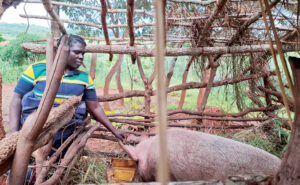
For nearly a decade, a farmers’ group in Seleman Village, Nkhata Bay North, kept hares. From the outset, the group, called Chanjati, appeared active, but in reality, its efforts yielded little returns.
Most members remained trapped in poverty; living in leaking grass-thatched houses, struggling to find enough food, and failing to pay school fees for their children.
The essence of being in a group literally meant nothing in as far as improving their livelihoods was concerned.
One of the members of the 15-member group, Sarah Banda, said without mincing words that they lacked direction.
“The challenge was that we were rearing hares as domestic livestock without looking at the commercial aspect of the issue. For years, we did not make any profit,” she said.
- Advertisement -
The turning point came in 2024 when the group was introduced to irrigation farming by extension workers from Temwa Malawi Organisation for Sustainable Communities and Development.
They were trained in low-cost, solar-powered irrigation technologies, an intervention that has since transformed their fortunes.
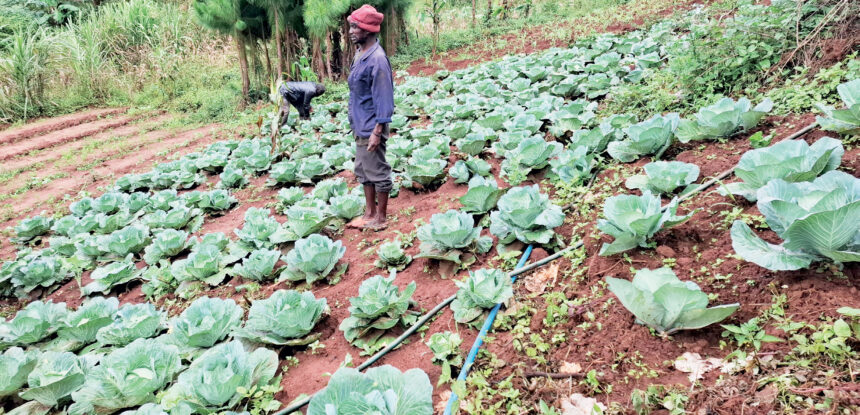
“We have perennial rivers here. Temwa supported us with a solar-powered water pump and constructed a water tank in 2025. On our first attempt, we grew cabbages and onions and realised K12 million,” Banda said.
She said the group shared part of the earnings and saved the rest for reinvestment.
- Advertisement -
- Advertisement -
“We had never handled such an amount of money before,” she explained.
The impact has been immediate. Banda, for instance, invested her share in a motorcycle, which she now uses to run her taxi business.
“There is a lot of profit in irrigation farming. Most of us are now doing better than before. We have already set aside K600,000 as start-up capital for this season,” she said.
Currently, the group is growing maize, carrots and cabbages under rain-fed farming while preparing for winter irrigation farming.
Another member, Masiya Nkhonjera, has used proceeds from one season to acquire pigs and goats.
“We are planning to utilise six acres during the winter, when we will grow carrots, cabbages, maize and green pepper,” she said.
For Ken Zikhale Phiri, joining the group three years ago marked a shift from subsistence to more productive farming.
“On my own, I struggled due to low yields. But, through the group, we receive guidance from extension workers, which has made our farming profitable,” he said.
Phiri added that he has gained skills in conservation agriculture, manure making and botanical pesticides.
“I am now able to harvest twice a year. Previously, poor yields meant relying on piecework just to survive,” he said.
Village Head Mlera has since urged community members to take advantage of available water sources to expand irrigation farming.
Nkhata Bay, a lakeshore district, has abundant perennial rivers that remain largely underutilised.
The traditional leader, who is also a member of the group, said he deliberately joined it to lead by example.
“There are many benefits with irrigation farming. We now have surplus food in our homes, something others can emulate,” he said.

Temwa Senior Projects Officer for Agriculture and Forestry, Eleazer Soko, said reliance on rain-fed agriculture is unsustainable due to climate change.
“With persistent hunger affecting many parts of the country, winter cropping through irrigation is a viable solution,” he said.
Soko said Temwa has, so far, trained seven farmer groups in solar-powered irrigation, benefiting over 100 households.
“Since 2024, we have seen improved income levels. Previously, most families struggled to support themselves but, now, more households are food secure,” he said.
He added that the organisation is promoting environmental conservation to protect water sources.
“We urge farmers to embrace winter cropping through irrigation as the rain-fed season comes to an end. This is a reliable way of addressing hunger,” Soko said.
Malawi is estimated to have over 400,000 hectares of irrigable land, much of which remains underutilised.
The underutilisation is mainly due to challenges such as irrigation infrastructure being capital-intensive, inadequate technical support and lack of proper markets for irrigation farmers.
However, the government says it will continue to scaling up investment in the agriculture sector.
According to the Ministry of Agriculture, Irrigation and Water Development Public Relations Officer, Salome Gangire, in the 2026-27 national budget, the government has prioritised irrigation expansion, farm input support and market development to boost productivity and reduce reliance on rain-fed farming.
Notably, she said K40 billion has been allocated to the National Irrigation Development Programme under the Public Sector Investment Programme, with an additional K6 billion for irrigation operations while K111.4 billion has been set aside for the Farm Inputs Subsidy Programme to support smallholder farmers with affordable inputs.