By Pemphero Malimba
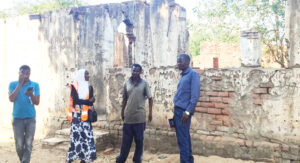
One morning in mid-March 2023, hundreds of under-five children, their parents, caregivers and local leaders woke up to the shocking state of Namisangu Community-Based Care Centre (CBCC) in Traditional Authority Liwonde in Machinga.
The roof was blown off leaving the structure, which community members constructed a decade earlier, unsafe for learning for over 100 children who were accessing Early Childhood Development education (ECD) at the centre.
“Following the damage, learning was halted because it was not ideal for the children. Parents were afraid to send their children to the centre,” Elina Winess, deputy head teacher at the CBCC, recalled.
Even when some insisted on continuing with the teaching and learning process, the number of children attending lessons reduced to about 50.
- Advertisement -
Namisangu CBCC chairperson Romas Malunga said the damage on the structure did not only affect the children but also expectant mothers.
“The CBCC was also used for many years as a village clinic for expectant mothers.
“When this happened, women were now travelling 12 kilometres to access vaccines and other medical services at the next nearest facility,” Malunga said.
Statistics from the Ministry of Gender, Children and Social Welfare indicate that Malawi has 13,920 CBCCs and 241 of these were damaged or rendered unsafe by the cyclone.
- Advertisement -
- Advertisement -
The damage on the CBCCs left thousands under-five children with no or poor access to ECD, eventually affecting the country’s quest for provision of this level of education to all children as stipulated by the 17 Sustainable Development Goals (SDGs).
SDG number four in particular highlights the need for countries to ensure that by 2030 all girls and boys should have access to quality early childhood development, care and pre-primary education so that they are ready for primary education.
For Namisangu, hope resurfaced for community members and children almost two years after the disaster when Oxfam in Malawi intervened through its Climate Just Communities project.
Funded by Development Alternatives Incorporated (DAI Global UK) and the Scottish Government, the project is being implemented in five districts of Salima, Zomba, Machinga, Phalombe and Karonga.
It also has a nationwide advocacy covering seven thematic areas: disaster risk management, livelihood security, loss and damage, resilient schools, water, sanitation and hygiene, advocacy and gender equity and social inclusion.
Valued at £1.6 million (about K3 billion), the project aims to strengthen community resilience to the material and social impacts of extreme weather events and environmental disasters such as floods, prolonged dry spells and cyclones.
In Namisangu, Oxfam in partnership with Churches Action in Relief and Development (Card), are conducting various interventions under the project including rehabilitation of five CBCCs.
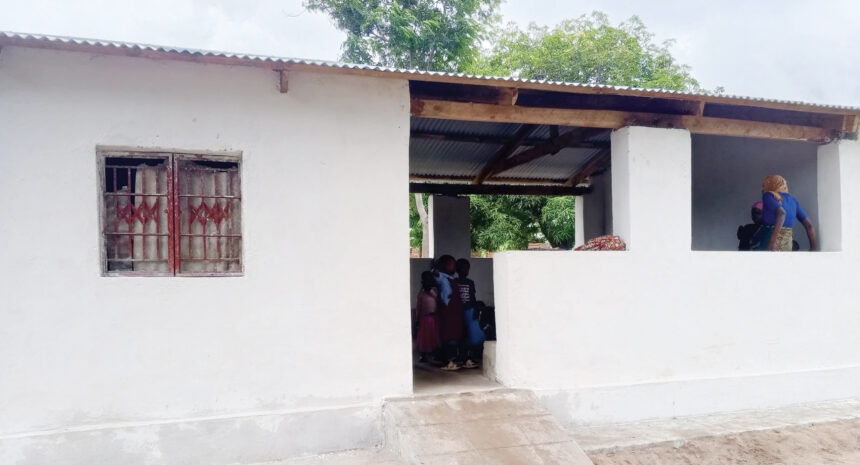
For Namisangu CBCC, the two organizations provided cement, iron sheets, window frames and other items for its rehabilitation.
The organizations also rehabilitated a borehole in the area which provides learners at Namisangu with clean water.
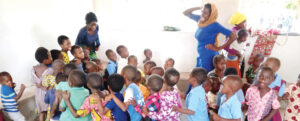
As a result, enrollment is surging again. There are now 78 learners.
“We hope that more and more learners will be coming because we have a conducive learning environment now,” Winess said.
The CBCC has four caregivers who provide lessons to the children. Despite their efforts to provide quality education at the centre, the caregiver face challenges at a personal level. They are not paid. They do work on voluntary basis. Sometimes, this lack of remuneration affects their motivation.
In addition, they lack first aid kits for them to be able to respond to emergency cases affecting the children.
According to the Ministry of Gender, Children and Social Welfare, Malawi has 49,000 CBCC caregivers with majority of them working on voluntary basis; only 2,000 receive honoraria largely through partner-supported initiatives.
But these CBCCs provide essential services not only to the children but also their parents, as testified by 46-year-old Laina Daiton, a parent to one of the learners at Namisangu.
“After the damage, we were not happy. Now that the centre has reopened, we are able to do house chores and other economic activities while our children at the CBCC,” she said.
“We have also noted that our children are behaving well when they get home. They get busy practicing poems and songs and reading and writing that they learn at school. My child has changed. He was misplacing things back home but once the CBCC rehabilitated him, he is now able to do things right,” Daiton said.
As one way of sustaining the operations of the centre, community members have established a village savings and loans group.
“We will be using the interests [generated through savings and loans] to support the CBCC. Whenever there is a need for maintenance works we will be using those funds,” Malunga said.
Card project assistant Blessings Nkhwazi expressed delight to see the centre and other four others transformed in the area and preparing children to excel in upper levels of education.

Ministry of Gender, Children and Social Welfare spokesperson Linda Moyo said the ministry focused on promoting coordination and providing policy guidance in the transformation of CBCCs hit by Tropical Cyclone Freddy across the country.
“Our efforts have focused on coordination, policy guidance and technical oversight, working closely with district councils and partners to support renovation, re-registration and improved management of the affected CBCCs.
“These efforts align with the National Early Childhood Development policy which promotes community ownership while leveraging partner support for infrastructure rehabilitation, caregiver training and service quality improvement,” Moyo said.
She further said the ministry advocates for sustainable incentives for caregivers in form of learning materials, community food contributions and periodic material support “to ensure children have a safe, stimulating learning environment.