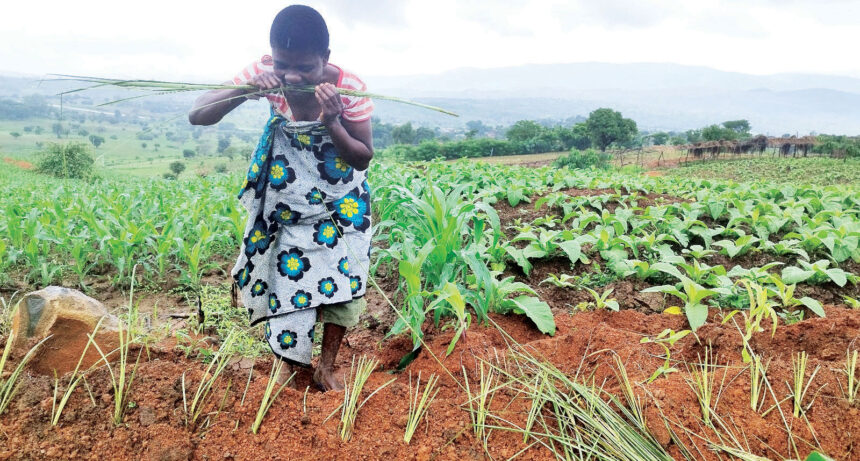
Emmie Gondwe, a 35-year-old single mother from Chikakula Village, Traditional Authority Mwalweni, in Rumphi, has struggled with soil erosion for years, witnessing a steady decline in her crop yields.
Farming predominantly in hilly areas prone to landslides, Gondwe primarily grows tobacco, maize and groundnuts.
She estimates that nearly half of her crops are lost annually due to soil erosion, relegating her to subsistence farming despite aspirations of commercial success.
Employing three people to assist in her tobacco fields, Gondwe’s annual yields fall short of their potential due to the persistent challenge of soil erosion.
Each of the farmers produces approximately 15 bales of tobacco, each weighing 100 kilogrammes (kg).
- Advertisement -
For, maize she gets around 40 50kg bags from her two-acre piece of land.
“I know my produce could have been higher than this,” she said.
Gondwe’s plight reflects a broader issue facing Malawi, where soil erosion threatens agricultural development.
Studies reveal that soil loss not only diminishes cultivable soil depth but also depletes fertile soils, leading to reduced agricultural productivity, heightened fertiliser expenses, and a decline in overall crop profitability.
- Advertisement -
- Advertisement -
“I was then introduced to some form of farming where contour ditches are created to slow down the water movement and reduce its erosive force.
“I was one of those who did not like the idea of having the swales. This is because there are a lot of holes dug in the fields. To me, I felt this was a waste of land,” she Gondwe says.
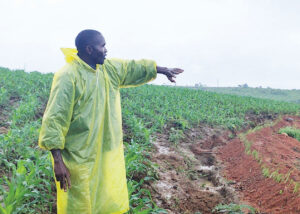
Another farmer Peter Gondwe, who is also Village Head Mawondo, states that soil erosion has been one of the factors leading to low yields in his village.
Peter Gondwe has about 15 acres where he grows maize, beans, groundnuts and tobacco. He says soil erosion has been very high in the area due to widespread deforestation.
“We used to have thick forests in our area but due to overpopulation, people have started opening new farms on the hills. They end up clearing trees, which is the necessitating the massive soil erosion,” he says.
However, the narrative could change this farming season owing to the Climate Smart-Enhanced Public Works Programme (CS-EPWP), a component under the Social Support for Resilient Livelihoods Project (SSRLP).
The project aims to restore degraded landscapes, offering a lifeline to farmers like Emmie Gondwe whose hillside farm now wears contour ditches and vetiver grass.
“I have all the belief that this year, the harvest will be higher because since the onset of the rains, I have not had any experience of soil erosion,” the local ruler says.
Participants in the CS-EPWP, including Gondwe, receive a compensation (K1,200 per day) for their efforts in activities such as contour marker ridge construction, vetiver grass planting and natural tree regeneration.
The project has at least 8,000 participants in the district.
Stella Gondwe, a forewoman of Chivwayuma Hotspot, where some of these interventions are taking place, said despite initial scepticism, the project’s success in curbing soil erosion has spurred interest among other farmers seeking assistance with similar interventions.
“There was a lot of resistance at first, because farmers felt a lot of land would be wasted to dig ditches that would collect run-off water.
“We tried with few hill-lands and the results were big that other farmers are now coming free to ask if we call also help them make contour marker ridges and plant vetiver grass,” Stella Gondwe.
Julius Kandongo, an extension officer overseeing the project in the Ntchenachena- Phoka catchment area, emphasises the importance of community involvement in sustaining these efforts.
Kandongo says through tree-planting initiatives featuring indigenous species like Nsangu-nsangu and commercially viable options like pine, the project aims to stabilise soils and mitigate the risk of floods and landslides.
“Rumphi District is surrounded by hills but most of them do not have rocks to support the soils. Worse still, most of the trees have been cut down.
“A lot of landslides and soil erosion occur here. So, the coming of this project will help that the trees that were cut down should be brought back. In the long run, we would also reduce incidences of floods,” he says.
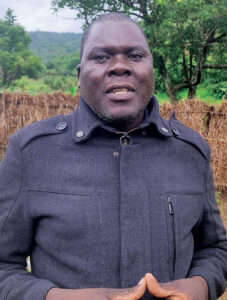
Hastings Makonokaya, District Project Facilitator, says they are currently dealing with three sectors namely, forestry, soil and water conservation and livelihood.
Makonokaya says so far, about 15 hectares of land has been restored in Ntchenachena and more than 70 hectares in all the 13 catchment areas in the district.
“We are doing forestry regeneration whereby we have natural trees and we are doing reforestation wherever there is deforestation.
“In the sector of land resource, we are doing soil and water conservation where we are constructing assets like check dams, swales, marker ridges and other land resource associated interventions.
SSRLP is a Malawi Government project funded by the Multi Donor Trust Fund facilitated by the National Local Government Finance Committee in all the 28 district councils.
In the face of adversity, Emmie Gondwe and farmers alike are embracing innovative solutions to combat soil erosion, paving the way for a more sustainable and prosperous agricultural future.