By Charles Mpaka:
Why they have the word ‘fish’ in their name is a story for another day but redclaw crayfish have the look of a really notorious creature that is not fish.
Two strong claws, more than half a dozen legs for movement, a body looking like an armour, a head shaped like a big screwdriver with inordinately big eyes on it and a mouth that’s more or less like a forest of jutting thorns and grown vines, crayfish have everything about them that makes them look ruthless.
So when four Zambians smuggled the live crustaceans into Malawi on May 16, 2025, the authorities – Malawi Revenue Authority (MRA), Malawi Police Service and the Department of Fisheries – made sure they arrested them and get them charged.
On the same day, the Department of Fisheries applied to the court in Lilongwe to have the crayfish destroyed. Permission granted, the contraband was incinerated at Kamuzu Central Hospital.
- Advertisement -
On May 23, the four appeared in court where they pleaded guilty to the charges.
On May 26, they got convicted and sentenced. They paid fines to escape jail terms and went back home.
It was the first-of-its kind case in Malawi, and probably the first case known to have moved so swiftly in a system so famous for its not being in a hurry on any case.
But the real question is: Why did Malawi have to bother about a mere 250kgs of some insect-like, ugly creature whose cousin should be a prawn or crab but bears the name ‘fish’ which it may have acquired dubiously?
- Advertisement -
- Advertisement -
First, the four did not have the requisite authorization from the Department of Fisheries for them to transport into Malawi live crayfish as is required by the law.
A case report produced by the department says in doing so, the Zambians contravened provisions of the Fisheries Conservation and Management Act (1997) that prevent the introduction of non-native species that pose ecological, economic and social threats.
Secondly, and worse, according to the report, across their several species, crayfish adapt easily to their new environment, are indiscriminate in what they eat and they are aggressive in their behaviour.
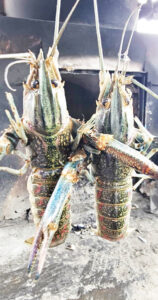
A native of Australia, once introduced into non-native ecosystems, redclaw crayfish can disrupt existing aquatic communities, tear apart food webs and change the ecological habitat in a number of ways.
Introduced in water bodies like Lake Malawi, the crayfish would prey on fish eggs and juveniles, directly reducing native fish populations.
They would compete with the prized chambo and other species in the lake for food and shelter. Due to their aggressive nature and high reproductive rates, they would emerge victors, the report indicates.
It furthers says crayfish would alter the new habitat by burrowing and feeding on aquatic vegetation and they are known to transmit diseases, potentially leading to disease outbreaks and further decimations of native fish populations.
By trafficking the live crayfish into the country, the four Zambians essentially put some of Malawi’s national interests in peril, the department suggests.
“The suspects’ unauthorized transporting and bringing of crayfish poses risks beyond ecological and economic concerns,” reads the report, citing threats to livelihood of millions of Malawians that rely on the fisheries sector, food insecurity that would come with reduced fish stocks and risks to public health.
Maxon Ngochera, Senior Deputy Director of Fisheries in the Department of Fisheries, tells Malawi News that the four said they were bringing the crayfish to a Chinese buyer in Lilongwe for use in Chinese restaurants. That’s because crayfish can also be a culinary delight – as are many crustaceans of its like.
One of the smugglers told the court that this was the second time he had trafficked the crayfish into Malawi.
They were convicted on possession of live, illegal and aquatic animals and on possession of alien species. They paid fines ranging between K50,000 and K150,000, effectively escaping jail terms of between 6 and 12 months.
Ngochera says while the fines were low to be deterrent enough, the department was “somewhat satisfied” that the court upheld its request to destroy the contraband.

Sloans Chimatiro, president of African Union’s Policy Research Network for Fisheries & Aquaculture in Africa, says the fact that this was only 250kgs does not make it a small matter.
“This was a big deal,” he says.
It should be understood in three ways – that the laws of Malawi prohibits smuggling of any form, that the Fisheries Act prohibits importation of fish or aquatic animals without authorization and that the Fisheries Act prohibits introduction of exotic fish species because of the risk that they could infest Lake Malawi, a world heritage site.
“Therefore, the actions of MRA and the Department of Fisheries were commendable,” he says.
According to Chimatiro, drawing lessons from Zambia and other parts of the continent where crayfish have caused damage, spreading of the crayfish into Malawi’s lakes and rivers could be an “ecological disaster”.
In an indication of how the Zambians may have sourced the crayfish, Chimatiro says redclaw crayfish was first introduced in Zambia on a farm in the 1990s.
By 2008, it was reported to have been well-naturalised, spreading, and wreaking havoc in Kafue River and Lake Kariba.
Recent research has also reported that the crayfish is in many parts of the Zambezi River, Kwando watershed in Angola and floodplains connecting to Okavango Delta in Botswana.
He says being an exotic aquatic animal, most people in Southern African region are not accustomed to eating crayfish.
“In fact, research in Zambia has revealed that the crayfish is either a threat (as it entangles in fishing nets or eat other fishes) or being useless (i.e. of non-food use) – although recently, it has proved to be of a commercial value due to the demand from hotels, upmarket restaurants and other consumers,” he says.
Surveys have also reported crayfish being sold widely in major markets in Lusaka.
Crayfish was used in the 1990s in French West Indies against a banana pest.
Studies show that crayfish is used as fishing bait in some parts of the world. It is also raised commercial aquaculture systems and for aquarium trade.
Across their species, they have been introduced in a number of countries in Africa, including South Africa, Uganda, Kenya and Egypt.
“They’re here to stay,” says Ana Luisa Nunes of the Centre for Invasion Biology at Stellenbosch University in South Africa.
In a research article she published on The Conversation in 2016, Nunes said the question is how to manage these populations.
“African countries need to develop better strategies to prevent further spread and to reduce the possible impacts of invasion,” she said, calling for more stringent legislation and more scientific research.
“Ordinary people must be taught about the risks and potential impacts of spreading invasive crayfish.
“If these species keep spreading unchecked, the future of Africa’s freshwaters doesn’t look bright,” she warns.