For the past eight months, 72-year-old Ajida Mdala of Kango Village, Traditional Authority (TA) Lulanga, in Mangochi has been unable to access critical services of a medical worker for his big wound which has confined him to one place all this time.
The agony is visible on his face as he explains how it all started.
“I got bruised by an axe when I went to fetch firewood. At first, the wound was small, but it later started growing until it reached this stage,” Mdala states.
During the eight months, he has only managed to visit a health facility three times, when the wound would be dressed before he was given painkillers.
At over 15 kilometres, the nearest health facility to Mdala’s home proves too far away.
- Advertisement -
“The other hospital, which is closer to my village, does not offer wound dressing services. It is an under-five clinic which is yet to be expanded by government,” he says.
Thus, he could just apply traditional medicine to the wound, which resulted in making things worse.
By the time of our interaction, a bone could be seen deep into his leg.
His aged wife and his grandson Adam are the ones who often take him to the bathroom.
- Advertisement -
- Advertisement -
“I can’t manage to be frequently taking him to the hospital because that is expensive. Transport to and from the hospital is about K20,000,” Adam says.
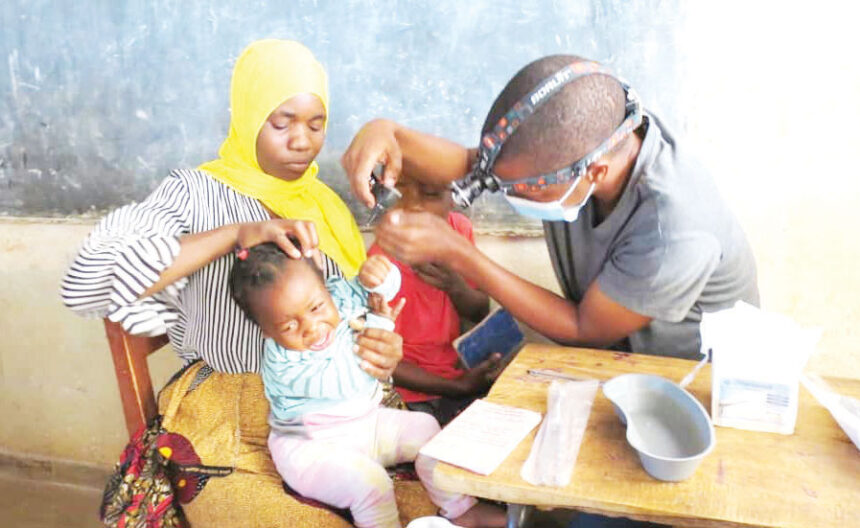
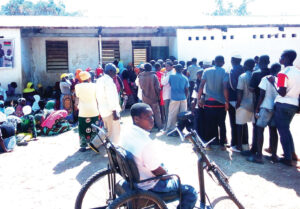
Just like many others with various medical conditions, Mdala rushed to Kango Primary School Ground in Makanjira, where Hilal Afrika, a Germany-based organisation, teamed up with Mangochi District Health Office to treat people.
At the camp, medical workers had to call for additional malaria drugs from Lulanga Health Centre after being overwhelmed by the large number of patients requiring attention for the disease.
About 1,300 people with various conditions were treated in a single day.
Hilal Afrika engaged over 40 healthcare personnel in different disciplines from Mangochi District Hospital to carry out the health task after appreciating challenges people in the areas face.
Another beneficiary of the initiative, who was treated for a toothache, Shakira Sosola, could not hide her excitement after the relief.
“I have lived with a swollen cheek for over three months. At Lulanga Health Centre, they do not offer dental services, which meant I was supposed to travel to Mangochi District Hospital. I am happy that I have been assisted without covering a long distance,” Sosola said.
In Lulanga and Makanjira areas, pregnant women are among those who are unable to access medical care due to long distances to health facilities.
For a combined population of over 300,000 people, Lulanga and Makanjira have a single health facility which offers maternity services.
“After conceiving, I only attended prenatal services once. I could not continue because of the distance.
“Now I have a baby who is three months, so I came to get family planning products after being informed that they were being offered here,” Hawa Mkwaka from Mpamila Village in TA Lulanga said.
With a population of about 17 million people, Malawi has about 700 health facilities spread across the country.
Most of them, especially in rural areas, are long distances away from people who are supposed to access services there.
The destruction of roads and bridges following tropical storms that have been hitting the country means transport challenges have also grown for most people in the affected areas.
Hilal Afrika Chairperson Umut Turan said they conducted the medical camps to reach people in the remotest areas with medical services after noticing that most of them were not able to access health services due to long distances to hospitals.
Turan said his organisation wants everyone to live healthy lives and contribute to the development of the country.
“But we do not have readily available resources for these activities, so we may not be able to fulfil our plans of conducting the medical camps every month in this area and other areas with similar challenges.
“We are trying to engage our partners to see how we can work together on this,” he said.
Cyclone Freddy
Mangochi District Hospital Clinical Officer Innocent Lanjesi applauded Hilal Afrika for the initiative, describing it as timely and critical.
“As a district, we were heavily affected by Tropical Cyclone Freddy, which damaged road infrastructure in areas such as Makanjira.
“Through the camps, we have managed to assist people who could have otherwise failed to access the medical attention which they needed,” Lanjesi said.
He admitted that while the hospital has qualified medical personnel, it does not have adequate resources for conducting medical camps in hard-to-reach areas.