Each new Middle East crisis is one of a kind, similar to the previous ones—both in the sense of its impact on the region itself and on outside world.
In 1956, Egyptian president Gamal Abdel Nasser nationalised the Suez Canal, which was then owned by the British. London responded by joining forces with Israel and France and organising a military intervention against Egypt.
As a result, Israel came out the winner, while for Britain it all ended in a terrible fiasco and an exit from the club of the leading world powers. Just as the crisis was inexorably heading towards this outcome, the wife of the then British prime minister Sir Anthony Eden, Lady Clarissa Eden, uttered a phrase that reverberated across the country: “Over the past few weeks, I have sometimes felt that the Suez Canal flows right through my living room.” Today, figuratively speaking, the Suez Canal once again flows through our living rooms, as well as through our airports, streets and minds.
Just a month ago, it seemed that a new violent outbreak in the Middle East would not come as still another test of strength for Russia. But it did.
“Internal unrest is the replacement of the current Russian elites with transitional ones. As a result, Russia will focus on its domestic problems for a certain period and begin to take the place in the world that it truly deserves (the place of a non-global player),” this is how, shortly after the riots in Makhachkala, Mikhail Podolyak, adviser to the head of the office of the Ukrainian President, described Kiev’s strategic goals.
- Advertisement -
It is obviously with these goals in mind that the Zelensky regime is banking on promoting anti-Semitic sentiments in Russia, even to the point of organising bloody pogroms.
Meanwhile, Russia has come under a political attack from Israel, incensed by the recent visit to Moscow by a delegation of top Hamas officials.
“Israel views the invitation of Hamas leaders to Moscow as an undignified step that gives the green light to terror and legitimises the atrocities of Hamas terrorists. We call on the Russian government to immediately expel the Hamas terrorists,” the Israeli Foreign Ministry said in a statement.
When being pressured from all sides, you may be tempted to change or at least adjust your foreign policy course, but in this case, you should by no means succumb to this temptation. It is in Moscow’s best interest to pursue a balanced line in the Middle East because any tilt in one direction or another will seriously jeopardise its national interests.
- Advertisement -
- Advertisement -
Lessons of history
In 1991, when diplomatic relations between the USSR and Israel did not yet exist, Soviet foreign minister Alexander Bessmertnykh paid a visit to Tel Aviv and was warmly received by prime minister Yitzhak Shamir. Shamir was a very tough man who, as he later confided in Russian representatives, never repented his “sins of youth”, such as organising terrorist attacks, including the 1944 assassination of the British resident minister for the Middle East, Lord Moyne.
That being said, Yitzhak Ezernitsky— the surname he went under in his early years, and who was born in 1915 in the Grodno province of the Russian Empire and was fluent in Russian— also boasted a good sense of humour, entertaining the Soviet delegation with the following story.
During a visit to the United Nations (UN) General Assembly in New York, the United States (US), in the early 1980s, Shamir, who was then Israel’s foreign minister, caught sight of a fellow native of Belarus – his Soviet counterpart Andrei Gromyko. Shamir immediately walked up to his colleague and, speaking with that indescribable Jewish town accent, said, “Mr. Gromyko, why don’t you love us?” “How can I not love you?” Gromyko replied with an equally indescribable Belarusian accent. “In 1948, I voted at the UN for the creation of the state of Israel!”
Here is another episode reflecting the complexity, ambiguity and versatility of the history of relations between Moscow and Israel. When receiving one of the Russian ambassadors in Tel Aviv during the Yeltsin era, the then Israeli president Ezer Weizman suddenly reminisced how, right ahead of the 1948 Arab-Israeli war, he, then a young pilot, visited Prague, with portraits of Stalin emblazoned everywhere, and actively participated in secret deliveries of military equipment, including aircraft, from Czechoslovakia to Israel. Officially, these supplies were authorised by the Czech government, but in reality the decision was made personally by Stalin.
Back in those days, the Arab states that objected to the creation of the Jewish state were under very strong Western influence. Therefore, at some point, the “father of all nations” thought about turning Israel into a Soviet outpost in the Middle East.
As we know, these expectations did not come true. By the time the next Arab-Israeli war broke out in the summer of 1967, Israel had become an “unsinkable aircraft carrier” of the US in the Middle East, and the Soviet Union had become an ally of the Arab world’s most influential country – Egypt.
On the morning of June 5, in a surprise move, Israel went to war and within days established control over a territory that was more than three times its own size. The scale of the Israeli victory would have been even more impressive, but on June 10, the Soviet prime minister Alexei Kosygin sent an urgent telegram to US president Lyndon Johnson: “We propose that you demand from Israel an unconditional cessation of hostilities within the next few hours… We want to warn Israel that if this is not done, we will take the necessary steps, including military ones.”
The warning worked. Moscow clearly demonstrated the extent of its influence on the international stage.
Unfortunately, the Brezhnev Politburo also demonstrated how not to conduct foreign policy. On that very same day, June 10 1967, the Israeli ambassador to Moscow Katriel Katz was summoned to the Foreign Ministry on Smolenskaya Square and handed the following note: “The Soviet government declares that due to the continuation of aggression by Israel against the Arab states and its gross violation of decisions by the Security Council, the government of the USSR has decided to break off diplomatic relations with Israel.”
This is how the famous Russian historian Gennady Kostyrchenko described the long-term consequences of this decision in his book Secret Politics: From Brezhnev to Gorbachev: “By breaking off diplomatic relations with the Jewish state and thus assigning it to the category of irreconcilable enemies, the Soviet leadership doomed itself to a one-sided orientation, burdened by the same onerous obligation to support the chronically weak Arab side. The defeatism and vulnerability of such a position became especially obvious after Egypt unilaterally terminated the Treaty of Friendship and Cooperation with the USSR on March 14 1976 and, having completely reoriented itself towards the US and Israel, seriously undermined the political authority of the Soviet Union in the Middle East.”
The Egypt of president Anwar Sadat was not the only one who behaved in such a double-dealing manner. In his book The Middle East on Stage and Behind the Scenes, Yevgeny Primakov thus describes the behaviour of such a “great friend of the Soviet Union” as president Mengistu Haile Mariam: “Despite its verbally anti- Israeli position, the Ethiopian leadership, led by Mengistu, regularly receives weapons from Israel, delivered by sea to the port of Mombasa. Ethiopia was then at war with Somalia, and Mengistu swore allegiance to Moscow, but carefully kept under wraps his secret agreements with Israel.”
Ironically, it was from Israel itself that Yevgeny Primakov managed to learn about the existence of such agreements.
As deputy director of the Institute of World Economy and International Relations in the early 1970s, Primakov, acting on instructions from the Soviet leadership, maintained confidential contacts with the Israeli authorities: “While waiting for a meeting with the prime minister, we asked this question to Ben Elissar (the Premier’s chief of staff), who confirmed the fact of supply of these weapons. “Naturally,” he said, “the deal is strictly confidential… As compensation for the supplied weapons, the Ethiopian leadership agreed to release to Israel 20,000 Falashas— Ethiopian citizens professing Judaism.”
Big politics in the Middle East has consisted, and continues to consist, of such nuances hidden from prying eyes, secret layers, with even more secret ones lying underneath. Ignoring this fact in an attempt to pursue a policy in the region based on binary logic, where there are those who are for us and those who are against us, dooms even a great power to the role of an object that is manipulated by everyone. Accepting this fact gives a great power a chance to succeed even in such a complex region as the Middle East.
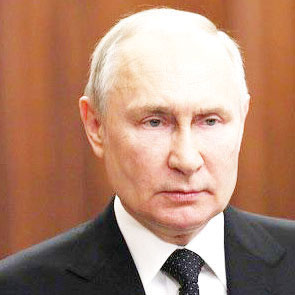
During VladimirPutin’s presidency, Russia managed to take advantage of this chance 100 percent primarily because the Kremlin’s present-day policy is directly opposite to that line of the Brezhnev Politburo.
Moscow does not drive itself into a corner, does not deprive itself of freedom of maneuver, and does not turn itself into a voluntary hostage of anyone. This line commands respect in the region.
However, among some regional players, this respect is mixed with discontent, a desire to return to the “good old Soviet times”, when, with rhetoric about “brotherhood, friendship and socialism” Moscow could be forced to pull chestnuts out of the fire for someone else.
On the one hand, Tel Aviv is putting pressure on Russia, demanding that Moscow break all contacts with Hamas and take an unambiguous pro- Israeli position in the spirit of 1948. On the other hand, the Kremlin is being pressured by those with diametrically different views and positions (I express myself so euphemistically because the Hamas movement is far from being the first in this list). Hiding behind this pressure is a clear desire to get back to the situation of 1967 or even something worse than that.
Obviously, neither one suits Russia’s national interests. When choosing between the conflicting sides in the Middle East, Moscow must invariably choose itself, no matter how this might hurt the feelings of its partners in the region and beyond.— International Affairs Journal