The El Nino-induced dry spells that hit Malawi, mostly the Southern Region, earlier this year, did not spare Zomba, whose flatlands are well known for their expansive crop fields.
In many gardens, maize withered in the scorching heat of the unusual weather phenomenon.
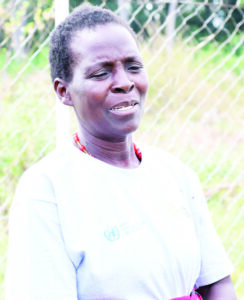
But Mary Sabola from Kachingwe Village, Traditional Authority M’biza in Zomba, did not have the prevalent problems in her fields.
“I was prepared, just like several other farmers who were aware of what was coming ahead,” Sabola, 57, says.
She has already harvested 15 50-kilogramme (kg) bags of maize, a quantity that is not different from what she used to harvest in normal climatic conditions from the same field.
- Advertisement -
Sabola says she opted for early-maturing maize varieties and prepared compost manure for her crops for retaining moisture.
“So, even though rain fell for a short time and a dry spell came, the moisture made it possible for the crops to successfully reach maturity,” the mother of four says.
She touts the weather information that she kept receiving through a community radio and mobile phone alerts as having saved her family from hunger.
Makoka Agricultural Research Station has been supplying the weather and agriculture data to farmers in surrounding communities to prepare them ahead of every growing season.
- Advertisement -
- Advertisement -
Located some 20 kilometres (km) south of Zomba and 22km north-east of Blantyre, the station, which remains the main centre for cotton research, packages information for farmers’ ease of use.
“For instance, information about the dry spells came in handy and allowed us to plan way in advance,” Sabola says.
She recalls that the station also alerted families about the potential landfall of Tropical Cyclone Freddy in March last year, allowing them to keep safe.
“We fortified our houses and prevented children from crossing flooding rivers. The cyclone’s impact was minimal in our case,” Sabola recounts.
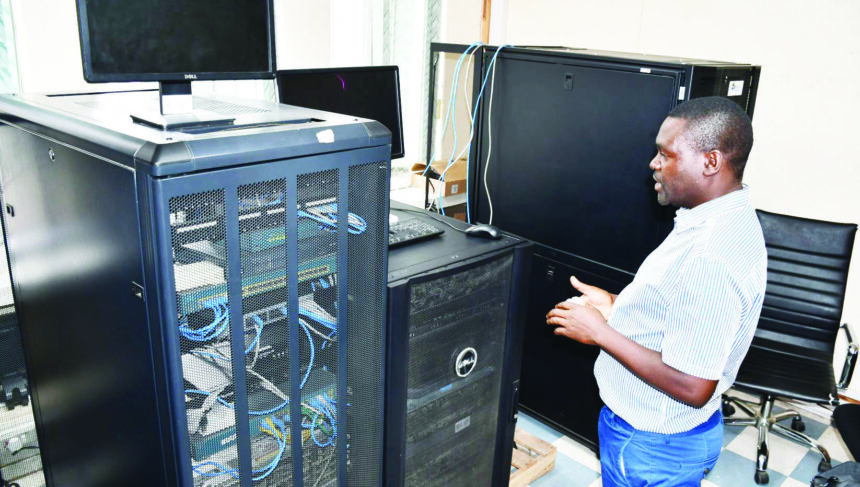
At the research station, which was established in 1967 as the headquarters of the now-defunct Agricultural Research Council of Malawi, modern weather equipment is making work easier.
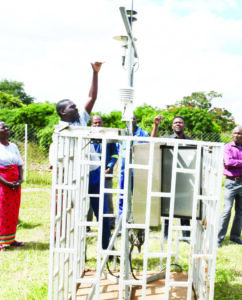
Side by side, traditional tools work with modern and upgraded automated ones for efficient production of results.
The station’s principal agriculture research scientist Jessie Mvula says agriculture research benefits from real-time weather and climate information.
“The automated weather station keeps records even when no one is watching. That allows us to have data all the time.
“In the research that we conduct, we must know everything about rainfall patterns, humidity, temperature and even wind speed to determine the kind of crops to grow,” Mvula explains.
She adds that the upgraded automated weather station further allows the researchers to provide accurate information to farmers for them to make proper decisions on the types of crops to grow.
The modern equipment, which is said to be assisting in crop production, has been provided to the Department of Climate Change and Meteorological Services (DCCMS) through the Malawi Resilience and Disaster Risk Management Project (MRDMP).
The three-year World Bank-funded activity under the Ministry of Water and Sanitation aims to help in meeting immediate food security and livelihoods restoration needs of communities affected by drought.
Deputy Director Responsible for Water Supply in the Ministry of Water and Sanitation, Peter Chipeta, says the forecasts from DCCMS from the modern equipment supplied by the project are saving lives and property.
Chipeta, who is also the ministry’s designated information officer, states that the ministry has used the accurate weather data to warn people about possible flooding in different parts of the country.
“DCCMS sends us information which we use to prevent damage to lives and property. Additionally, our colleagues in the Ministry of Agriculture are able use the forecasts to advise farmers on the types of crops they can grow,” Chipeta says.