By Isaac Masingati:
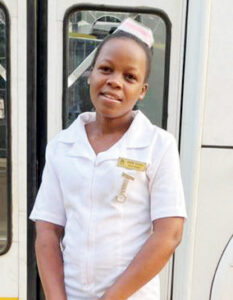
When Zione Njovu heard her name echo through the Great Hall at Chancellor College, a constituent college of the University of Malawi (Unima) now turned into a standalone Unima in Zomba, she stepped forward to receive her university degree—tears rolling down her face.
“It was too good to be true,” the 24-year-old recalls.
Her journey to that moment had been anything but easy. In 2020, she nearly dropped out of secondary school due to financial hardships.
Her parents, subsistence farmers from Chigonthi Village under Traditional Authority Chitukula in Lilongwe District, could barely afford her form one fees. They managed to pay for the first term, but struggled with the second.
- Advertisement -
Even on her graduation day, they could not afford the transport to Zomba to witness their daughter’s achievement.
Today, Zione proudly holds a Bachelor of Science Degree in Nursing and Midwifery from Kamuzu University of Health Sciences; her success made possible by a Malawi Washington Foundation scholarship (MWF), a non-profit initiative that supports youth education— especially for girls—from primary through tertiary education levels.
Zione’s dream of becoming a nurse began in earnest when she was selected to attend Likuni Girls Secondary School in 2020 but she quickly realised that academic talent alone was not enough—she needed financial support to cover many things, from school fees to basic learning materials and upkeep.
Moved by her potential, the school head referred her case to Forum for African Women Educationalists in Malawi (Fawema), which connected her to the Malawi Washington Foundation Scholarship. The support did not stop at secondary school—it continued through her university years.
- Advertisement -
- Advertisement -
“That’s how I was able to complete both secondary and university education,” she says.
Zione’s story is not unique. Ireen Wezzie Kamanga also benefitted from the same scholarship.
After scoring an impressive 12 points in the 2018 Malawi School Certificate of Education examinations, she enrolled at Kamuzu University of Health Sciences (Kuhes) to pursue a Bachelor of Science in physiotherapy. But by her second year, financial difficulties threatened her studies.
“I survived first year with help from friends at the college’s Seventh Day Adventist Church,” she says. “Then Fawema came to my rescue in second year through the scholarship.”
Another beneficiary, Mirriam Katadzuka, graduated on the same day as Zione with a Bachelor of Science in Laboratory Science from College of Medicine, now Kuhes. Like Zione and Ireen, her academic journey was made possible by the same scholarship.
The MWF was initiated in 2009 by a team of prominent Malawian women in the Washington DC metropolitan area that challenged itself to explore opportunities to collectively contribute towards development in Malawi.
Reflecting on their experiences, expertise and desire to give back to Malawi, the women pledged to work together and launch a non-profit organisation for charitable, educational and community service purposes by supporting education of the youth, especially girls, at all levels from primary, secondary to tertiary levels; providing and delivering medical supplies and equipment to public hospitals and clinics operating in rural areas; and responding to emergency food needs of poor communities while empowering them to attain food self-sufficiency where possible.
In December 2012, the Malawi Washington Foundation was registered as a District of Columbia not for profit organisation. It was officially launched in September 2013.
In 2015, MFS entered into a four-year, renewable partnership with the Forum for Africa Women Educationalists in Malawi (Fawema) as its implementing partner in Malawi. As of December 2016, the MWF had supported 11 young, deserving scholars through the provision of tuition, accommodation, school supplies, transportation, food and toiletries.
As of now, many young women are in school on the same scholarship, with some studying towards graduation from various undergraduate programmes.
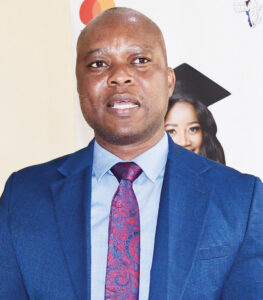
According to Fawema Executive Director, Wesley Chabwera, the impact of the scholarship on marginalised youths in Malawi has been profound.
“It has redeemed many youths who were at the point of withdrawing from school and enabled them to proceed and graduate,” he says.
Chabwera tells the story of Memory Nkhoma, who also experienced financial challenges in secondary school.
Fawema referred her case to the foundation, which financed her secondary school fees and continued supporting her through her university studies at Kuhes.
“We receive many applications from all over the country but we are limited by funds,” he explains.
While limited space in public universities is one barrier to higher education, financial constraint remains a major obstacle.
The Higher Education Students Loans and Grants Board strives to support every needy student at tertiary level, but demand still outpaces supply. For example, in the 2024–25 academic year alone, over 29,000 students applied for loans—only 28,000 were supported.
“This is where support from institutions such as the Malawi Washington Foundation Scholarship makes all the difference,” says Chabwera, whose organisation [Fawema] has continued to play a pivotal role in supporting girls’ and women’s education across Malawi since its establishment in 1993.
For Zione, Ireen, and Mirriam, the pain they went through is now history. They are fully qualified health professionals, ready to serve their communities and inspire the next generation.