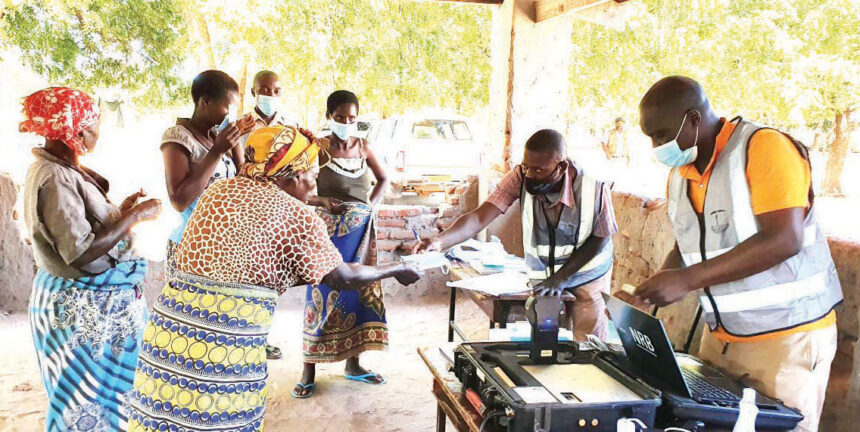
The eastern stretch of Mangochi District is the nearest location in Malawi to Cabo Delgado, a conflict-ridden province in northern Mozambique.
The violence, which erupted in October 2017, has been prompting security experts to call for ways of controlling its potential spread.
In September 2022, prominent Mozambican cleric Bishop Dinis Matsolo said the extremism was not a problem for Mozambique or Southern African Development Community (Sadc) alone, but for the entire world.
And there have been fears that as Malawi approaches the September 2025 general elections, the terror activities in Cabo Delgado could spill over to the country.
“Malawi must do everything possible to prevent the conflict from spreading. Sadc must also play its part.
- Advertisement -
“Perpetrators of terrorism often take advantage of existing tension in an area to drive their agendas,” Executive Director of People’s Federation for National Peace and Development Edward Chaka said in an interview with The Daily Times sometime back.
Analysts state that there was a possibility of the Mozambique clashes spurting into Malawi due to the disputes that were there between Muslims and Christians in the Eastern Region.
One cause of the spat was a sermon by Bishop Montfort Sitima of Mangochi Diocese, in which he alleged that some sheikhs preached messages aimed at bringing the government down.
“Failure to address disputes in Mangochi may create an opportunity for extremism and terrorism in Malawi.
- Advertisement -
- Advertisement -
“As Malawi moves towards elections in 2025, Mangochi remains a well-recognised hotspot that can experience triggers for violent conflict if religious intolerance is not contained,” the Public Affairs Committee (Pac) noted in its concept on peace-building in the region and other selected districts.
The quasi-religious body has been engaging Muslims and Christians to bring them together for peace to reign in a region considered one of the most volatile in terms of religious fanaticism.
Another issue which was a point of contention was the hijab, where the Muslim Association of Malawi (Mam) was pushing for female students to be free to wear the Islamic headgear in government and Christian-managed schools.
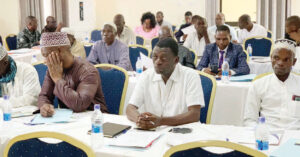
During a meeting which Pac had with President Lazarus Chakwera on the issues, Pac Chairperson Fr Patrick Thawale observed that religious intolerance has been observed in Malawi for years now.
“In 2019, dress code also emerged as a trigger of conflict between Muslims and Christians. In the 2020 fresh presidential election, the issue of faith arose as a campaign tool.
“In July 2020, an advert placed on a billboard around Maselema in Blantyre became a trigger of a dispute between two faith groups,” Thawale said.
Malawi’s 2023-28 strategy for countering terrorism and violent extremism acknowledges that terrorism poses fundamental challenges to the country and the Sadc region.
A foreword to the strategy says such kind of radicalism risks undermining core values of the Constitution, the rule of law, protection of civilians and the peaceful resolution of conflict.
“Its motivations, financing and support mechanisms, methods of attack and choice of targets are constantly evolving, thus adding to the complexity of an effective strategy to counter it,” the prelude says.
With a focus on the Eastern Region, the mediation that Pac instituted in a peace-building initiative within the Malawi National Peace Architecture supported by the United Nations Development Programme has borne fruits.
A statement which was signed by Sheikh Fahad Kansuli of Mam, Sheikh Abdullah Kaposa of Qadria Muslim Association of Malawi, Fr Davie Mambo of Mangochi Diocese and Shaibu Ajassi of the Islamic Commission for Justice and Freedom (ICJF) acknowledges the impacts of the dialogues.
“The parties observed that although there have been differences leading to conflicts among Muslims, Christians and [ICJF], key recent developments demonstrate religious co-existence,” the statement dated November 14 2023, reads.
It adds that the co-existence has been evident in scenarios such as the joint cleaning and ground clearing by Muslims and Christians at Mangochi District Hospital.
The statement further indicates that participants in the dialogue sessions agreed that even if differences arise in the future, peaceful resolution mechanisms must be explored.
Pac Executive Director Robert Phiri said in an interview that the organisation, which is largely seen to be synonymous with advocacy and democratic governance, traditionally undertakes dialogue facilitation and mediation to enhance social cohesion in Malawi.
“For instance, with all criticisms it faces at times, Pac facilitated dialogue during the parliamentary boycott of 1996 through clergy committee on dialogue; engaged presidential candidates during 2014 and 2019 electoral stalemate…,” Phiri said.
He added that Pac also undertakes conflict prevention projects through youth and women-centred interventions.
Phiri further explained that preventing conflict in the first place is a stepping stone to conflict management and resolution.
Perhaps, the peace and unity that is prevailing among Muslims and Christians in Mangochi and other parts of the Eastern Region will practically wipe out any tension and possible terrorism ahead of the next general elections.