In February 2015, national duties beckoned me to San Francisco, United States of America (USA), where I was invited to make a presentation at a conference. As I interacted with delegates during tea break, we were joined by a woman, probably in her late 50s, who I later leant was a professor at one of the universities around.
I was amazed to see how her face beamed with excitement upon reading details on my name tag. That is, upon learning that I was from Malawi. She explained that she would have loved to be around to listen to my presentation but said she had to attend another equally important presentation by “your fellow Malawian”.
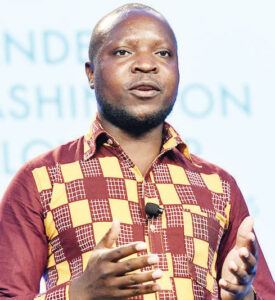
The Malawian being referred to was William Kamkwamba. He was the guest speaker at a conference that took place a kilometre away from ours. I noted that Kamkwamba was being held in high esteem in USA, going by the praises she lavished on him.
The professor excitedly showed me some pictures, which depicted her posing with Kamkwamba and a copy of his book. Probably, she wanted to demonstrate to the conference delegates that she had brushed shoulders with this renowned Malawian and first African to make a Windmill in Africa. How I wished I had an opportunity to have a glimpse of this young man from Wimbe—some 40 kilometers east of Kasungu Town—making this presentation.
Honestly, this was a momentous occasion, such that I felt proud to be Malawian. For the first time, I had to break from the monotony of being identified at some of these international gatherings as someone who comes from a country where pop star Madonna adopted some kids!
- Advertisement -
Just to refresh your memory, Kamkwamba is a young Malawian who hit the international spotlight in 2001, when he built a wind turbine to supply electricity to his parent’s home using blue gum trees, bicycle parts and various locally sourced materials.
It is heartwarming to see how Kamkwamba has packaged this success story through his memoir, The Boy Who Harnessed the Wind (2009)—which he co-authored with Bryan Mealer. The book has been published in almost 20 languages and has even been made it into a movie. I would not be surprised if I heard that, out there, his book is amongst prescribed ones for students who are studying windmills.
At 19 years old, Kamkwamba was already a name that international conference organisers would want to be on the menu. He has told the story at high-profile global conferences, notably the TED conference, World Economic Forum on Africa and many others across Europe and Africa. He has also been invited to popular talk shows in USA, notably Good Morning America on ABC and the like. Universities and colleges have invited him to present motivating talks to students on subjects ranging from energy, innovation to entrepreneurship.
Through the Moving Windmills Project he co-founded in 2008, he works with young Malawians to provide simple solutions to everyday farming challenges and the like.
- Advertisement -
- Advertisement -
However, because a prophet is never popular in his/her homeland, Kamkwamba’s name may not elicit much excitement among folks in his home country, let alone being invited to high-profile local conferences. Yet, he is a person whose exploits have helped in boosting Malawi’s image on the global map.
The point I am driving at is that Malawi has global competitive advantage on which it can leverage on.
The country’s global competitive advantage is evidenced in its rich natural resources. President Lazarus Chakwera is quoted in The Daily Times of May 8 2024 as—on the sidelines of the USA-African Business Summit held in Texas, Dallas—amplifying the country’s positive narrative. He boasted of Malawi as sitting on abundance of wealth, in terms of minerals which were yet to exploited. Surely, we are rich. Take, for instance, the recently discovered Rutile with its vast quality deposits at Kasiya in Lilongwe, and many more.
Apart from mineral resources, Malawi has a youthful population with abundant energy and innovative ideas. Malawi has potential in tourism and hospitality. It is rich in its culture and heritage. We have, for instance, Mulanje Mountain, which is a Unesco World Heritage site, Lake Malawi National Park and the popular and tasty Malawian Chambo which is found in the fresh waters of Lake Malawi!

sidesteps the goalkeeper to score the goal
There is, therefore, a need to amplify the narrative about Malawi’s competitive advantage. We can use global ambassadors such as Kamkwamba and sports personalities such as the Chawinga sisters— Temwa and Tabitha—to amplify Malawi’s story. These popular personalities and natural features could also be assigned to some streets, and the like, to illustrate that much as we, as a nation, have some shortfalls, there are some positive narratives that could be celebrated.
In essence, innovators, journalists, filmmakers, musicians and artists are key actors in branding and promoting any country through their positive presentations and stories. These should take a lead in championing positive narratives about Malawi. However, it requires sound public relations and proper marketing strategies to harness the power of these actors.
Above all leaders must set the tone. I believe Chakwera has set the tone.