By Nelson Gonjani:
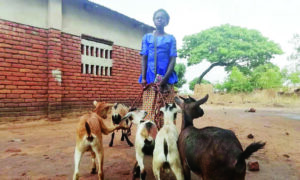
In the area of Senior Chief Chulu, Kasungu District, Lucia Phiri, a single mother, embodies the struggles faced by many people in her community.
With two children to support, she often finds herself battling the harsh realities of poverty, such that she struggles even to provide the most basic needs to members of the household.
“My life has been full of experiences where we have spent days without food for prolonged periods. The dry spells have made the situation worse, since some of our crops were washed away while in the field,” Phiri reminisced.
Her situation is dire, as she grapples not only with daily survival needs but also with the burden of paying school fees for her children.
- Advertisement -
Phiri’s neighbour, Mkosa Gerson Mvula, shares a similar story.
With escalating costs of goods and services, she cannot afford farm inputs, making it increasingly difficult for her to provide for her family.
“Farm inputs such as fertiliser are so expensive that people like me cannot afford them. For someone like me, accessing them is nearly impossible and, as such, we are suffering from starvation,” Mvula explained.
According to the Department of Disaster Management Affairs, at least 5.7 million Malawians have been affected by hunger.
- Advertisement -
- Advertisement -
As such, the department launched a lean season food distribution exercise to help ease the situation.
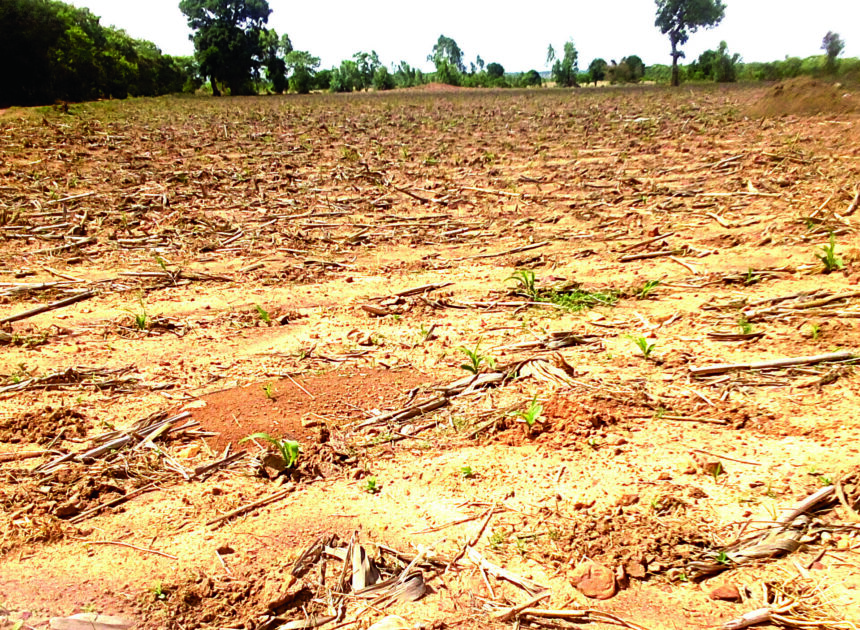
Late last month, it was revealed that Malawi lost an estimated $341 million (about K600 billion) in crop and livestock loss, representing a 2.4 percent loss on the country’s gross domestic product (GDP) due to the El Niño weather that hit the country early this year.
This is according to the latest Socio-Economic Effects of El Niño in Malawi and Implications for Recovery and Long-Term Resilience Building Report by the United Nations (UN).
“A more detailed analysis of the damages and losses (D&L) incurred in the agriculture sector resulting from the El Niño has revealed that the loss incurred on crops stands at $310 million, representing 12 percent of the total crop value of $2.9 billion.
“While for livestock, the total loss is estimated at $31 million, representing 1.4 percent of the total value ($2.24 billion) for all the livestock,” the UN report indicates.
It says across all the economic sectors, the agriculture sector was most impacted.
According to the report, the agriculture sector was directly impacted by soil moisture deficits, which impacted crop production, reduced pastures for livestock husbandry and overall productivity of the ecological system.
It notes that the overall reduction in agriculture output also impacted the industrial sector, particularly food processing industries such as cooking oil and maize flour.
“For instance, in April 2024, the Government of Malawi announced a restriction on the export of soya ostensibly to support local industries and investors in the soya value chain to access the soya beans following an assessed 20 percent decline in production.
“In addition, the tourism and recreation sectors were mainly impacted by flash flooding, leading to reduced occupancy, with the extent yet to be fully captured,” the report says.
It adds that rural and urban water supply systems and hydroelectric energy generation were not significantly impacted, as the country received significant rains, albeit late and erratic, mainly affecting agriculture.
“Fortunately, tobacco, Malawi’s leading foreign exchange earner, was not impacted. The country recorded a harvest of 129 million kilogrammes of tobacco, a seven percent increase from the 2023 tobacco production of 120 million kilogrammes,” the report says.
According to the UN report, climate change is expected to significantly affect Malawi’s economy, mainly because of its dependence on climate-sensitive economic sectors and its low capacity to take adaptation measures due to preexisting macroeconomic vulnerabilities.
It says different climate change scenarios suggest that impacts of climate-related shocks and other disasters could result in substantial annual GDP losses, as high as 20 percent under business as usual (BAU) by 2040.
The UN says Malawi’s updated Nationally Determined Contribution (NDC) estimates a direct overall cost due to climate change equivalent to losing at least 5 percent of the country’s GDP yearly.
“Further, climate change will likely exacerbate existing social and economic inequalities, particularly for the vulnerable. The main impact channels are likely to be agriculture and infrastructure facilities and services that are instrumental to efficient production, transport and trade.
“In agriculture, the increased uncertainty around future precipitation levels in Malawi will likely result in higher variability in crop yields,” it says.
Recently, Department of Climate Change and Metrological Services Director Lucy Mtilatila told reporters in Lilongwe that Malawi expects La Nina conditions this year.
Mtilatila said the rainfall season is generally predicted to start mid- November in southern Malawi districts of Mulanje, Thyolo, Chiradzulu, Blantyre, Phalombe, Zomba and Mchinji and spread to some districts during end November and early December.
According to Mtilatila, the onset is expected to be slightly late roughly by two weeks mainly over some parts of the country such as Karonga, Kasungu and Chitipa, which is two weeks later than the previous 2023-24 season, and the onset could reach mid to end December in some parts of these districts.
On March 23 this year, President Lazarus Chakwera declared a State of Disaster in 23 out of Malawi’s 28 districts affected by El Nino conditions.
The declaration applies to Nsanje, Chikwawa, Blantyre, Thyolo, Mulanje, Phalombe, Chiradzulu, Zomba, Machinga, Mangochi, Balaka, Mwanza, Neno, Lilongwe, Mchinji, Ntcheu, Salima, Dowa, Dedza, Ntchisi, Kasungu, Nkhotakota and Karonga.
According to Chakwera, apart from the late and erratic onset of rains, the districts experienced inadequate rains, floods and prolonged dry spells, which severely damaged crops and the prospects of food production.
“Our preliminary assessment is that close to two million farming households have been affected. Specifically, 749,113 hectares of maize have been affected, representing 44.3 percent of the national crop area.
“Other important crops like rice, soya beans, cowpeas and groundnuts have also been affected…,” Chakwera said.
For Phiri and Gerson Mvula— who are from Kasungu, one of the districts affected by the State of National Disaster declaration—the earlier they are helped, the better.
Fortunately for them, they see a glimmer of hope in efforts that some non-State actors are taking to bail people affected by weather phenomena.
Take, for instance, World Vision Malawi, which is beginning to change the narrative in their community.
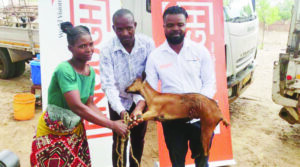
The organisation’s Mutchenda Animal Gift Catalogue initiative has had a profound impact on community members as, under it, 5,125 goats have been distributed to 1,025 vulnerable households.
Each family received five goats and ten chickens, all valued at K400 million.

According to Arnold Tsalayekha, who is the World Vision Malawi Programmes Manager for Kasungu and Dowa districts, their goal is to enhance the economic well-being of families so they can afford other basic necessities and school fees for their children.
“Many households are not financially stable. As such, by providing livestock, we aim to boost their economic growth and improve their nutrition status,” Tsalayekha explained.
Among other things, the initiative encourages beneficiaries to share goats, thereby promoting the spirit of community collaboration.
“Those who have benefitted from the project are already passing on goats after breeding, leading to empowered families,” he added.
On his part, Kasungu District Council Assistant Animal Officer, Tsankho Juma, commended the organisation’s efforts.
“I, therefore, encourage farmers to promote communal growth and sustainability. Our role is to guide beneficiaries in making the most of this opportunity,” Juma said.
Jacob Kawaza, the chairperson for the Area Development Committee, echoed the sentiments, describing the programme as a lifeline to community members who are struggling to meet basic needs.
“Not everyone has the chance to improve their circumstances, but now our children have brighter prospects,” Kawaza said.
World Vision Malawi’s interventions are set to continue until 2028, with hopes that the foundations laid today will lead to sustained resilience and economic empowerment in the district in particular and Malawi in general.